“Most visitors to Luang Prabang get the Disney version.”
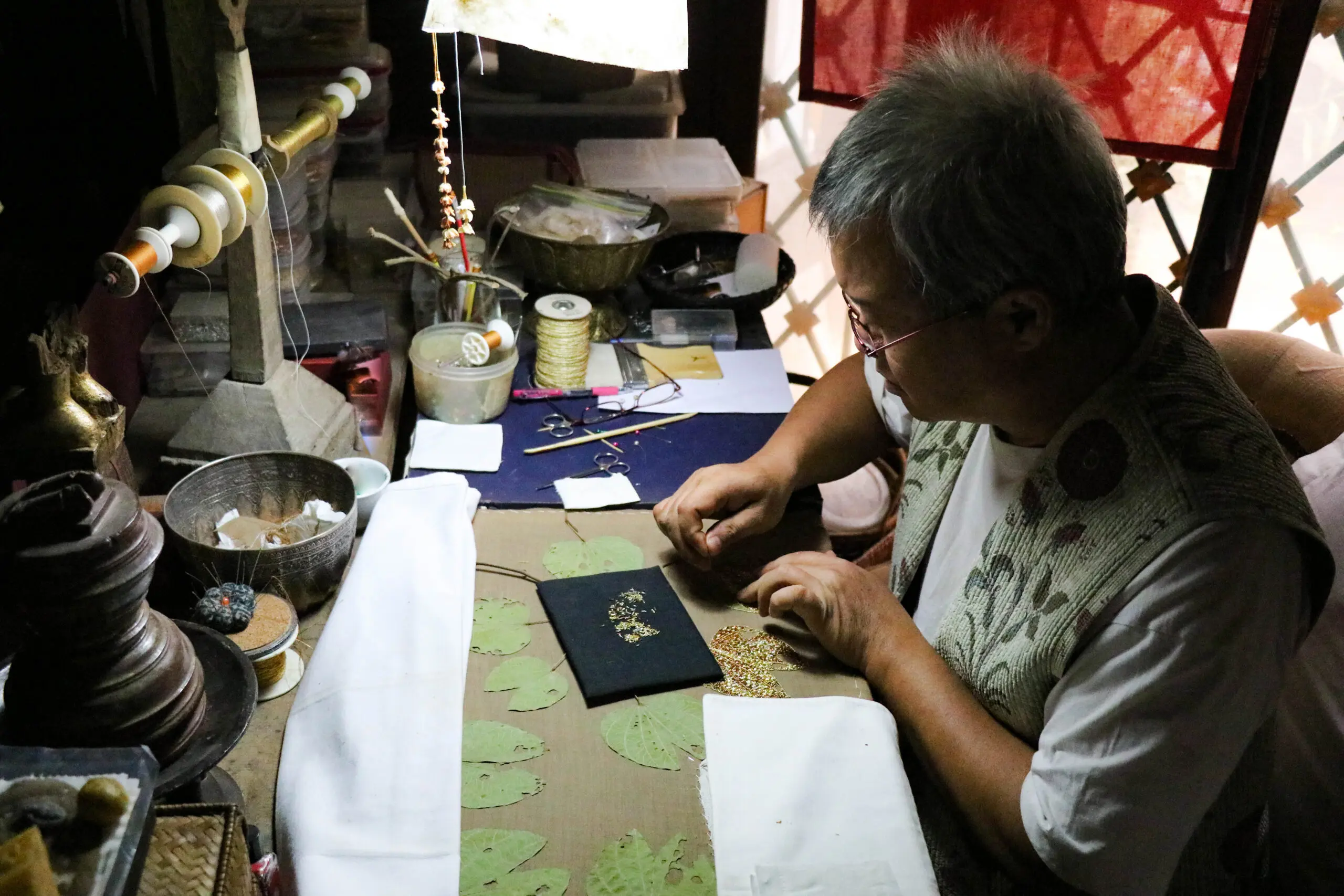
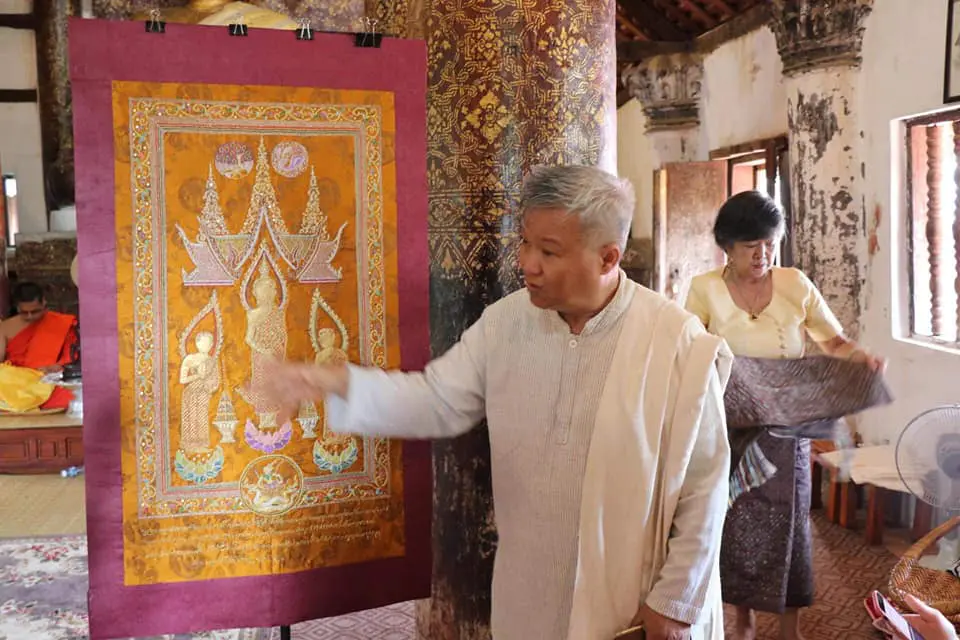
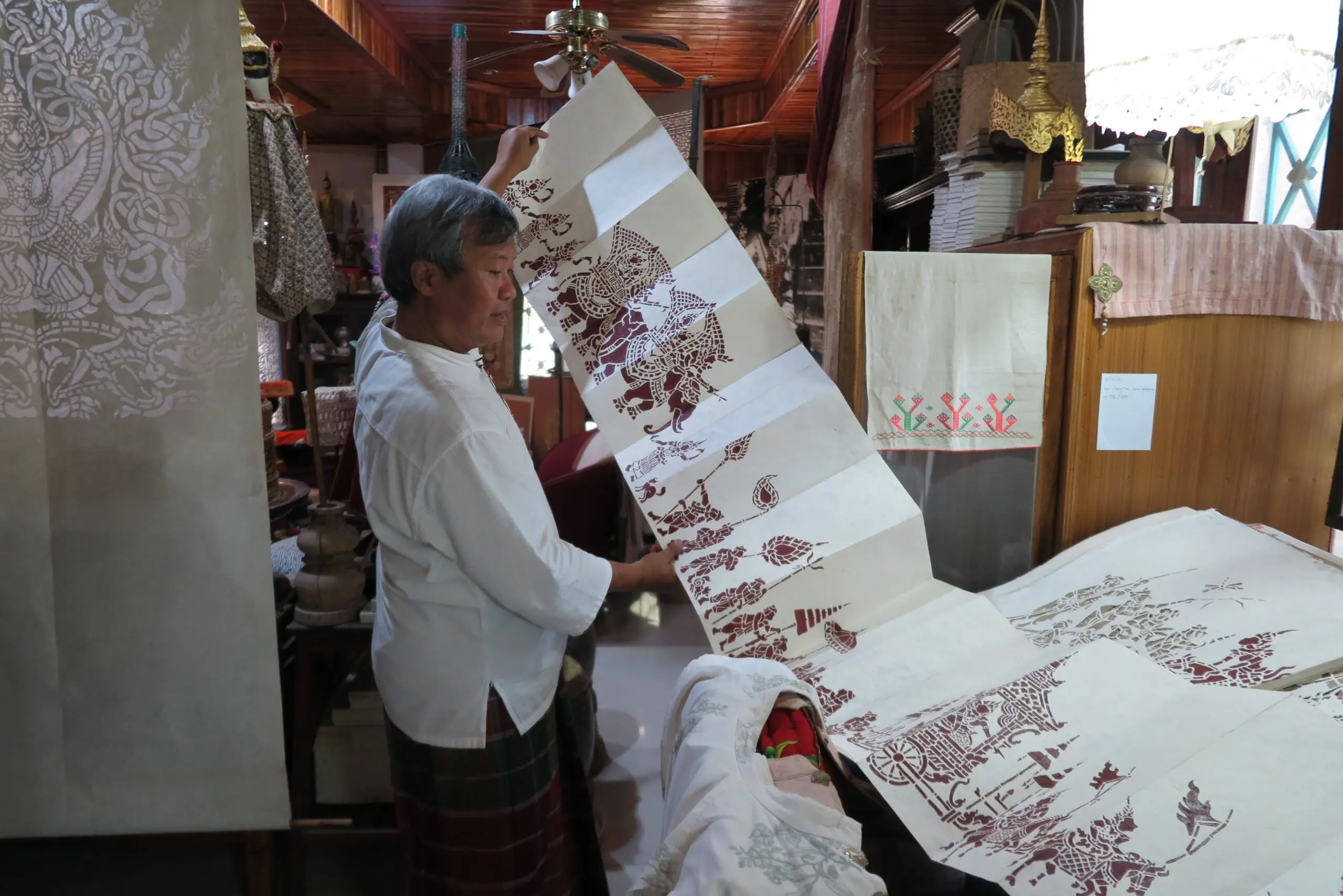
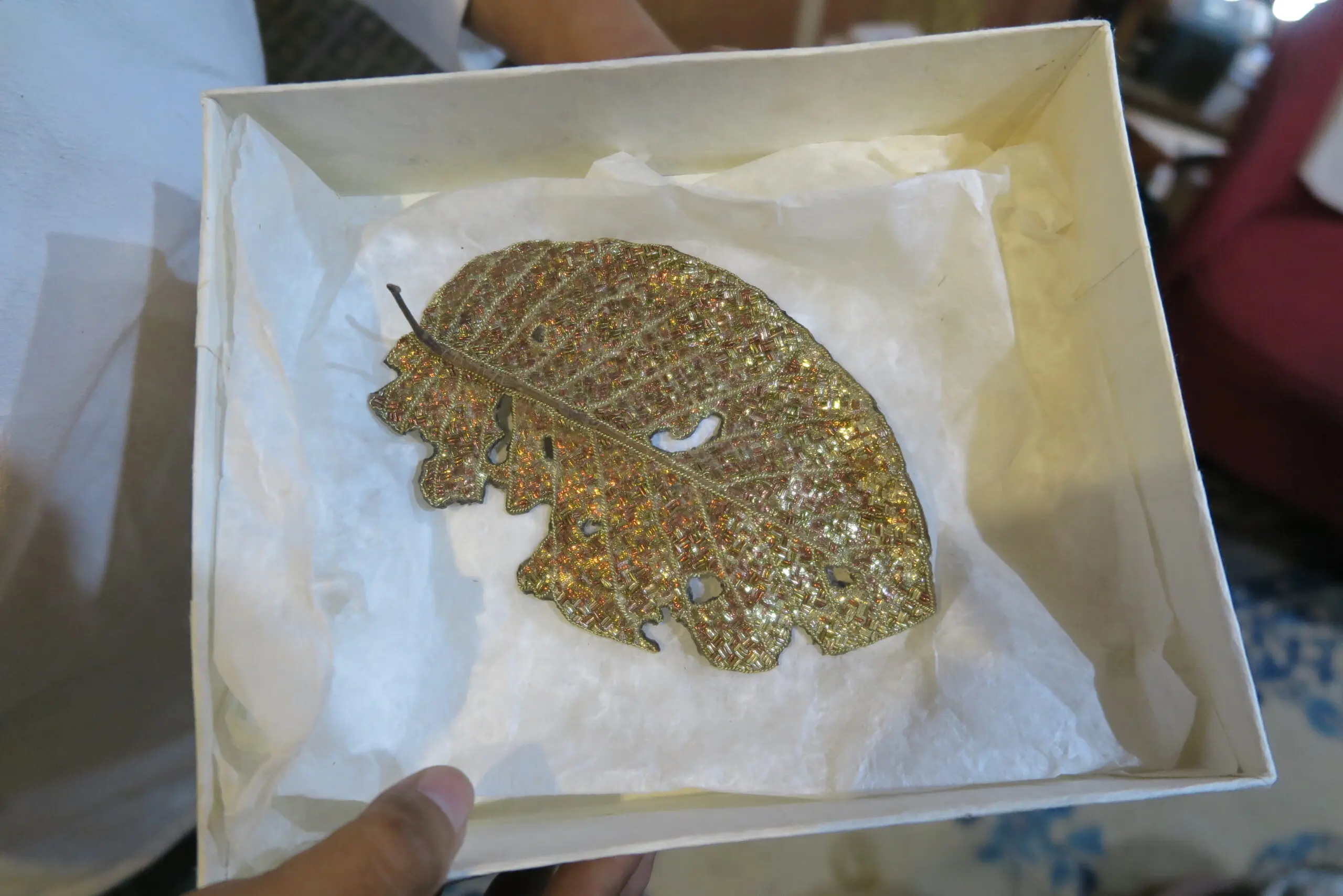
I’d just met Tiao Nith in Laos. He quickly shared the history of temple art in Luang Prabang, explained the Baci ceremony, introduced students working on his pieces, and showed me a golden leaf stencilled with his art.
I’d heard Luang Prabang had changed, but I was still charmed by the soft shophouses, French villas, and monks with parasols wandering the town.

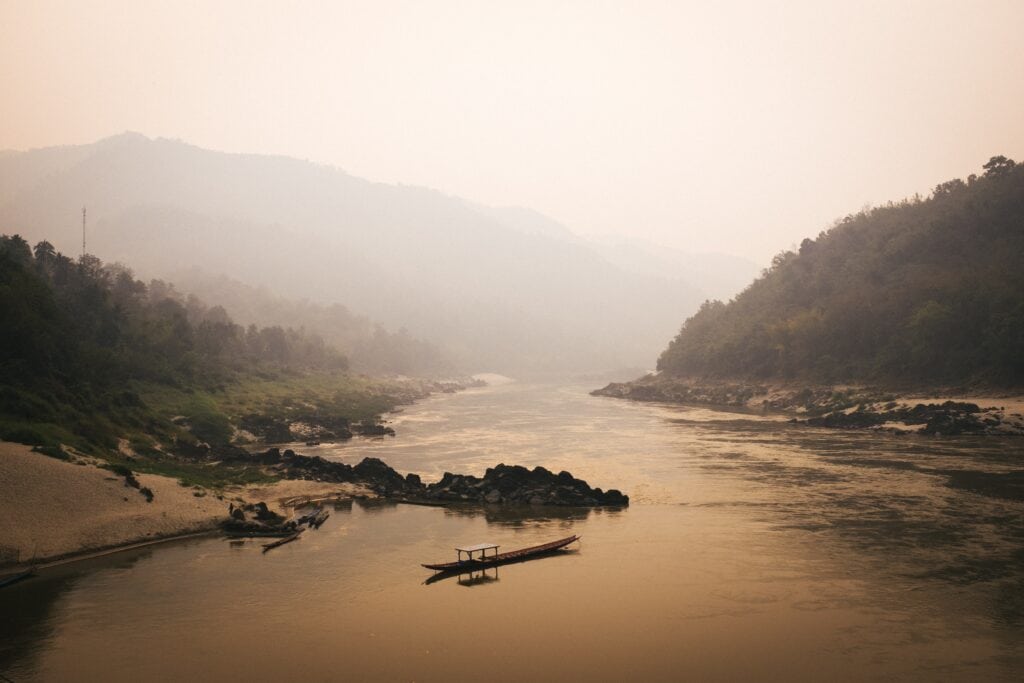
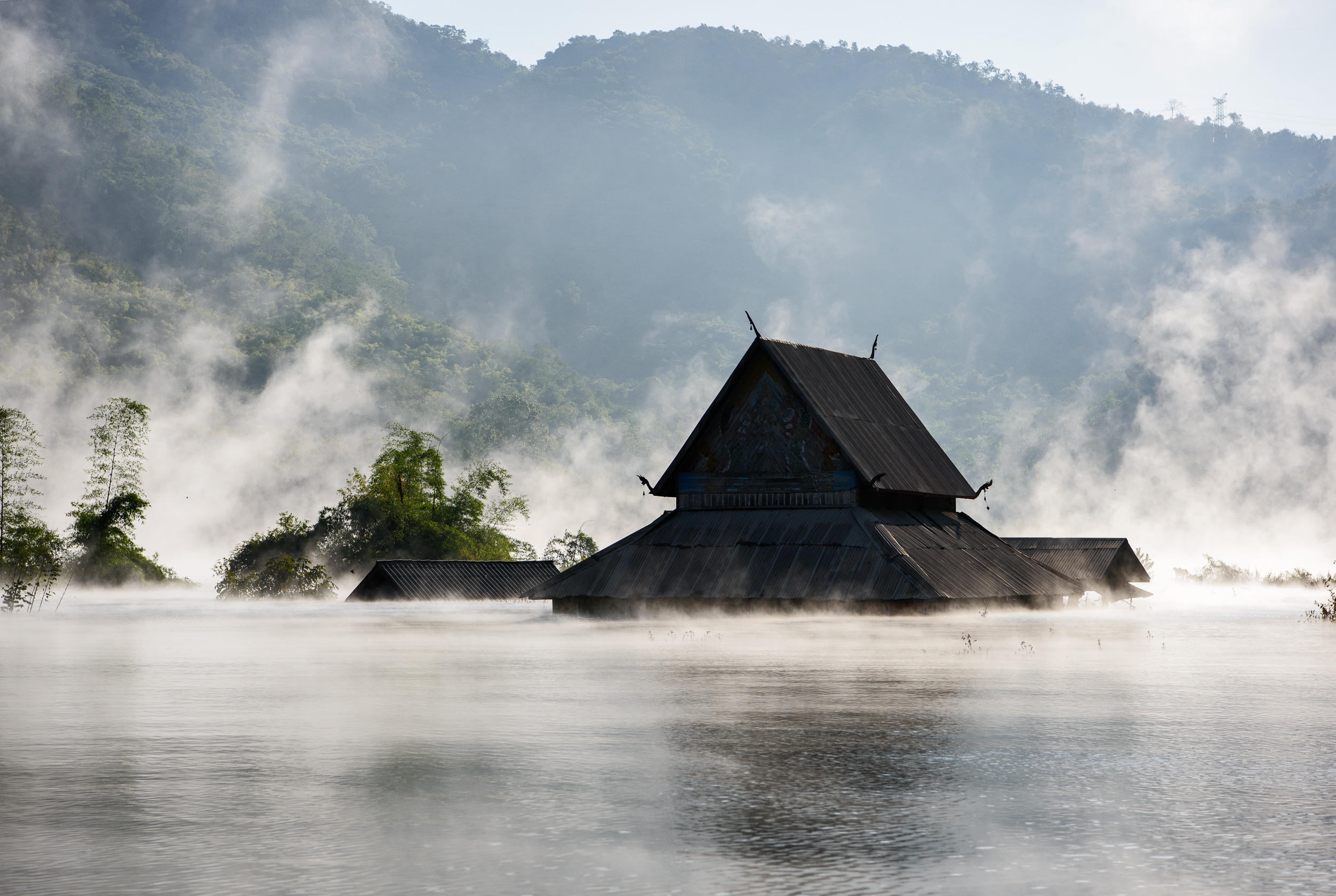
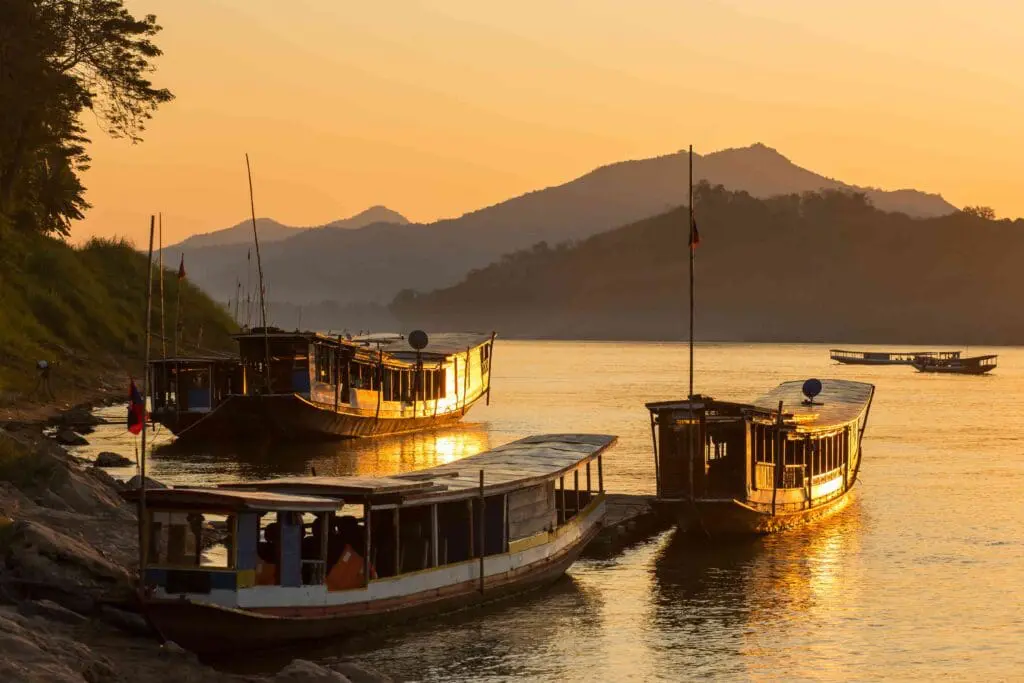
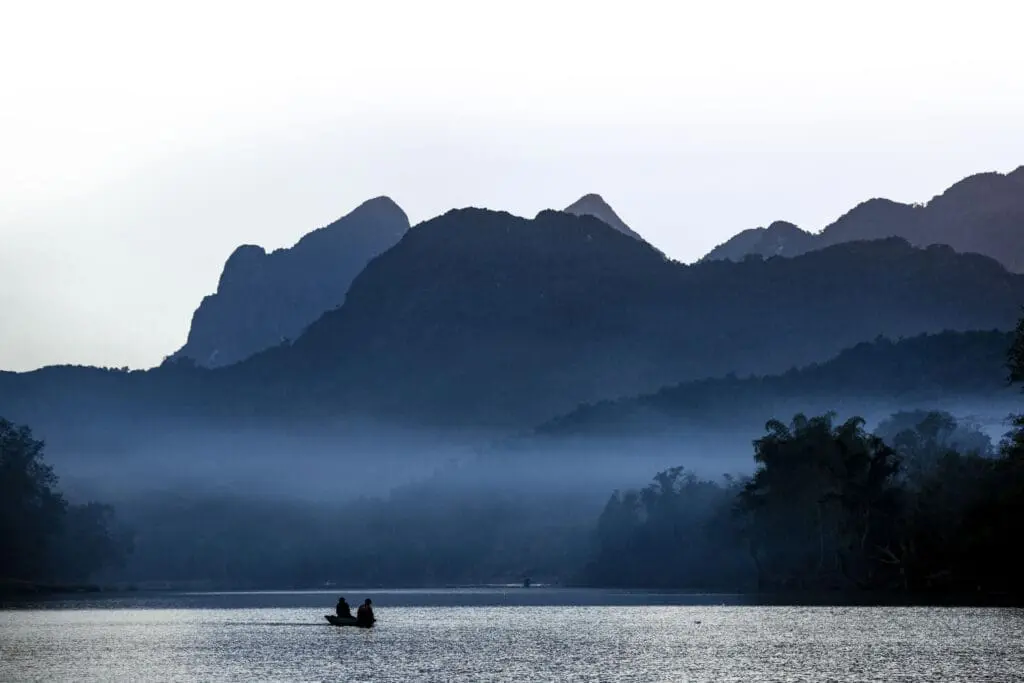
Sunrise on the River Mekong, Laos
And yet. The town felt more commercialised than it once did. With the coming of the high-speed rail, that process will likely continue. I could imagine how easy it would be to skim the surface here: tick off the temples, buy the textiles, then the obligatory sunset cruise on the Mekong. It would still be a lovely experience. But I began to wonder: is it so easy to get lost in the pleasantness that we let it wash over us, and miss the culture and art just below the surface?
It’s a danger, no doubt, but one that, with a little curiosity and slightly more effort, is avoidable.
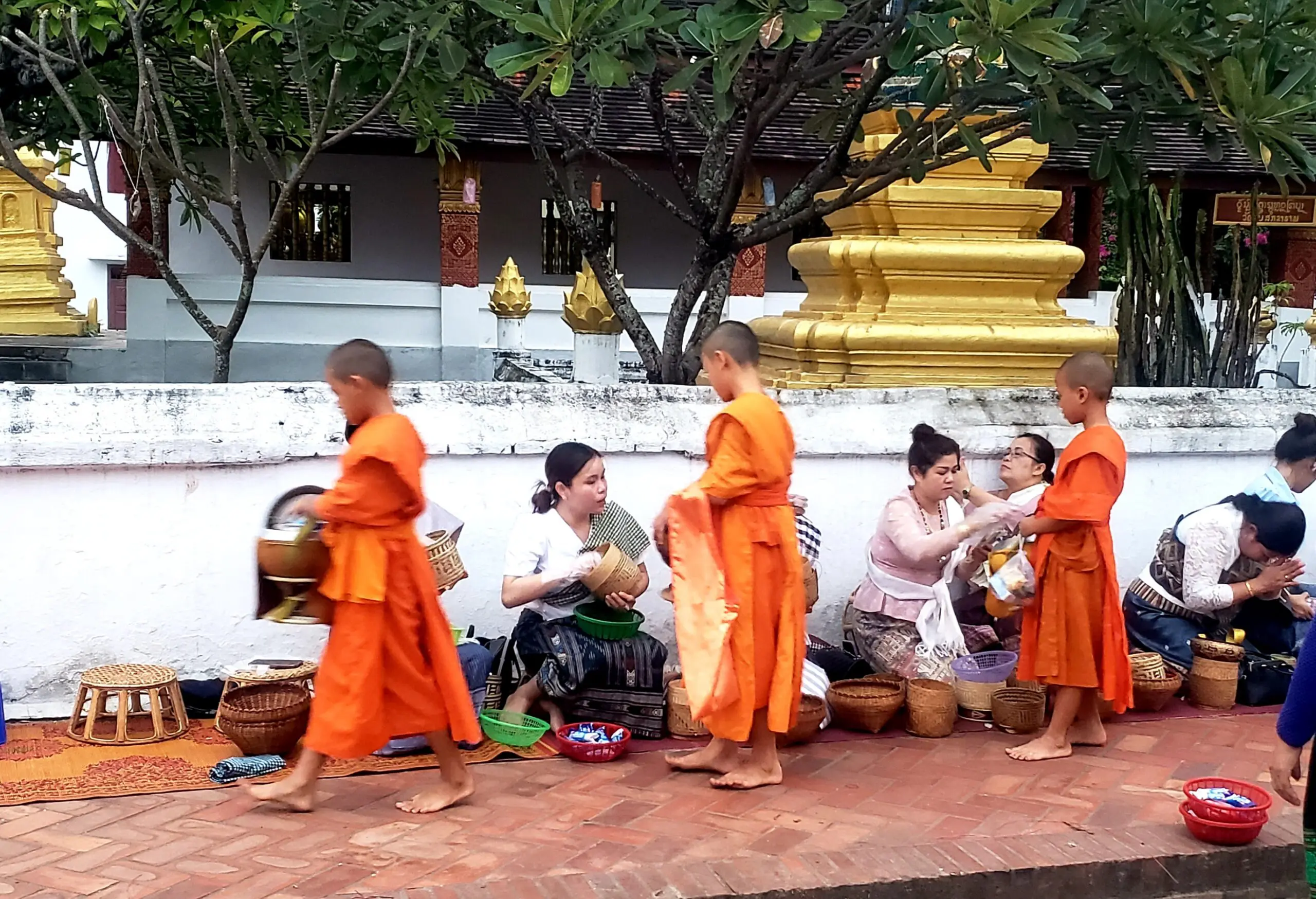
Take Tak Bat, for instance: the early-morning almsgiving in which monks walk silently through town, and residents place offerings into their bowls. In the centre of Luang Prabang, it has become something of a parody and is often misunderstood. Tourists plonking themselves on chairs to participate can feel like a corruption of the ritual. Watching it, I felt uneasy.
But a few minutes out of the old town, a different story emerges. Almsgivers still line up with reverence. The monks and novices still walk sedately among them, receiving food in silence, then offering a blessing before moving on. Not a tourist in sight, apart from me, standing on the other side of the road, observing quietly.
Alms-giving in Luang Prabang
Tourists mean well, and the monastic tradition depends on donations. Boys still come from the provinces to become novices, hoping for education and a good meal in Luang Prabang’s Sangha communities. At ETG, we take a different approach. Our guests are taken out of central Luang Prabang to watch the Tak Bat ceremony at a respectful distance and then visit a monastery outside town after breakfast, purchasing provisions at a local market to donate.
“Buy meat,” Khamsone, my guide advised me. “The young novices will be so happy.”
At the monastery, after laying out my donations, Khamsone and I chatted with the monk in charge, with Khamsone translating. I spoke to a Lao couple from the US returning to bring an offering. They fed the entire community that day, so my donation was small, though welcome by the young boys. Sometimes, the monk said, ‘we have nothing—so feed them only packet noodles.’ Donations clearly matter.
Just a short drive from the heritage zone, life feels worlds apart from Luang Prabang’s typical visitor experience. The abbot welcomes visitors cautiously, in small numbers. The young novices enjoyed lunch and the break from routine.
I left the monastery feeling moved but unsure of what I had just experienced. The next day brought me another opportunity to understand monastic Buddhist culture, as I explored Luang Prabang further.
My morning was spent wandering the old town, visiting the national museum, and stepping in and out of temples—which I enjoyed thoroughly. Later, I was led to a quiet temple on the east side of town, where a small but elegant two-storey building stood within the grounds.
“It’s Thai Art Deco style,” said Kit, my guide today. “And it houses the Buddhist Archive of Photography”.
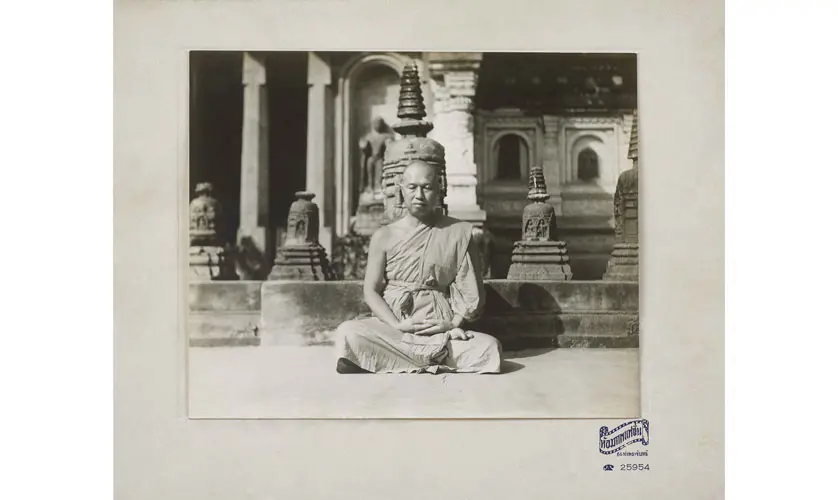
Inside, Boumson, a young cataloguer, showed me photos from a 2007 Vipassana retreat the abbots organized—the first since the 1975 revolution. Monastic life had gone on, but many practices were discouraged for years. Things began to thaw in the mid-eighties. More on that later.
Courtesy of Buddhist-archive.org. Pra Khamchan Virchitta Maha Thela practicing Vipassana Meditation.
The photographs in the public exhibition are beautiful: soft light, intimate scenes, monks, some very young, evoking calm and serenity, but also toughness and an unflinching approach to their task. Boumsong didn’t reveal to me then, that one of the monks was him, as a fifteen-year-old novice.
As I studied the wonderful photographs, an older German man introduced himself to me as Hans Berger. I later learned these were his photographs. For now, he told me he was working with the Buddhist Photo Archive, and sat me down to share the story of its founding. I won’t try to tell it here as I won’t do it justice, but it can be found online, and if you ever visit Luang Prabang with ETG, you can hear it for yourself.
Suffice to say, my mind was reeling as Hans and Boumson led me upstairs, away from the public exhibition and into the inner sanctum: the archive itself.
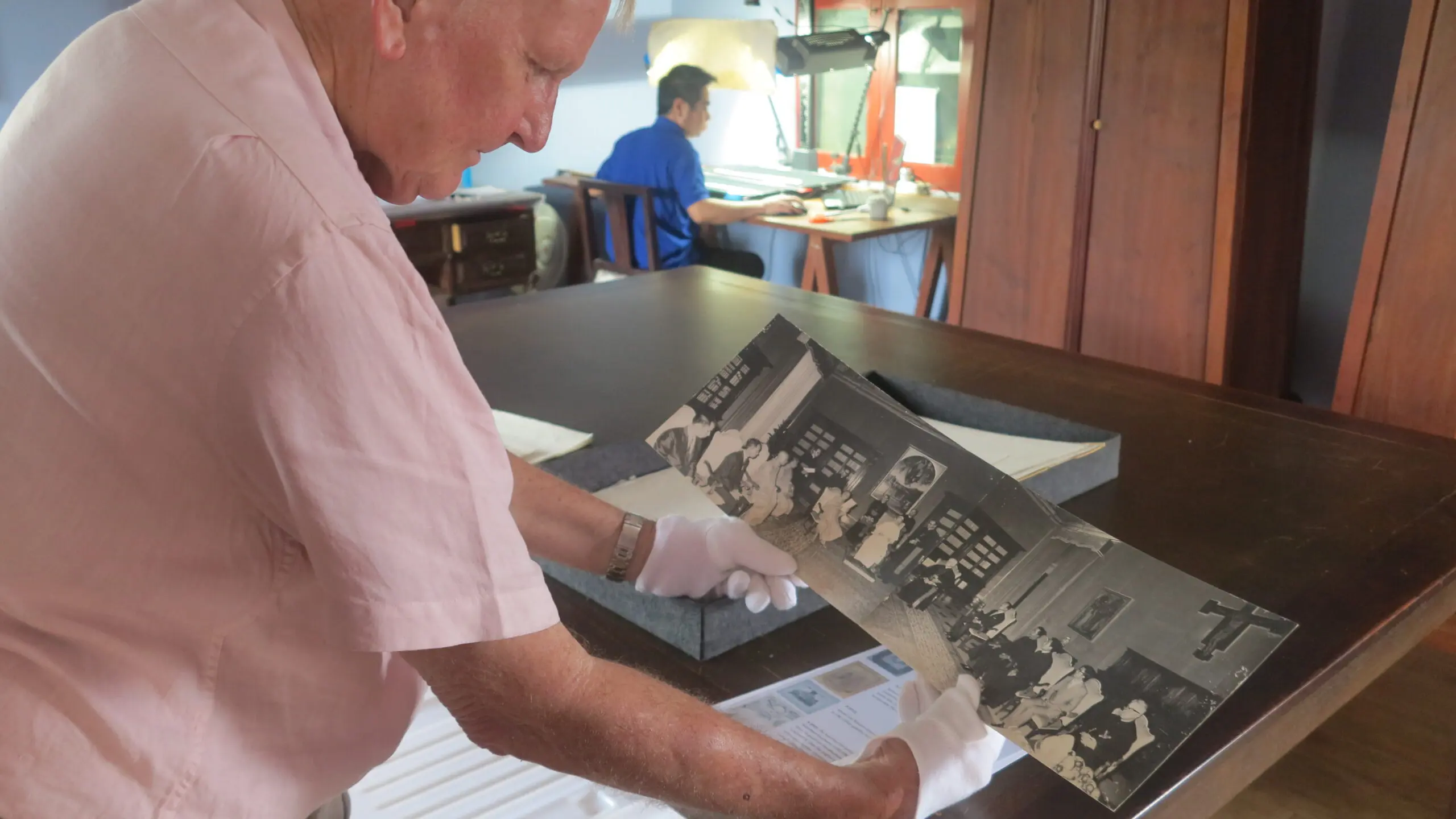
The archive room is quiet, with wooden cabinets and a portrait of a stern abbot. It houses over 35,000 photographs documenting Buddhist life for a century, all created by insiders. Visits are by written appointment only.
Hans Berger at the Buddhist photo archives
Hans unsheathed a folder of black-and-white photographs and began telling me the stories behind them, occasionally asking for my opinion and drawing Kit into the conversation as well. And then something happened that felt like a small electric shock. Hans showed a photograph of a 1985 funeral celebration for the most important abbot of the day — a significant ceremonial Buddhist occasion — but this time attended by two suit-clad members of the politburo seen in the photo. Subtle, symbolic: the long thawing between church and state beginning to show itself.
Kit suddenly said, “I was there! As a young boy, it was so exciting!”
“Those kinds of connections happen all the time here,” Hans said softly after hearing Kit and his memories bring the black-and-white photo to life.