

Tracing Ladakh's Silk Route Through Its Food
ETG India Specialist, Sara, traversed an ancient trade route, discovering how Ladakh's role as a cultural crossroads lives on in its cuisine.

By ETG India Specialist, Sara Wells, from her latest recce in Ladakh
A Trading History You Can Taste
For centuries, Ladakh in India wasn’t an isolated mountain kingdom, it was a crucial link on the ancient Silk Route.
Caravans of horses, yaks, and Bactrian camels pushed through dramatic mountain passes, hauling spices, Chinese silk, Indian textiles, Tibetan salt and wool, and ideas across Asia. Today, you can still find traces of all that trade in Ladakh’s landscapes, its temples, and, as I came to realise, its food.
On my recent trip, I followed in the traders’ footsteps: tasting, learning, trying to picture what life must’ve been like on this extraordinary cultural crossroads…
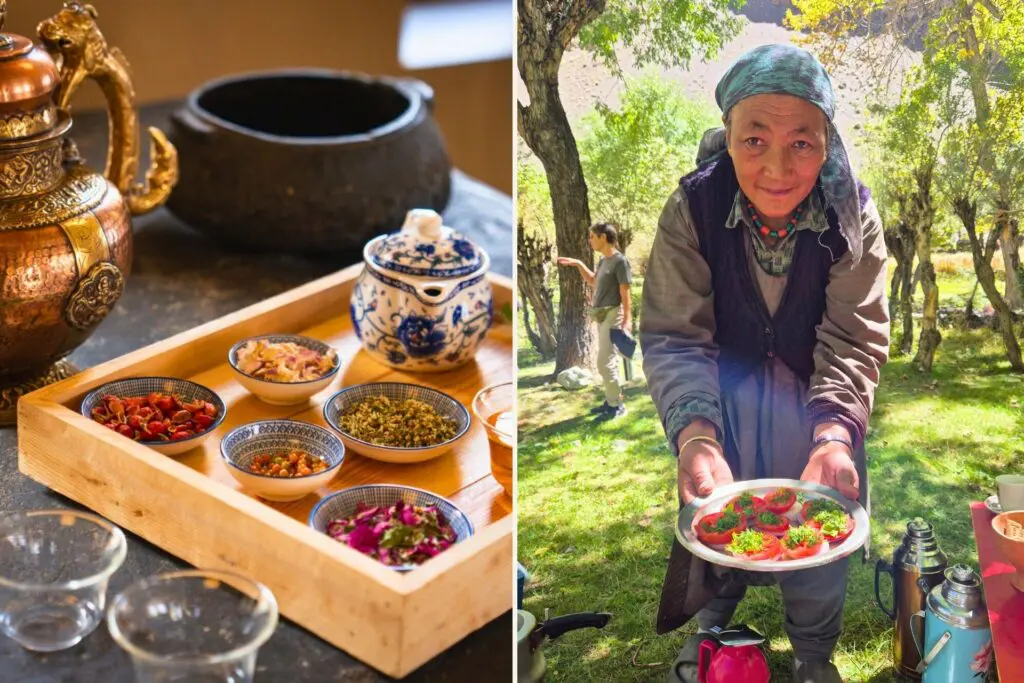
Turtuk and a Balti Tasting Menu
Baltistan is this almost-forgotten kingdom that’s mostly in Pakistan now, except for the tiny hamlet of Turtuk on the Indian side. This used to be where trade routes linked Ladakh to Kashmir, China, and beyond. These days, that whole history lives on in Balti cooking.
I sat down to a seven-course lunch here, all cooked by local Balti women. Everything was proper farm-to-table: apricot and peach kernel oils, buckwheat from the terraced fields, mountain herbs foraged nearby. What surprised me was how vegetarian it all was, especially for an Islamic enclave of Ladakh.
Over at Turtuk’s Yagbo Palace, the King still welcomes visitors. Sometimes he’ll even host a meal himself, and you get this beautiful blend of history and hospitality all at once.
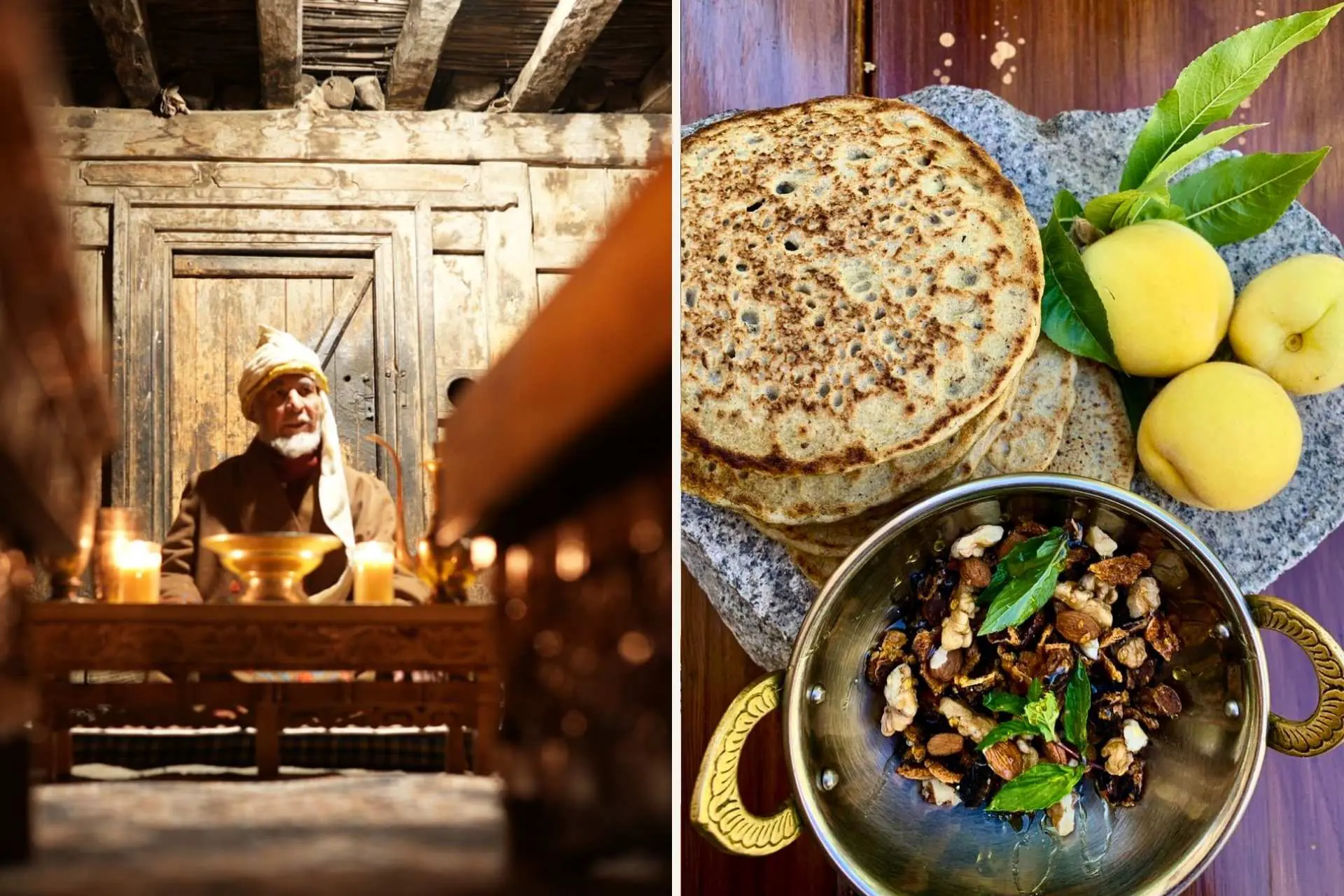
Nubra, Fresh Picnics under Apricot Trees
Nubra’s wild, you’ve got these fertile valleys that suddenly turn into proper sand dunes, and there are still Bactrian camels wandering around, descendants of the ones that used to haul goods along the Silk Road. The whole valley is dotted with ancient rock carvings that tell the story of those old trade routes. Camels, ibex, hunters, Buddhist symbols like stupas and vajras, all scratched into stone by nomads, early settlers, and the Buddhist communities that came later.
The food culture here is still rooted in the land: salads pulled straight from greenhouses, Himalayan yak cheese, and incredibly fresh mountain herbs.
I loved sampling and munching my way through these while picnicking in the shade, with the valley spreading out in front of me.
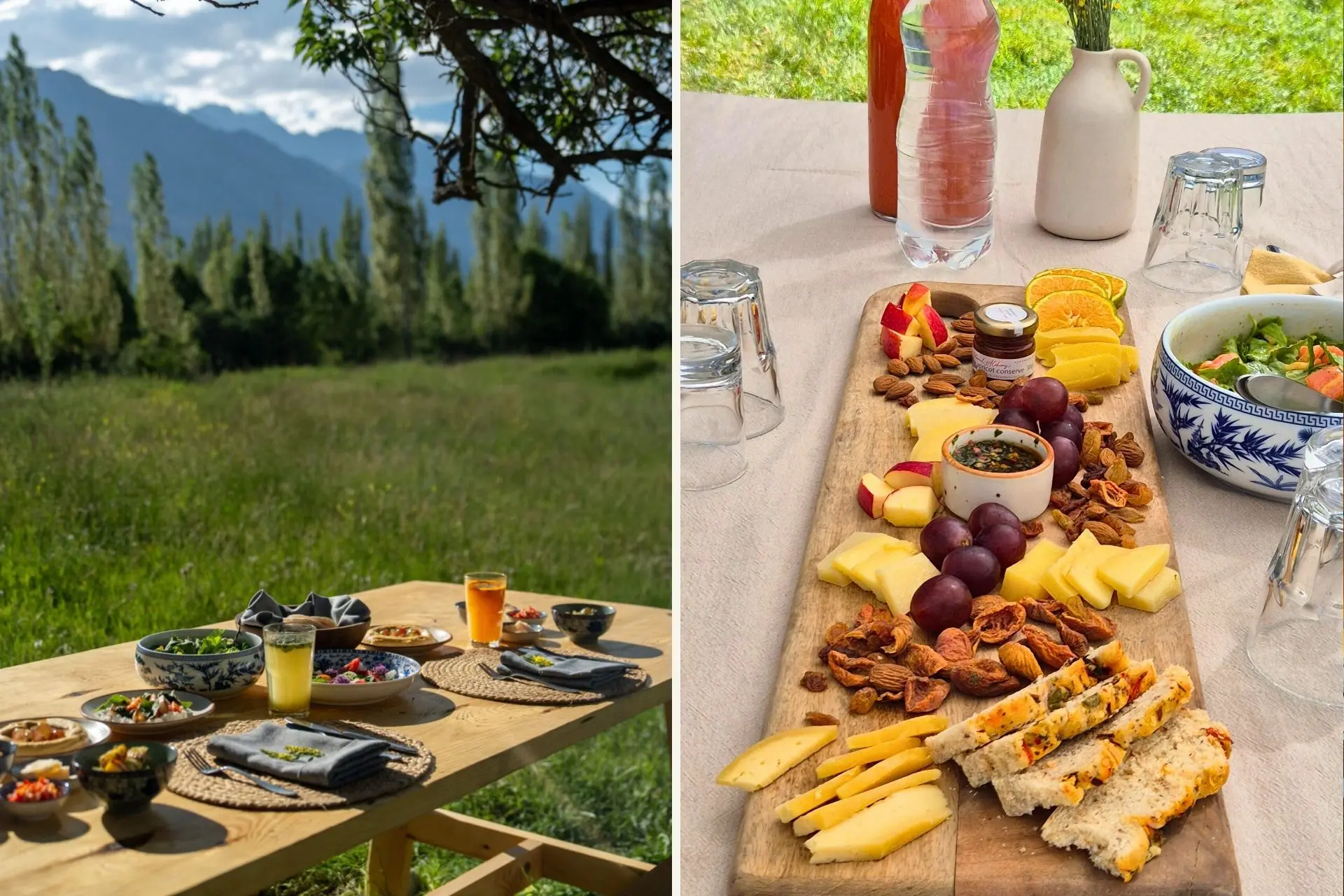
Leh, Traditional Plates and Fusion Cocktails
Traders once packed Leh’s market square. Now it’s chefs reinterpreting the Silk Route on a plate.
You’ve got to try the fragrant mutton sausage, Yaksha Shapta (slow-cooked in spinach) served with tingmo (these fluffy steamed buns), and mutton pilau rice with herb butter and caramelised onions (my mouth’s watering just thinking about it!).
But Leh’s not stuck in tradition. Some of the hotels here are getting creative, especially at the bar. Dolkhar‘s doing this whole cocktail menu inspired by a “Journey through Ladakh”, mixing drinks like they’re caravan stops along the old trade routes. They’re working with what grows here: apricot, mulberry, apple, almonds, walnuts, buckwheat honey to name a few.
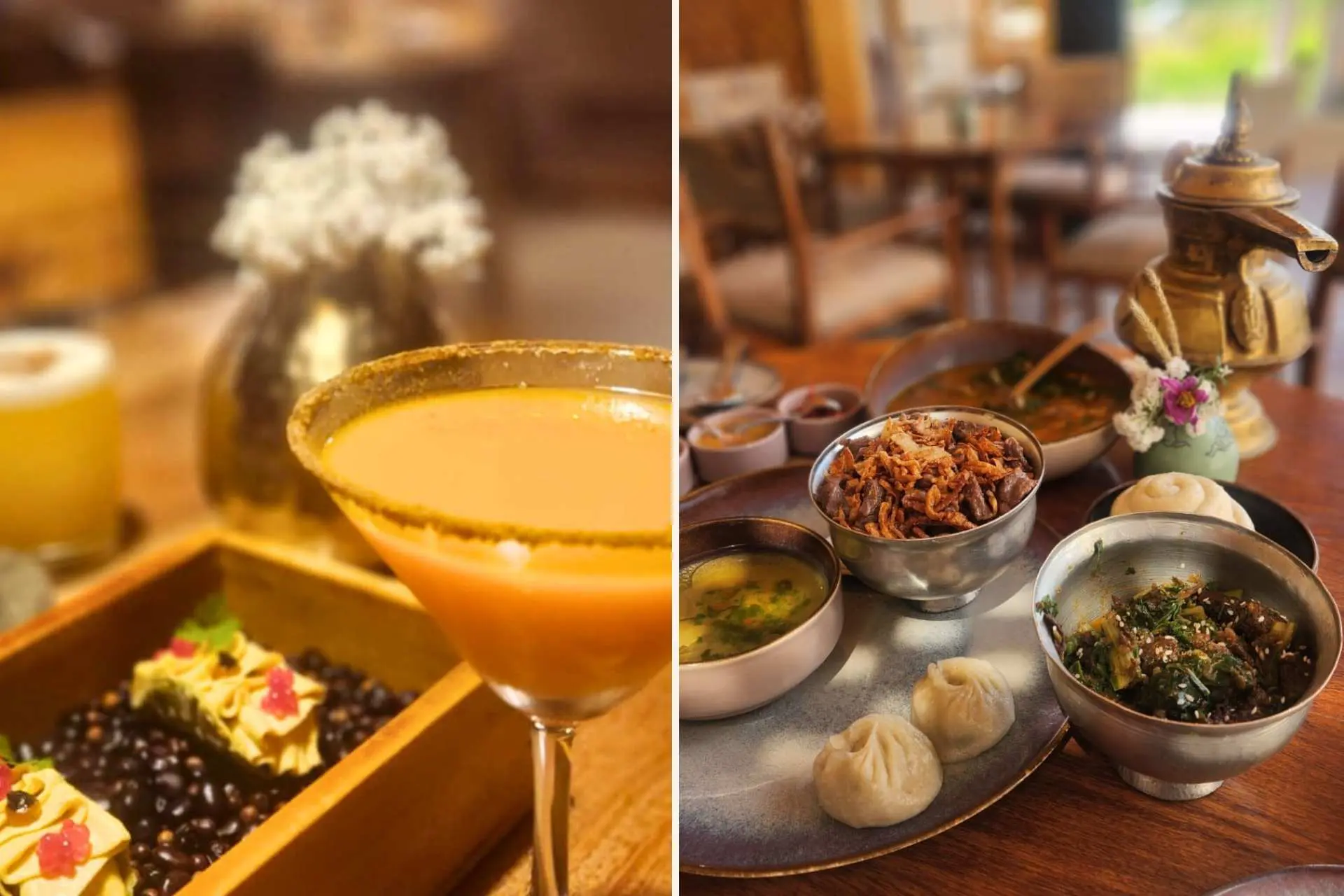
For something really special, there’s a tasting menu at Stok Palace, one of Ladakh’s most atmospheric spots, that weaves together local ingredients and storytelling. You can dine al fresco under a willow tree glade, or cosied up at a family-run guesthouse with three generations of Ladakhis around the table.
None of this is accidental. Leh’s been a Silk Route hub for centuries, and you can see it all documented at the Central Asian Museum. They’ve got photos from the late 1800s of bustling markets, traders, and families… the people who built the city’s food culture.
Alchi, Caravanserai with UNESCO Murals and Skyu
Alchi is unique: it’s a temple complex, not a monastery, and there are still traces of an old caravanserai where traders used to rest at night. Inside, UNESCO-protected murals reveal a fusion of influences: Buddhas depicted with Persian hairstyles and beaded ornaments (as well as hunting scenes… strange for a place of prayer!).
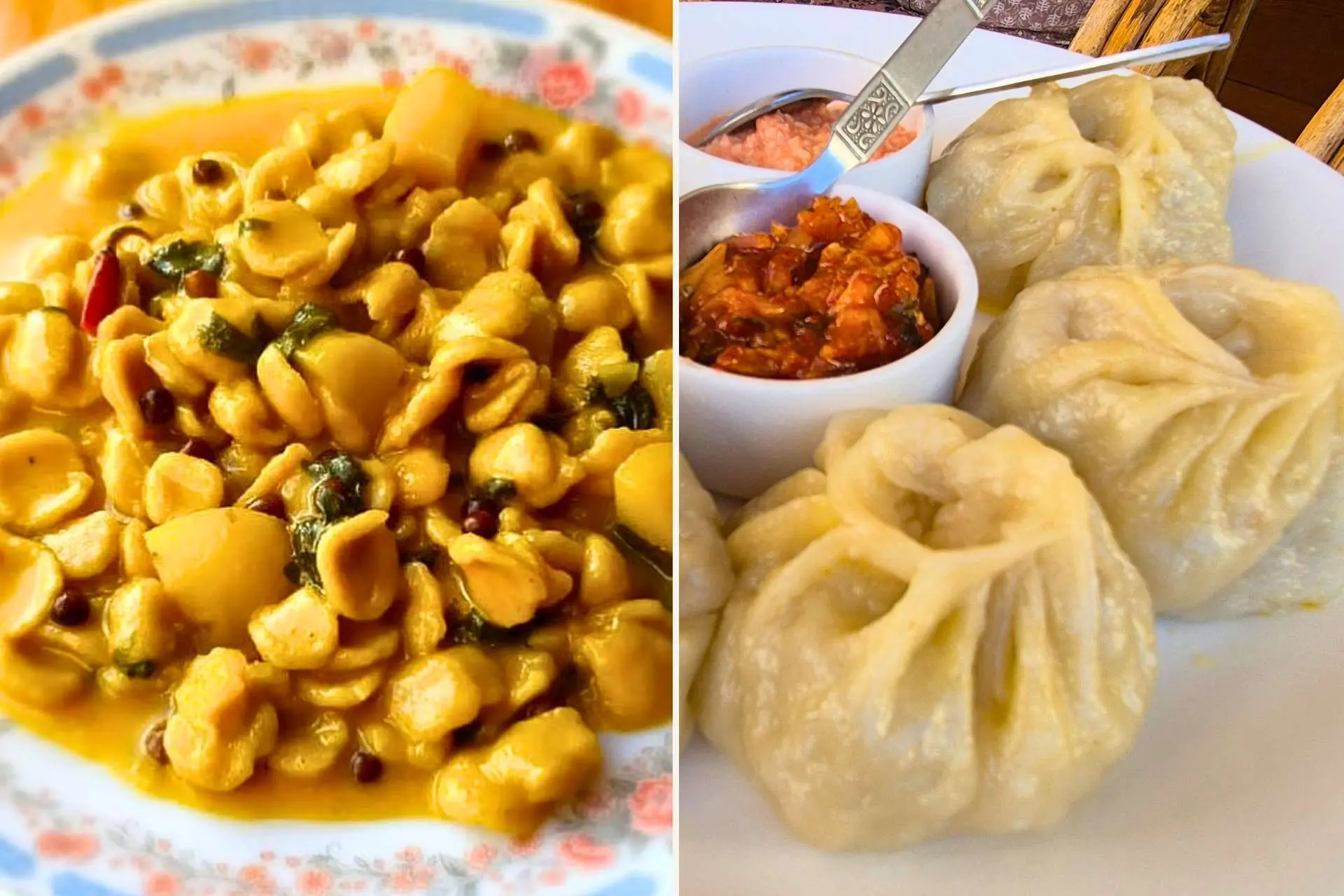
The food here tells the same story of mixing cultures. At Alchi Kitchen, they do cooking demos that blend Tibetan recipes with Central Asian influences, like skyu: this traditional stew with hand-rolled wheat pasta cooked in broth with root vegetables, chives, and sometimes mutton. This influence came over the mountain passes with the traders.
Crossing Ladakh, Passes and Perspectives
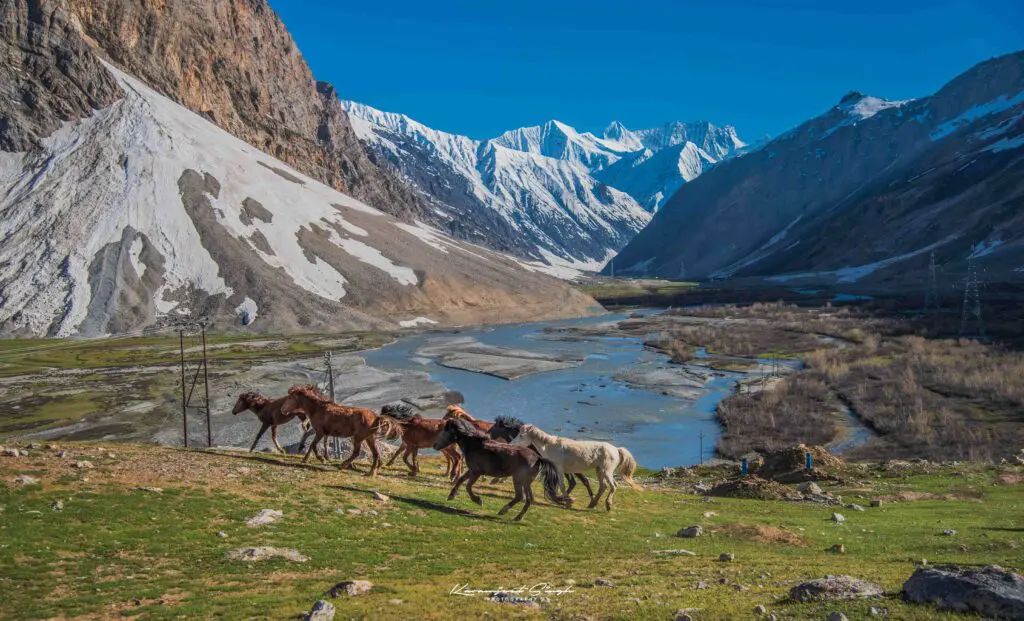
Food’s only half the story, though. Driving across Ladakh, I found myself traversing these epic high passes where the landscape transforms dramatically. One minute, I was staring at jagged snow peaks and glacial valleys around Dras, next I was among sand dune-like formations near Nubra. The mountains change colour with the minerals and different tectonic plates: reds, purples, greens, the whole spectrum.
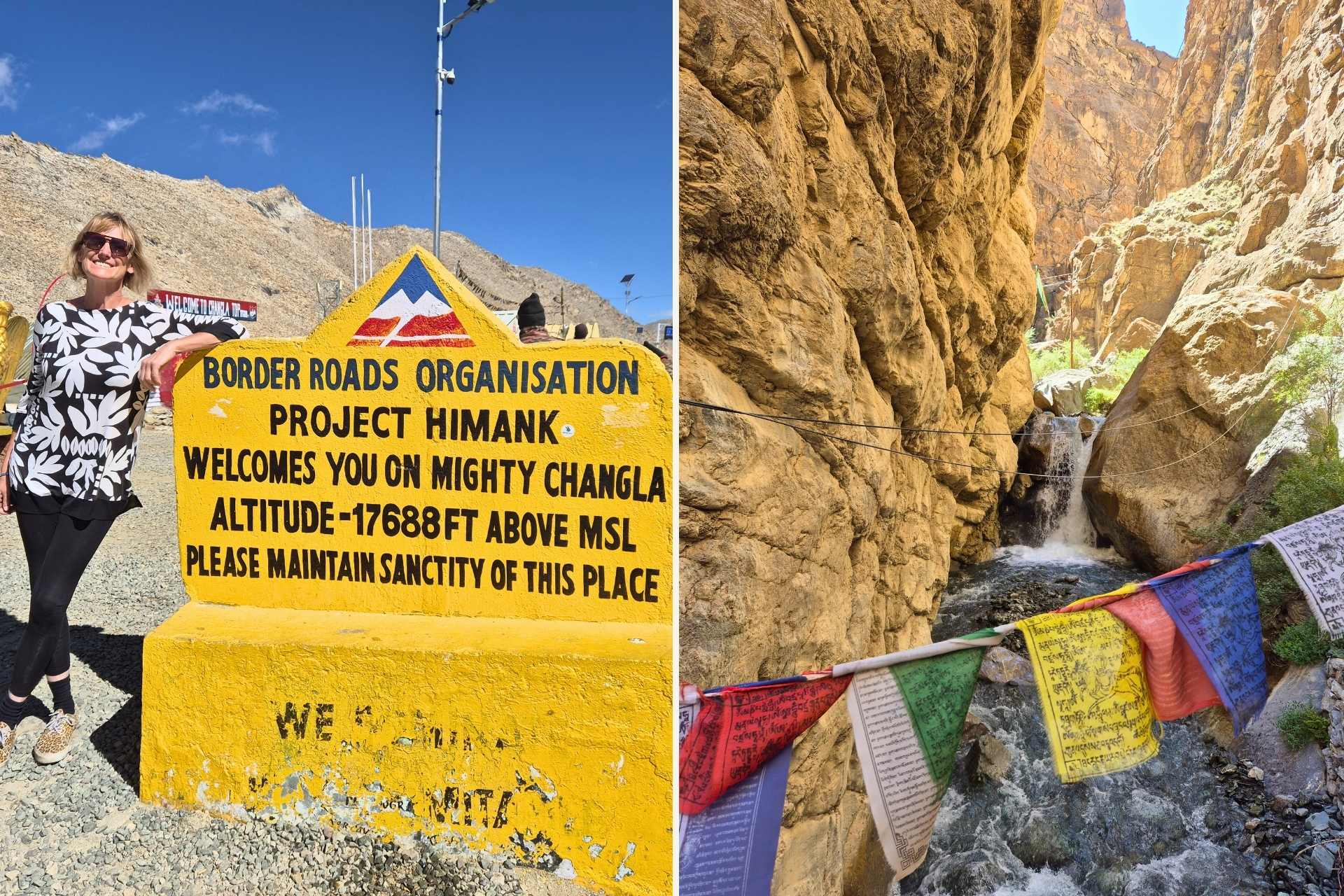
Now imagine doing this journey on foot instead of in a jeep. With a caravan of camels and horses, camping under freezing stars at altitude. The highest pass I crossed was Chang La at 5,391 metres.
My Final Reflections
Tracing the Silk Route through private tastings, family kitchens, and palace dining rooms adds a whole other dimension to an ETG Ladakh trip. For me, it changed how I understood this place. Ladakh stopped feeling remote and started feeling immense, threaded into centuries of movement, exchange, resilience and adaptation. The resilience of these mountain farmers, the way ingredients still travel valleys much as they once crossed empires, the fact that a bowl of skyu or a glass of apricot-infused cocktail can quietly carry the memory of caravans, all of it left me with a renewed sense of awe.
Ladakh may feel geographically remote but culturally, it feels boundless. And that, more than anything, is what stayed with me.
Explore our ETG Ladakh trips:
Follow in Sara’s footsteps in Ladakh
Please get in touch on 0207 924 7133.
Alternatively, fill out an online enquiry form to start your journey.
You may also like