

Reviving Ladakh’s Dying Arts
ETG India Specialist, Sara, ventured into Ladakh’s high-altitude villages to meet the last keepers of its ancient crafts, and discovered how thoughtful travel is helping breathe new life into these fading traditions.

By ETG India Specialist, Sara Wells, from her latest recce in Ladakh
For centuries, Ladakh’s artisans have crafted not just the objects of everyday life, but the very identity of the region. From finely woven pashmina shawls to hand-hammered copper utensils, these crafts carry the imprint of the Silk Route’s storied past.
Today, though, many of these skills are at risk of slipping away. Younger generations are pursuing different livelihoods, mass production is undercutting handmade value, and only a handful of families are keeping certain traditions going.
For travellers, encountering these artisans and trying your hand at their crafts offers something rare: a way to connect, while also playing a part in keeping Ladakh’s cultural fabric from unravelling.
Coppersmiths and Pottery
In the villages of Nimmu and Tsogsti, you can still hear the rhythmic clang of hammer on copper. Families here have kept the tradition of hand-hammering copper plates and vessels alive for generations. When you visit, you’ll see the whole process up close: fire, anvil, and goat skin bellows all in action.
Not far away, Likir’s potter works at a hand-spun wheel, shaping bowls and jugs from clay gathered in the mountains. Pottery is one of this region’s oldest crafts, but now just one family is keeping the traditional methods going. Mass production has hit this art form the hardest.
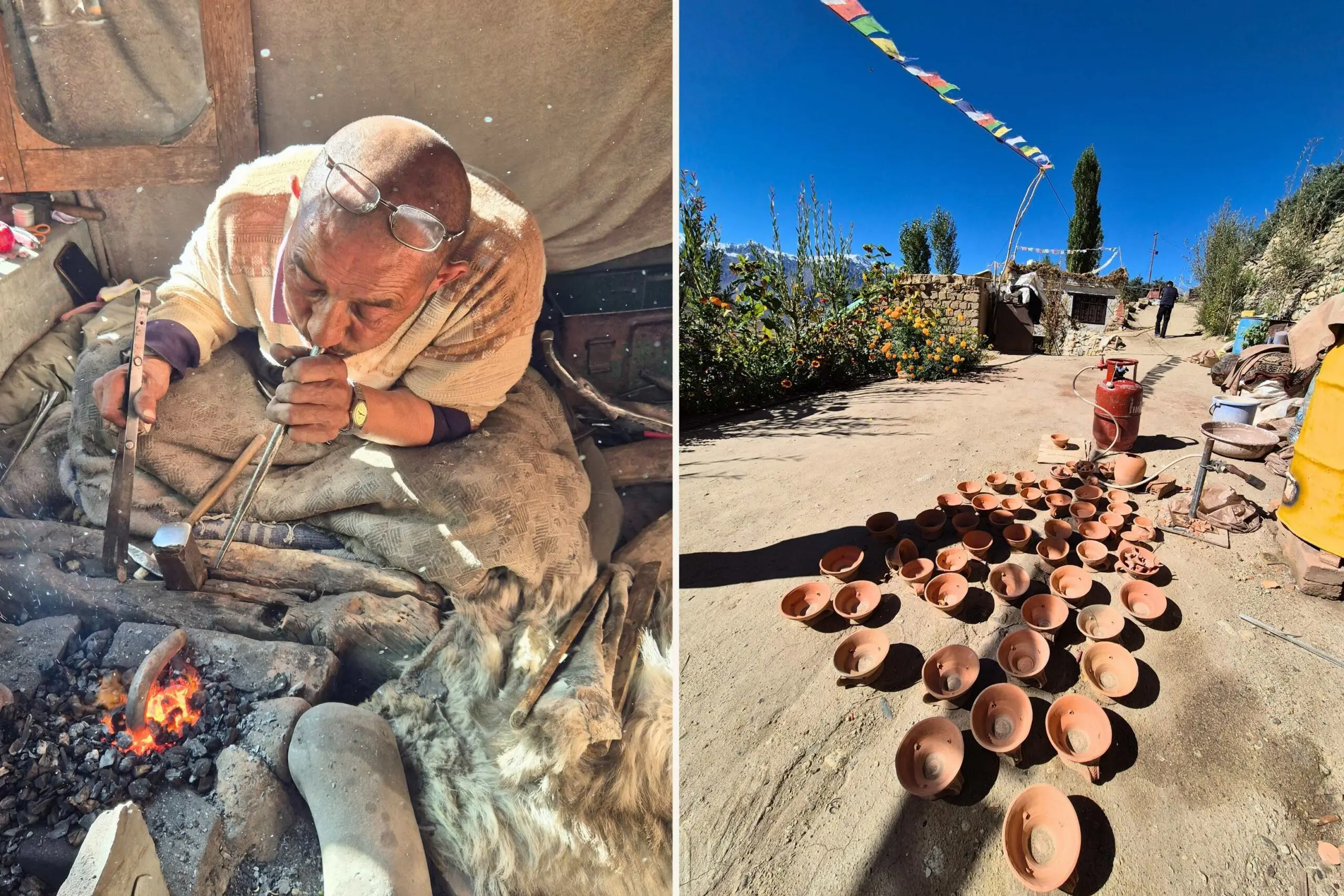
The family typically pitch-in for a couple of hours each evening making Dias (Indian ghee lamps) to sell. Workshops with the head potter give visitors a chance to have a go themselves, and they’re especially fun for kids who love getting their hands dirty and being creative.
Weaving and Stone Masonry
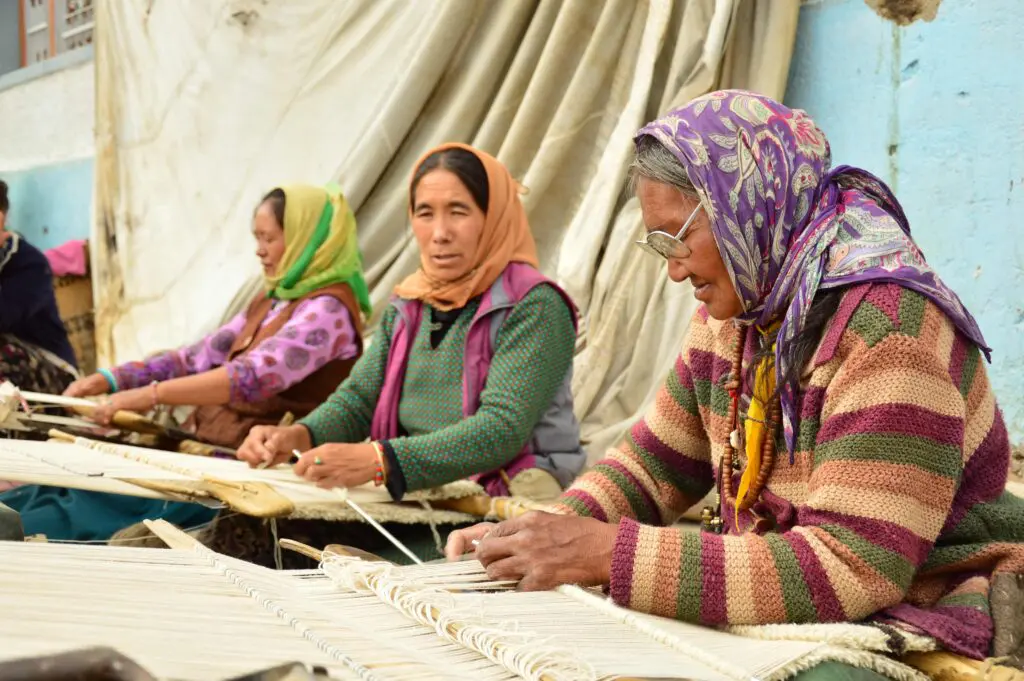
Further north in Turtuk, Ladakh meets Baltistan. Artisans here show you the intricacies of loom-weaving and the precision of stone masonry, skills that literally built and insulated entire villages.
Turtuk sits in the Karakoram ranges as India’s northernmost village; the rest of Baltistan lies across the border in Pakistan. It’s a place where heritage isn’t just preserved for its own sake, but it’s bound up with survival, so these traditional skills are still vital.
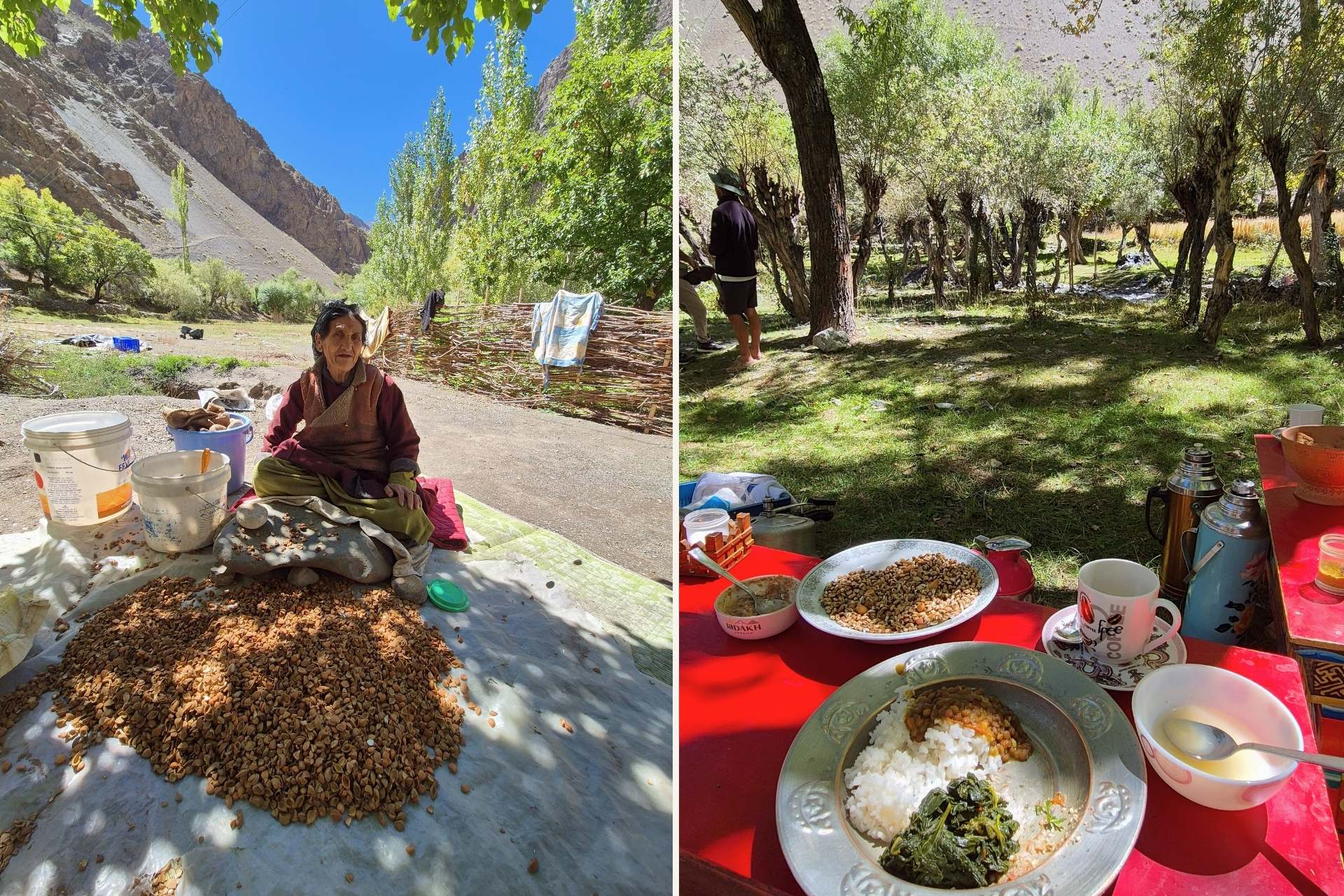
The village of Tar is also banking on weaving, among other ventures, to secure its future. It used to be a thriving agro-pastoralist community where eighty people worked together, herding hundreds of sheep and goats into the mountains and growing crops of barley, wheat, vegetables and apricots. Now there are just fifteen residents left… many families have moved away in search of other livelihoods. By welcoming international visitors and weaving, picnic lunches and homestays, the village is hoping to draw younger generations back home. I loved my picnic lunch in a gorgeous glade here.
Pashminas and Wool Weaving
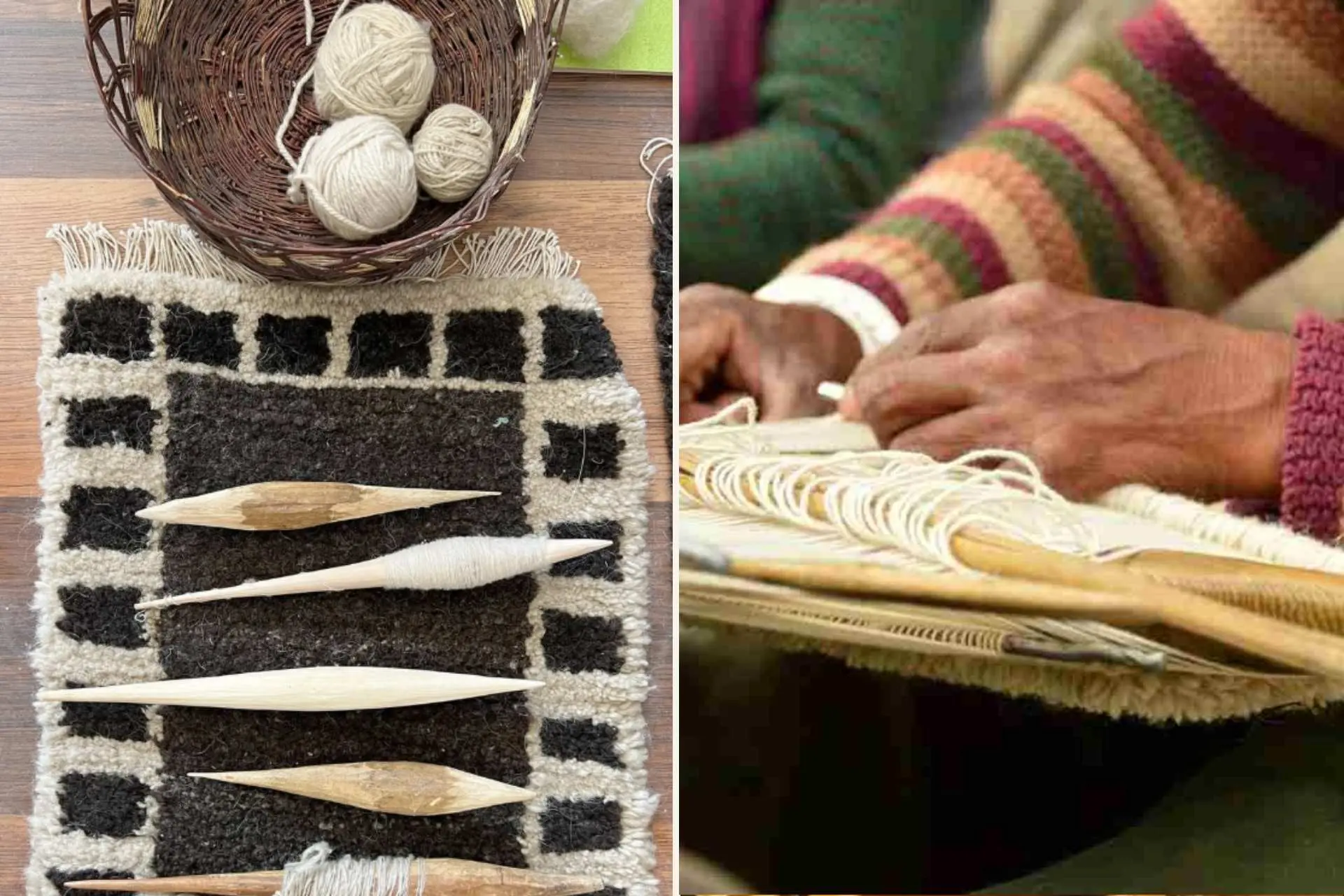
Ladakh’s most famous textile is pashmina, spun from the wool of high-altitude goats. Workshops with groups like ‘Lena Ladakh Pashmina’ give you hands-on experience in natural dyeing and weaving, and you quickly realise just how much work goes into each scarf or shawl.
For a deeper dive into the story, the Jigmat Couture Textile Museum of Ladakh showcases an impressive range of costumes and textiles, some woven right there in Ladakh, others that arrived via ancient trade routes. It’s where you can trace the country’s fabric heritage from its earliest days through to today.
‘Sustainabalti’ initiative and Brilliant Boutique Hotels
Some of our ETG-favourite hotels across Ladakh are doing a wonderful job suppoting these crafts, too.
At Virsa in Baltistan, their ‘Sustainabalti’ initiative runs artisan workshops; everything from loom-weaving and copper-smithing to wood and stone carving, making sure the profits go back to the community. Virsa itself is built from locally sourced materials like dressed stone, riverbed mud, timber and hand-carved wood, all crafted by local artisans.
At Dolkhar, you’re surrounded by interiors that manage to be both luxurious and rustic. Think handwoven rugs, stone-carved basins, pashmina throws, and sophisticated woollen rugs. But there’s more to the décor than just aesthetics… Dolkhar supports 40 Ladakhi artisans, many of whom sell their work in the hotel’s boutique.
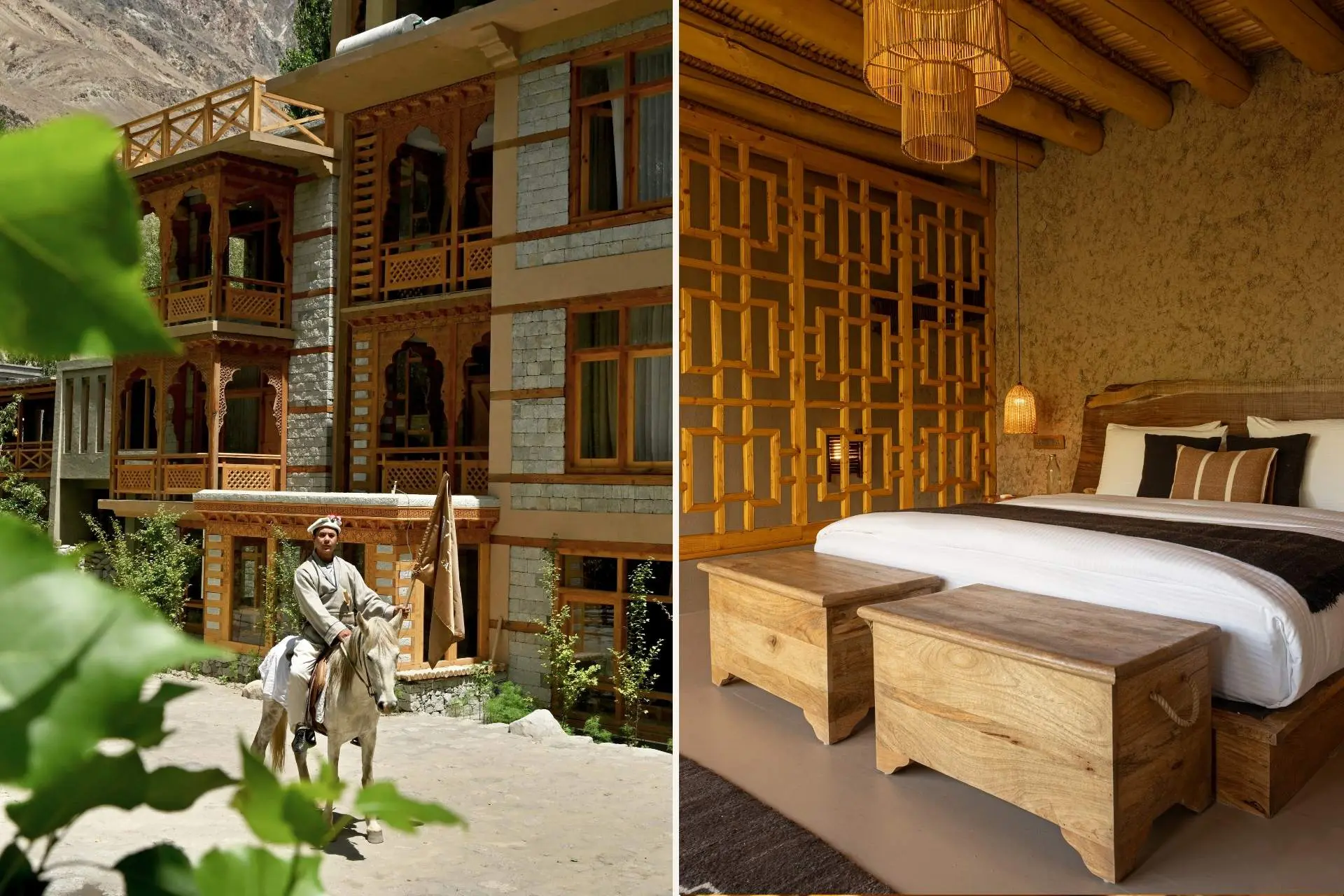
When you check into places like these, your stay is directly helping to sustain the very traditions that make them so beautiful.
Shopping with a Story
Leh’s boutiques offer some of the most thoughtful shopping you’ll find in the Himalayas:
- Jigmat Couture – innovative textiles with a strong design ethos.
- Lena Pashminas – traditional shawls and weaving workshops.
- Artisan Palace – carefully curated, high-quality crafts where you know exactly where everything comes from.
- Looms of Ladakh – a cooperative creating luxury cashmere clothing.
And even better than buying something? Rolling up your sleeves and giving it a go yourself. There’s nothing quite like threading wool through a loom or tapping a hammer against glowing copper to understand the extraordinary skill each object demands.
My Final Reflections
Ladakh’s crafts are far more than just souvenirs. They are living proof of patience, resilience and inherited skill. The choice you make as a traveller, where you stay, where you shop, who you spend time with, have real consequences here.
Step inside a weaving room or a copper workshop and admiration comes naturally. The real privilege is being welcomed into spaces where these traditions are still practised, witnessing the precision and pride behind every piece, and knowing your visit helps ensure they continue.
Follow in Sara’s footsteps in Ladakh
Please get in touch on 0207 924 7133.
Alternatively, fill out an online enquiry form to start your journey.
You may also like