


I recently had the very fortuitous chance to experience South India’s raucous Pulikali (‘Tiger Dance’) festival. Held in the city of Thrissur (or Trishur) every year, Pulikali is a folk festival timed to coincide with the fourth day of the broader Onam (harvest) festival which is celebrated in different ways throughout Kerala.
Said to be over two thousand years old, Pulikali is thought to have been instigated by ancient local monarchs who were able to forge the city’s rich cultural heritage into what is essentially a riotous make-up and dance competition.
Experience Travel Group‘s dynamo Kerala partner, Sinna had called me when he finally had confirmed dates for the festival and urged me to jump on a plane from Sri Lanka solely to catch this very unique gathering.
Having experienced many of Kerala’s vibrant religious and cultural festivals over the years I had been trying without success to feast my eyes and ears on the legend that is Pulikali. Needless to say, it was well worth the wait.
Even amongst India’s myriad of colourful and noisy outpourings, its carnival-like atmosphere is truly unforgettable.
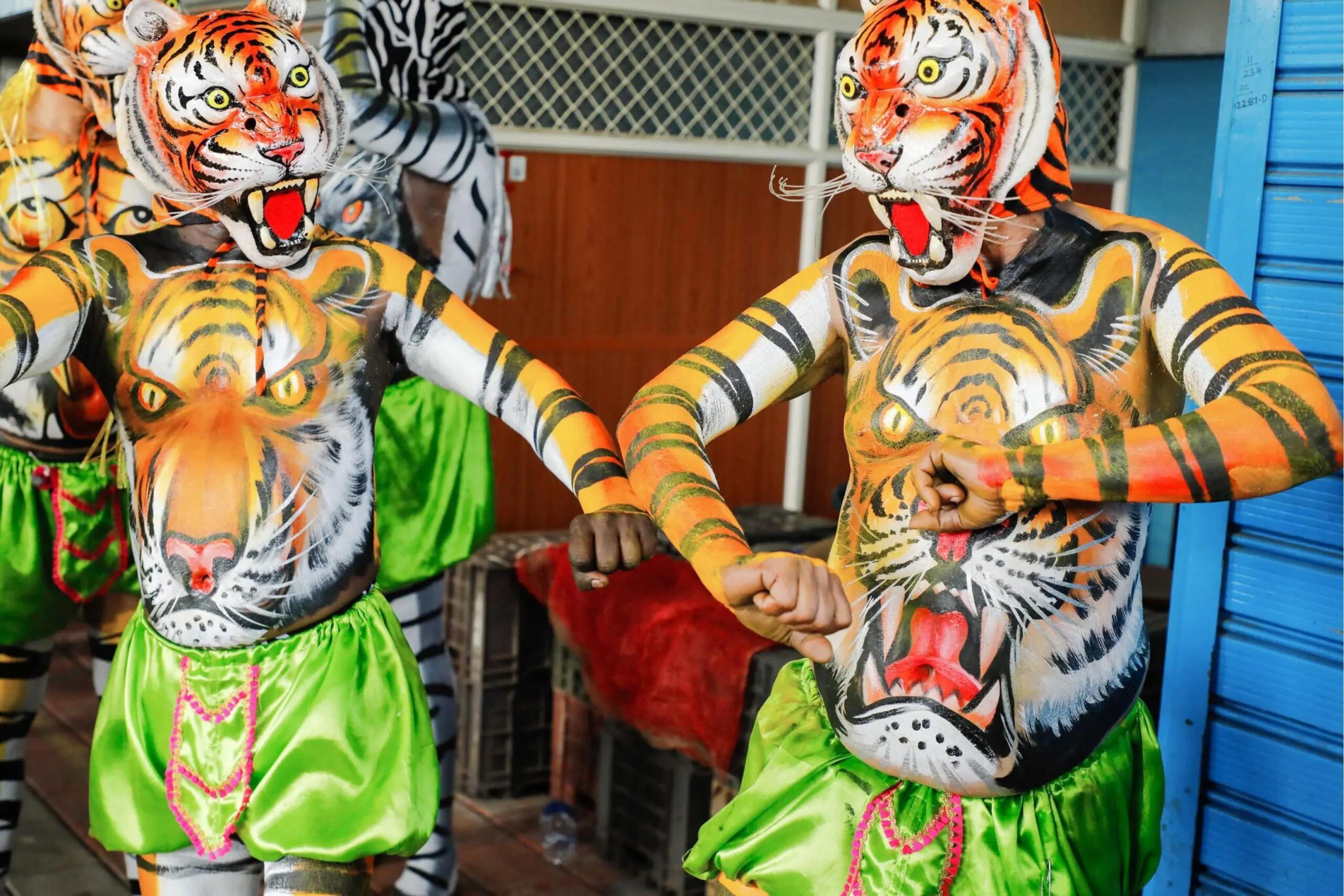
Trishur is considered to be Kerala’s cultural and artistic capital and Pulikali taps into this creative energy on a truly epic scale.
My guide par excellence Sinna talked me through the rituals and routines of the event. We followed a specific troupe from the beginning of the day as they prepared their make up and costumes, to the culmination of the vast procession of mesmerising dance, drums, performance and pomp around the city centre’s Swaraj Round; a giant ring road flanked by bustling shops, markets, food stalls and hotels.
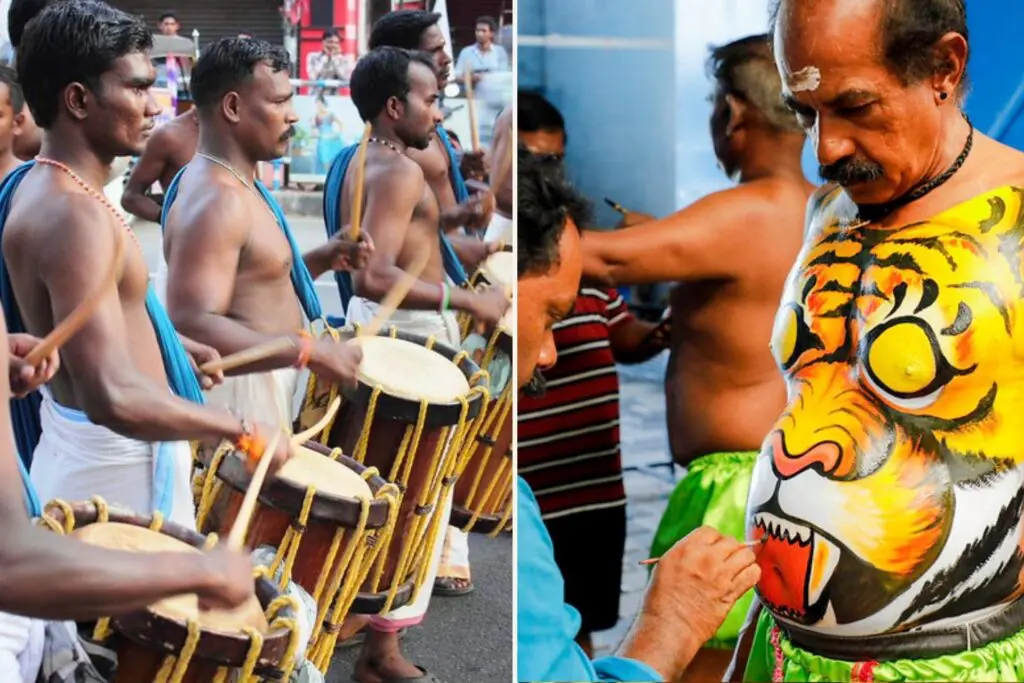
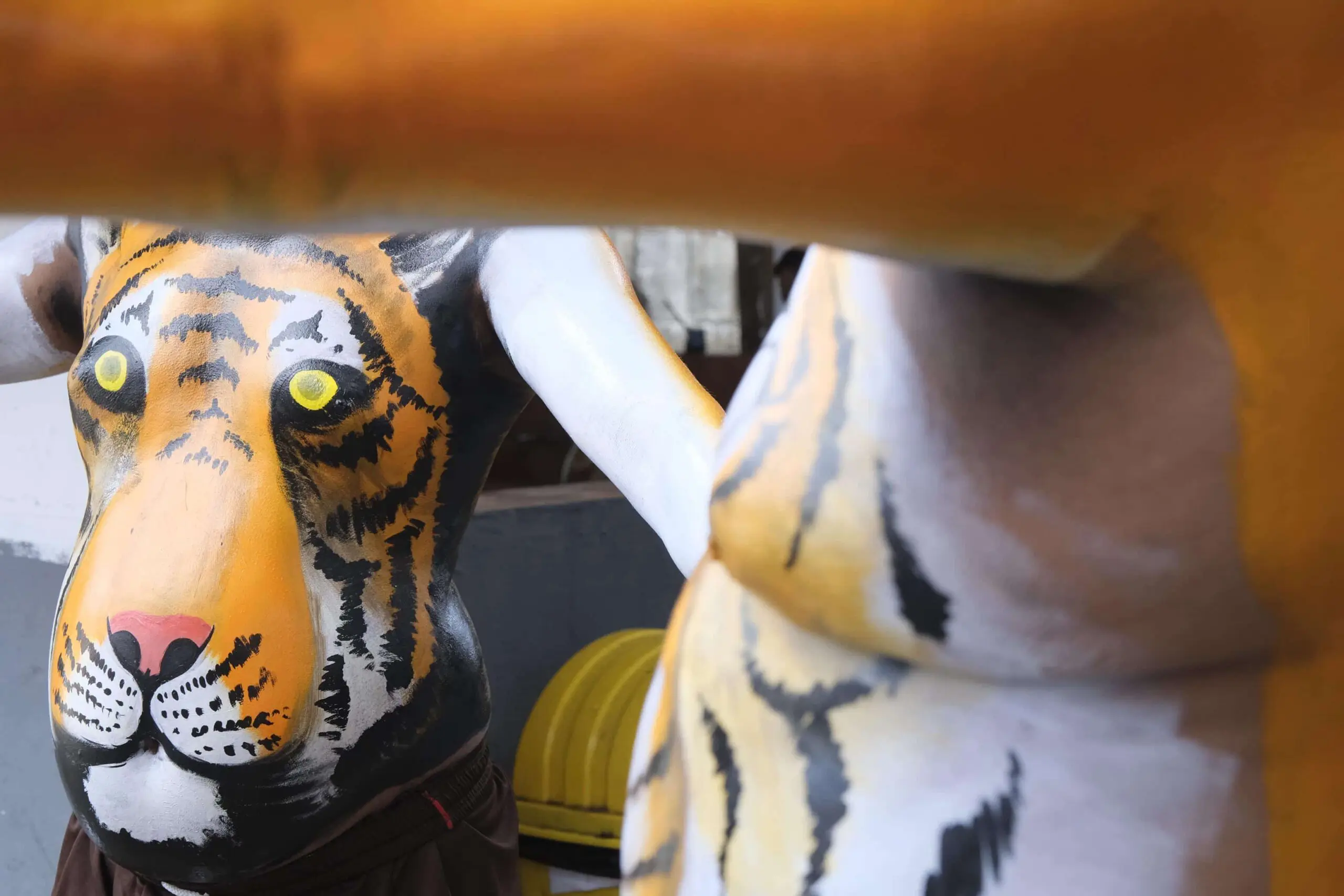
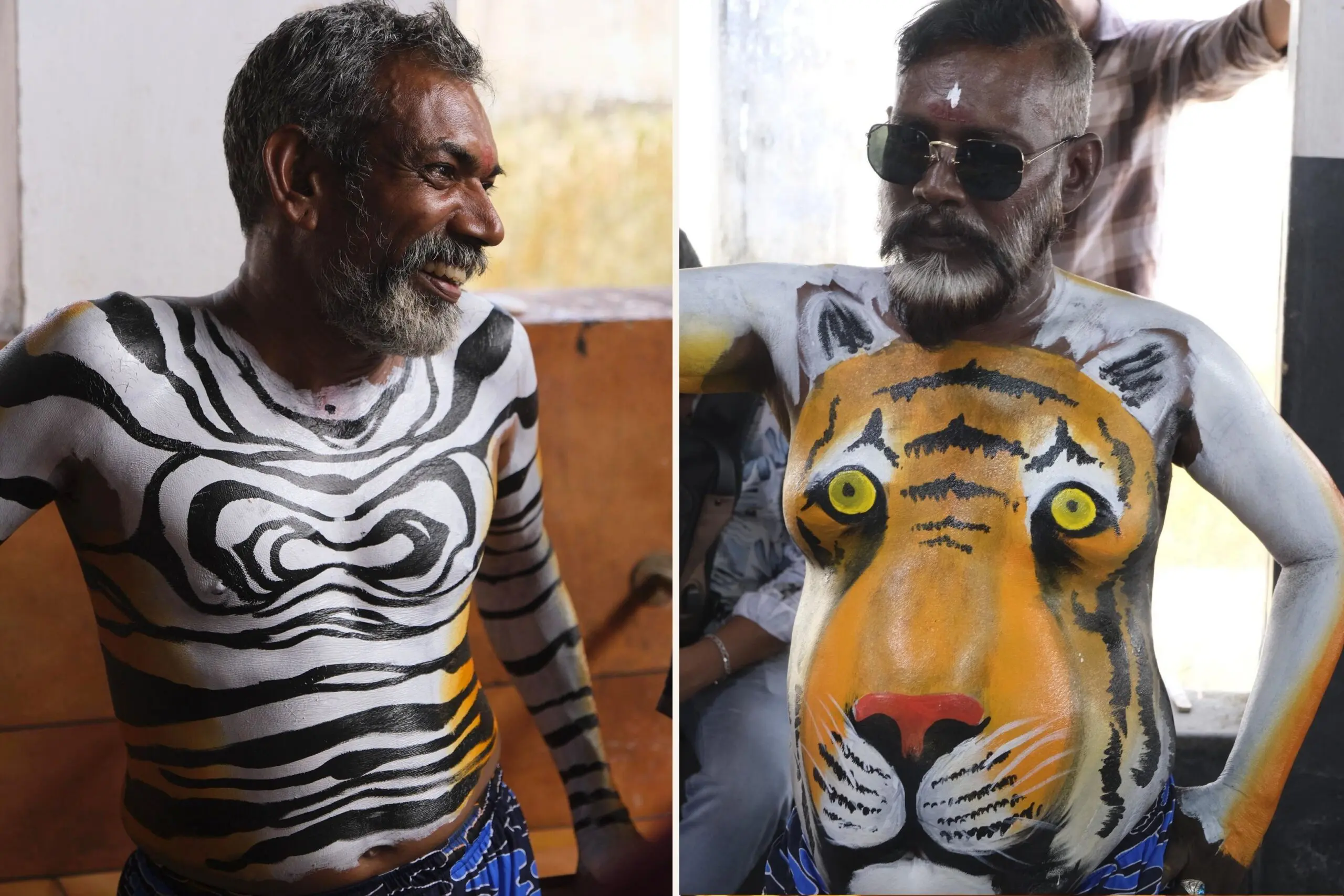
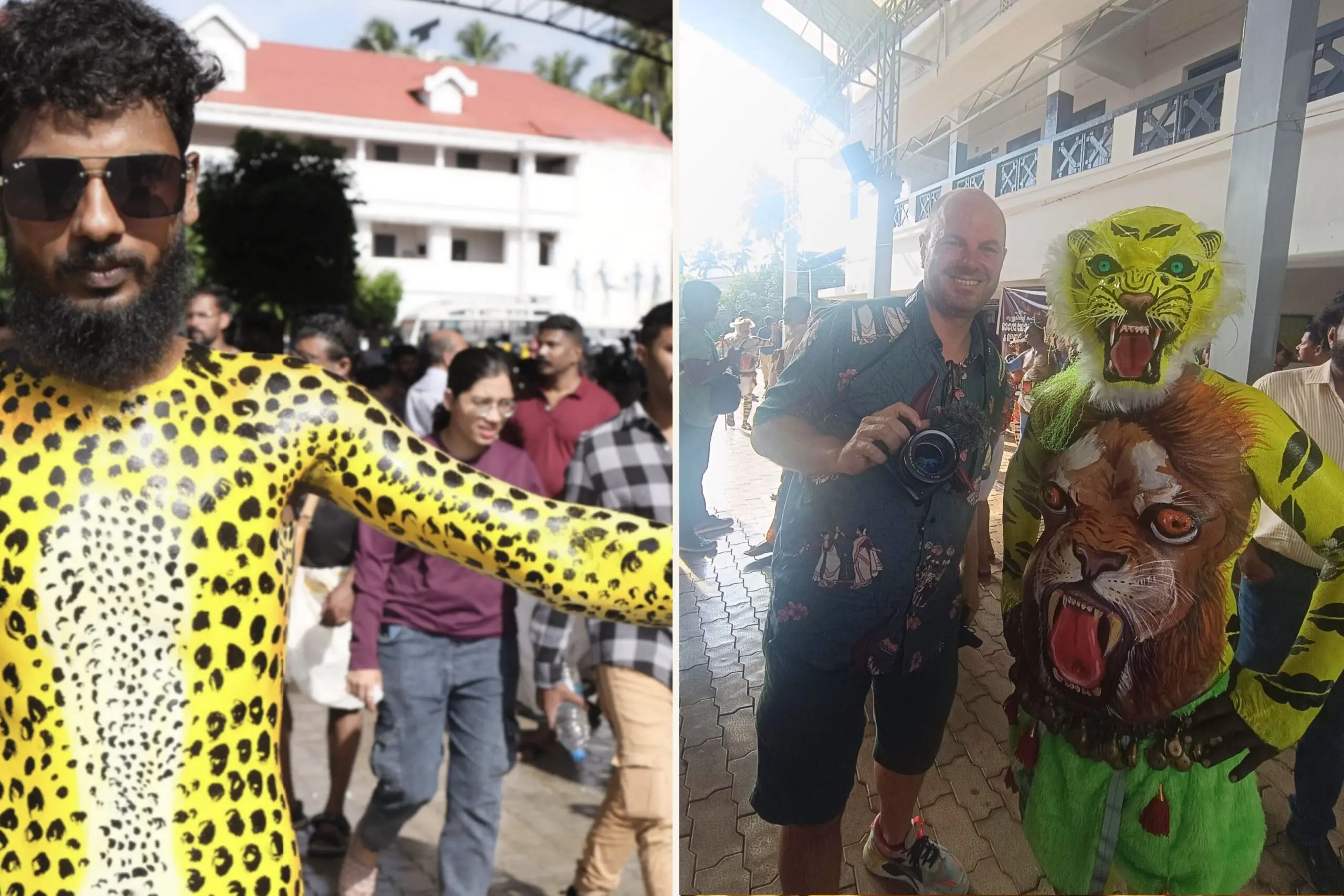
The basic premise of the performance is a dance of cat and mouse between a hunter and his prey; the tiger. This is the hook that facilitates elaborate costumes and, particularly, incredibly intricate, full-body make-up.
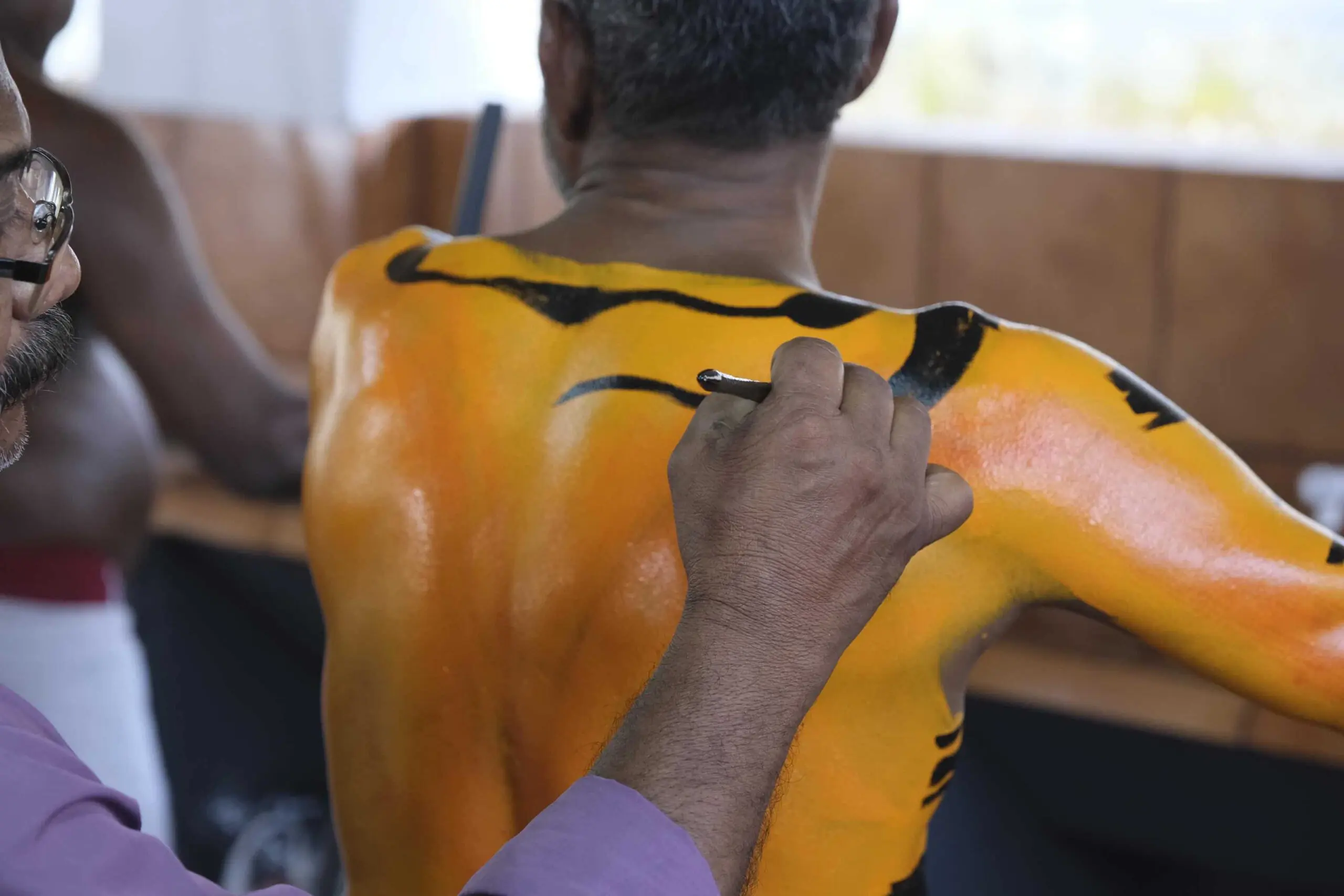
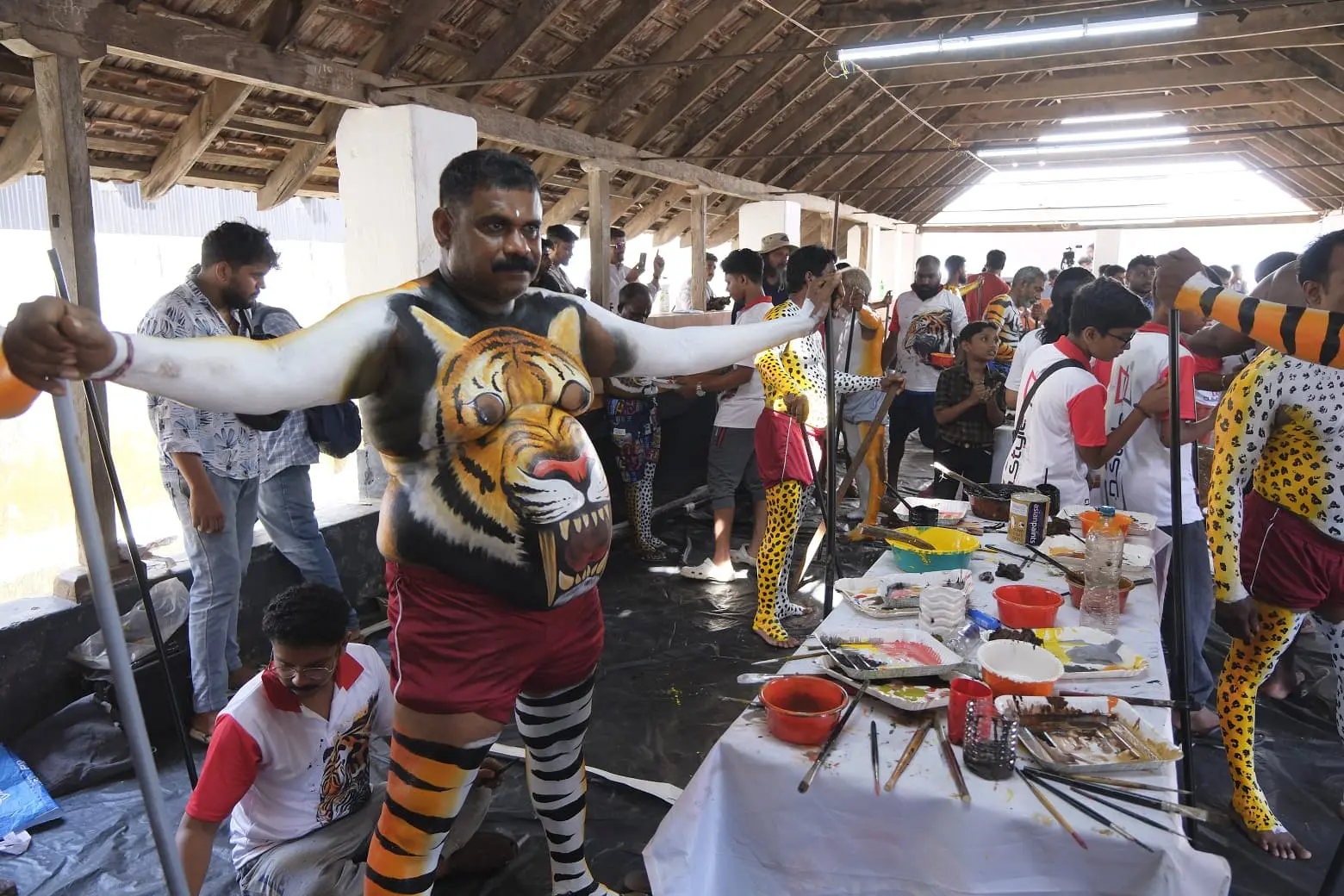
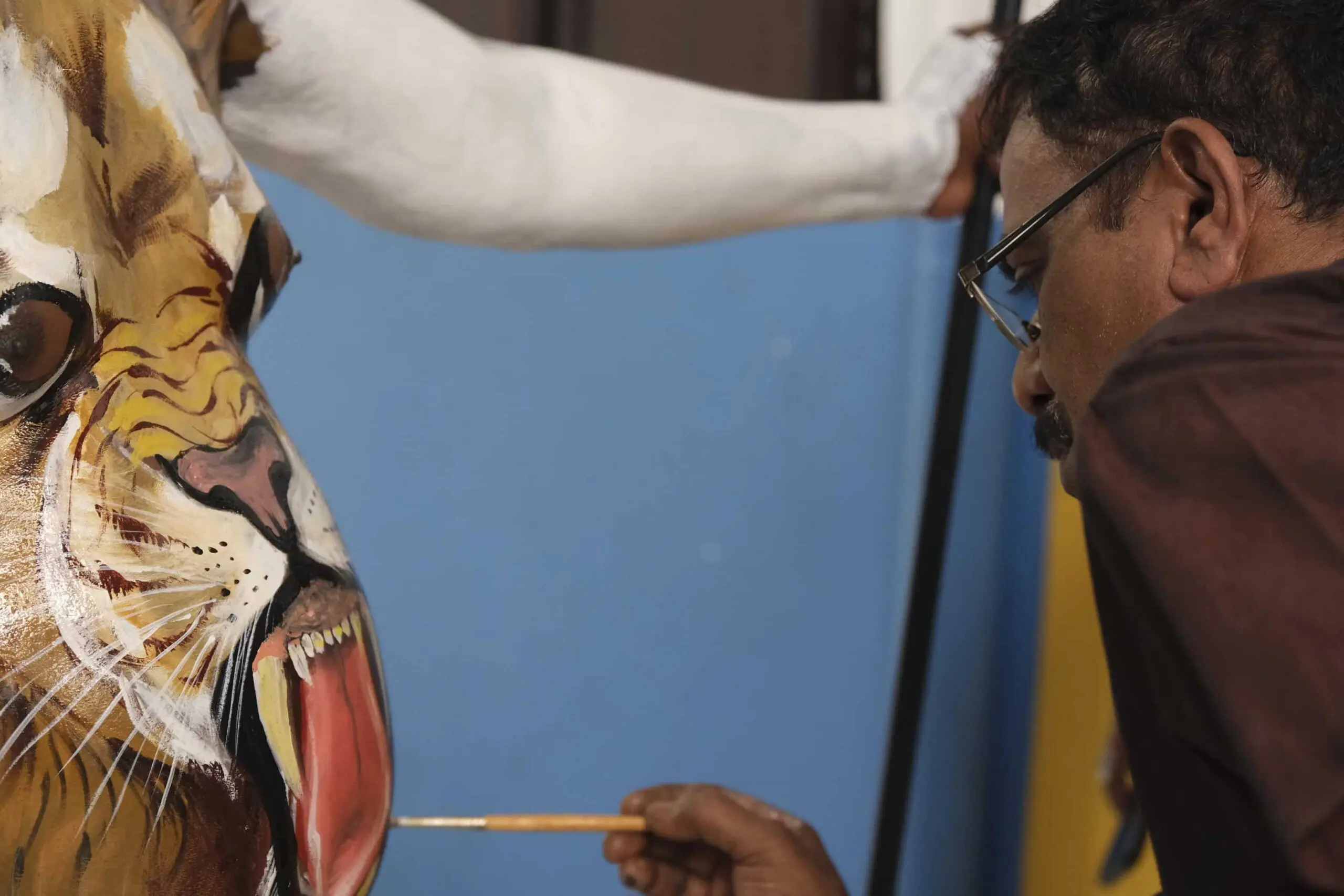
Performers are separated into troupes, with preparations starting at dawn. Families, friends and volunteers congregate to share the laborious and time-consuming work of creating a pack of tigers from nothing. Performers stand with their arms supported by poles while they are given layer upon layer of paint. Painstakingly, they have to wait while each layer of paint dries before more can be applied. The end result is nothing short of spectacular.
1
of
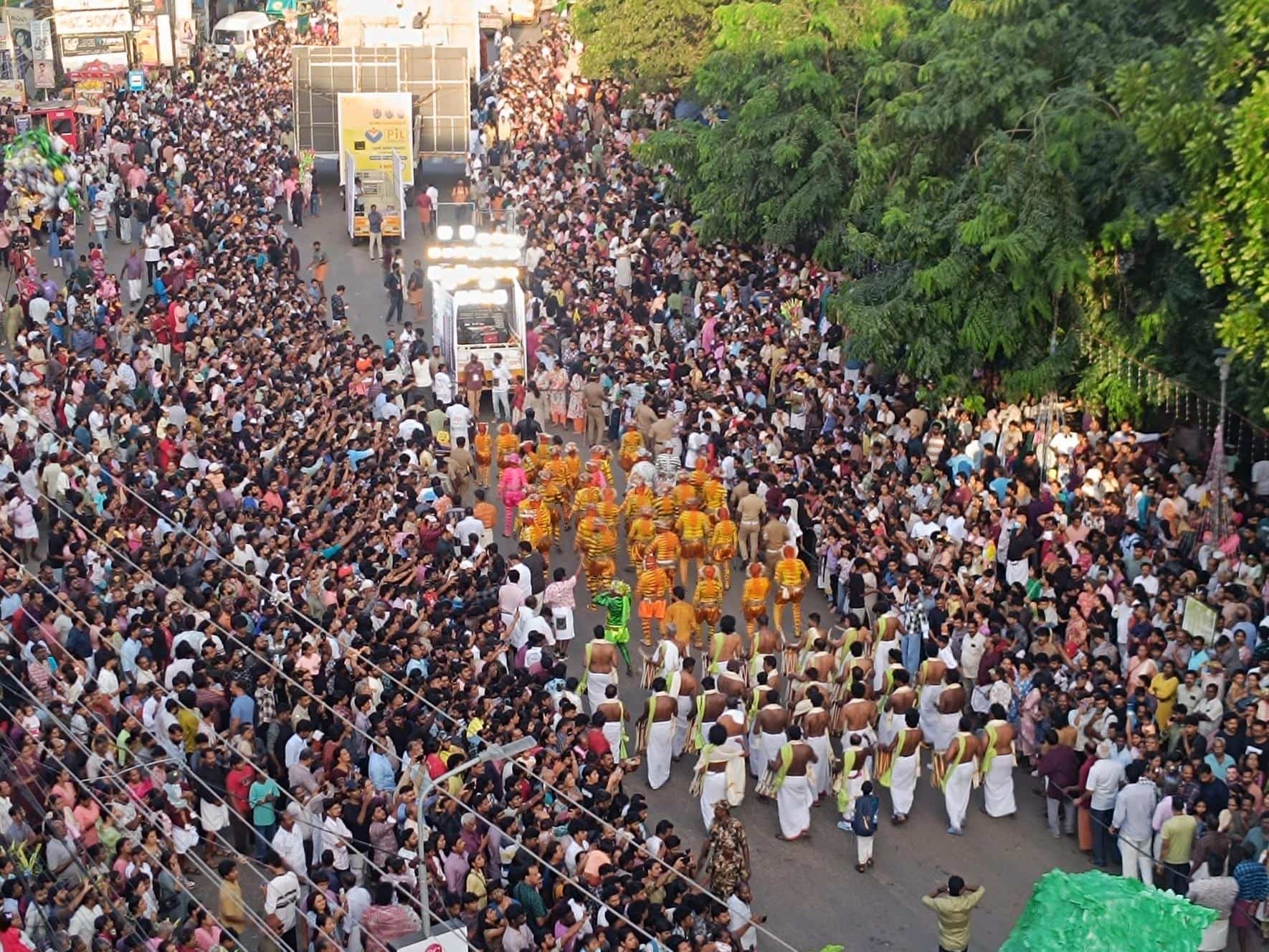
In the late afternoon the various troupes start their marches through the windy roads that lead to Swaraj Round. Before marching, the troupes are introduced to their own communities, emerging one by one into a circle as the rhythmic and up-tempo rhythms reach deafening levels and the performers start to really get into character before the troupe spills out onto the street.
Lead by drummers and musicians playing traditional instruments such at the Chenda, Thakil and Udukku, the troupe then moves into the streets. Each tiger is also adorned with a large belt with bells that add to the cacophony of sound.
When the troupes reach the Round, they are joined by large and ornately decorated floats depicting folk myths and legends. The performers then circle the vast ring road as onlookers clamber from all available spaces, street level and above, to catch a glimpse of this mesmerising spectacle.
As Pulikali is also a competition, judges watch closely as each troupe performs, assessing the artistry of the body paint and their dancing. By the end of the evening, one troupe is crowned the winner.
Pulikali is open to all and usually takes place in late August or early September.
It’s a joyful slice of Kerala life that few international visitors ever witness. For travellers curious to see a different side of South India, this is exactly the kind of rare event we love to build into an ETG adventure.

FEELING INSPIRED TO GO?
Explore our ETG Kerala trips, then talk to our specialists.
Feel free to get in touch or call us.
You may also like