Exclusive Art & Architecture Tours in Sri Lanka: ARTRA x ETG
Explore Sri Lanka through this lens, gaining exclusive access into Bawa homes, ‘43 Group modernists and contemporary artists from Colombo to Jaffna.

With ARTRA, the Sri Lankan art organisation, we've designed a way into Sri Lanka through the artists and architects who have painted, built and reimagined the island over the last hundred years.
Through our partnership with ARTRA, our travellers are welcomed into private homes, personal collections and exhibitions that most visitors to the island never see.
ARTRA magazine’s editors know the collectors, families and artists behind these places by name. That gives our travellers access that’s practically impossible without an introduction, from a Geoffrey Bawa house in Colombo to a former bunker in Jaffna.
Here’s how you can trace Sri Lankan art from the ’43 Group modernists to the second generation of contemporary artists, many of whom are overlooked, with insights from Azara Jaleel, the founder and editor-in-chief of ARTRA Magazine. We design these visits into your journey, so each one sits at the point in your trip where it makes most sense.
Colombo
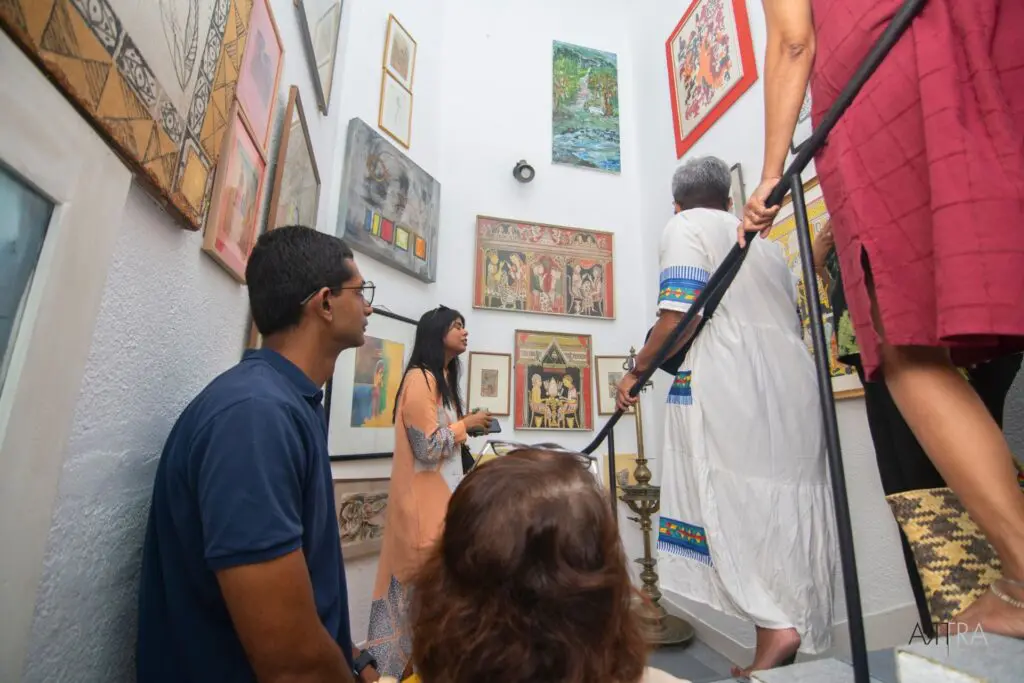
Home of Harry Pieris of the ‘43 Group (The Sapumal Foundation)
Harry Pieris was a member of the ’43 Group, the island’s foremost modernist movement. The group built a visual language of its own, drawn from Sri Lankan settings and Sri Lankan spiritual life, with no interest in borrowing Western grandeur. The collection runs to more than 1,000 items, including over 200 paintings and drawings tracing Sri Lankan art from the 1920s to today. It is the only public space in the world holding work by all ten core members of the ’43 Group. Pieris never hung it like a gallery.
As Azara puts it: “He showcased the works of his members as friends… He has placed them across the living room, across the library.”
You see the paintings the way his guests did.
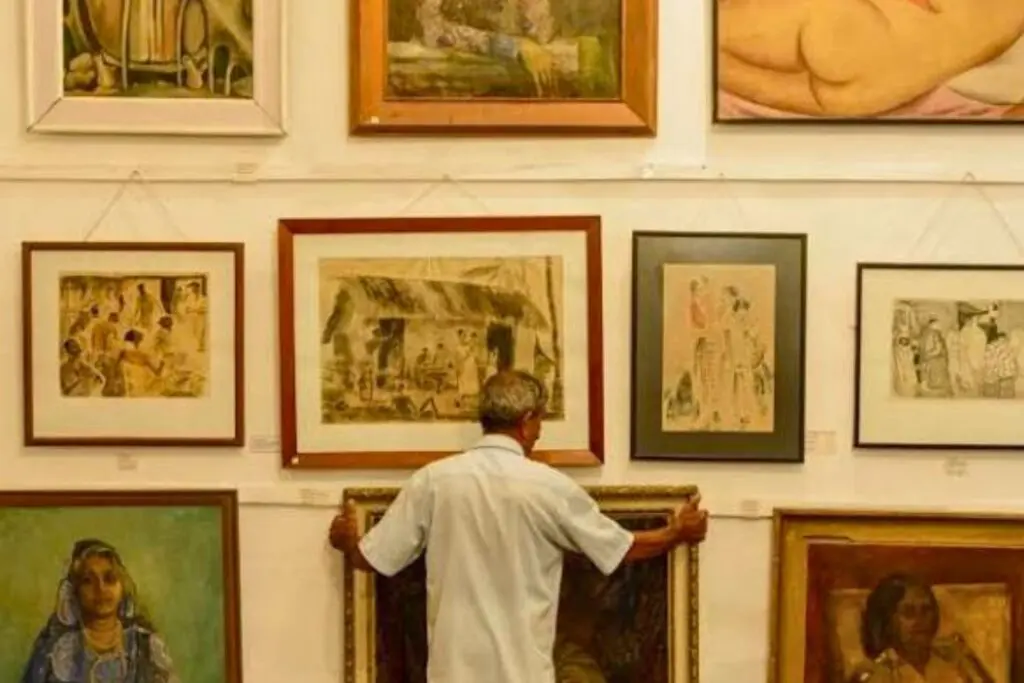
The Sapumal Foundation. Credit: ARTRA
De Soysa House (Private home, designed by Geoffrey Bawa)
Geoffrey Bawa is regarded as one of the most influential Asian architects of the 20th century, and De Soysa House is one of his few private homes. Here he reworked the pila, the traditional verandah, so that half the building is open to the air and folded around the trees.
The house was designed around a tree and around the collection of its owner, Chloe de Soysa. She collected women modernists who exhibited alongside the ’43 Group and were overshadowed by it. Their work hangs here next to the men who eclipsed them.
“It’s a private home, people still live there,” Azara reminds us, which is exactly why you won’t find it on a standard Colombo city tour. The only way to visit is as part of an ETG holiday.
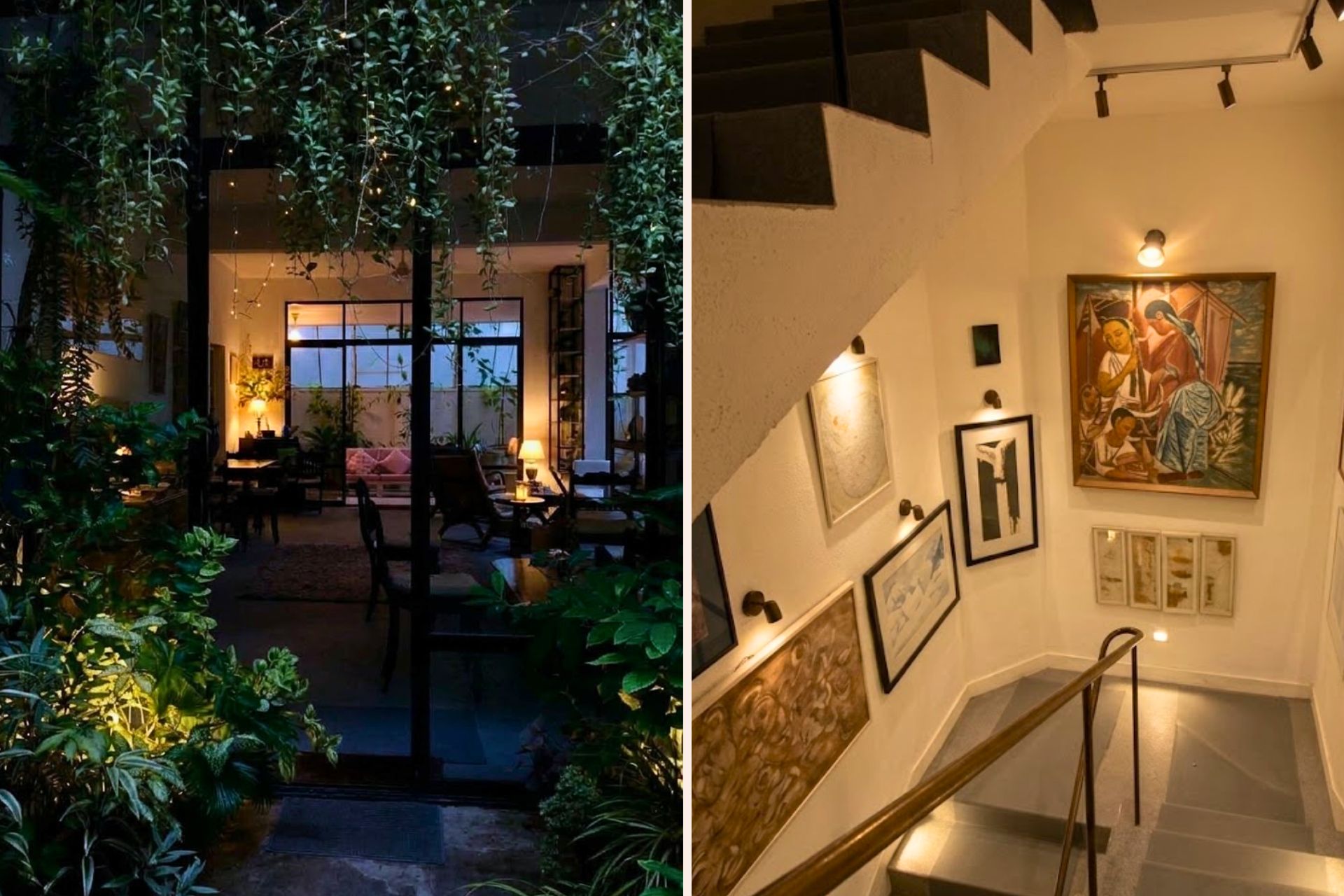
De Soysa House. Credit: ARTRA
Bentota
Brief Garden & Home by Bevis Bawa
Go to De Soysa House and then to Brief, and you’ll see the contrast between the two brothers’ style.
“One is known for architecture and more clinical, clean lines, whereas Bevis is much wilder,” says Azara.
Where Geoffrey worked in geometry, Bevis Bawa mass-planted single tropical species into dense walls of green, then hid things inside them: winding paths, reflecting pools, moon gates and outdoor showers, ideas he took from Sri Lanka’s monastic traditions.
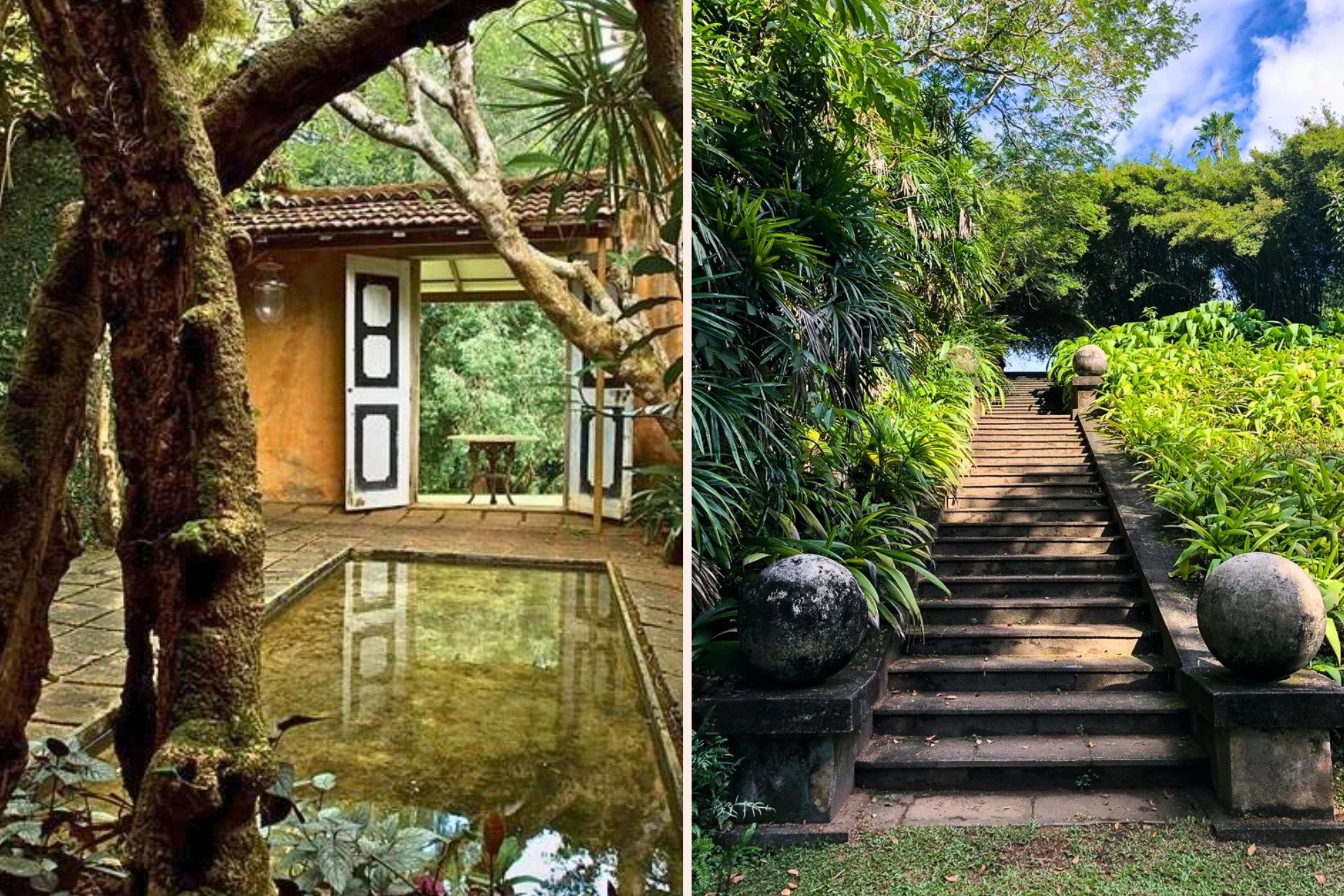
Brief Garden. Credit: ARTRA
Galle Fort
In 2022 the Aragalaya, Sri Lanka’s citizens’ protest movement, brought the country close to a standstill.
“We were in queues to get petrol,” Azara remembers. “It was very much murky water, but then it also became fertile soil for the second generation of contemporary artists.”
Those artists helped drive the protest site at Galle Face in Colombo.
ARTRA now runs rotating exhibitions of their work in spaces across Galle Fort that were never meant to be galleries, among them Galle Fort Hotel, The Merchant and The Charleston. You walk the fort’s streets and step into a hotel to find work by the artists who came out of the Aragalaya.
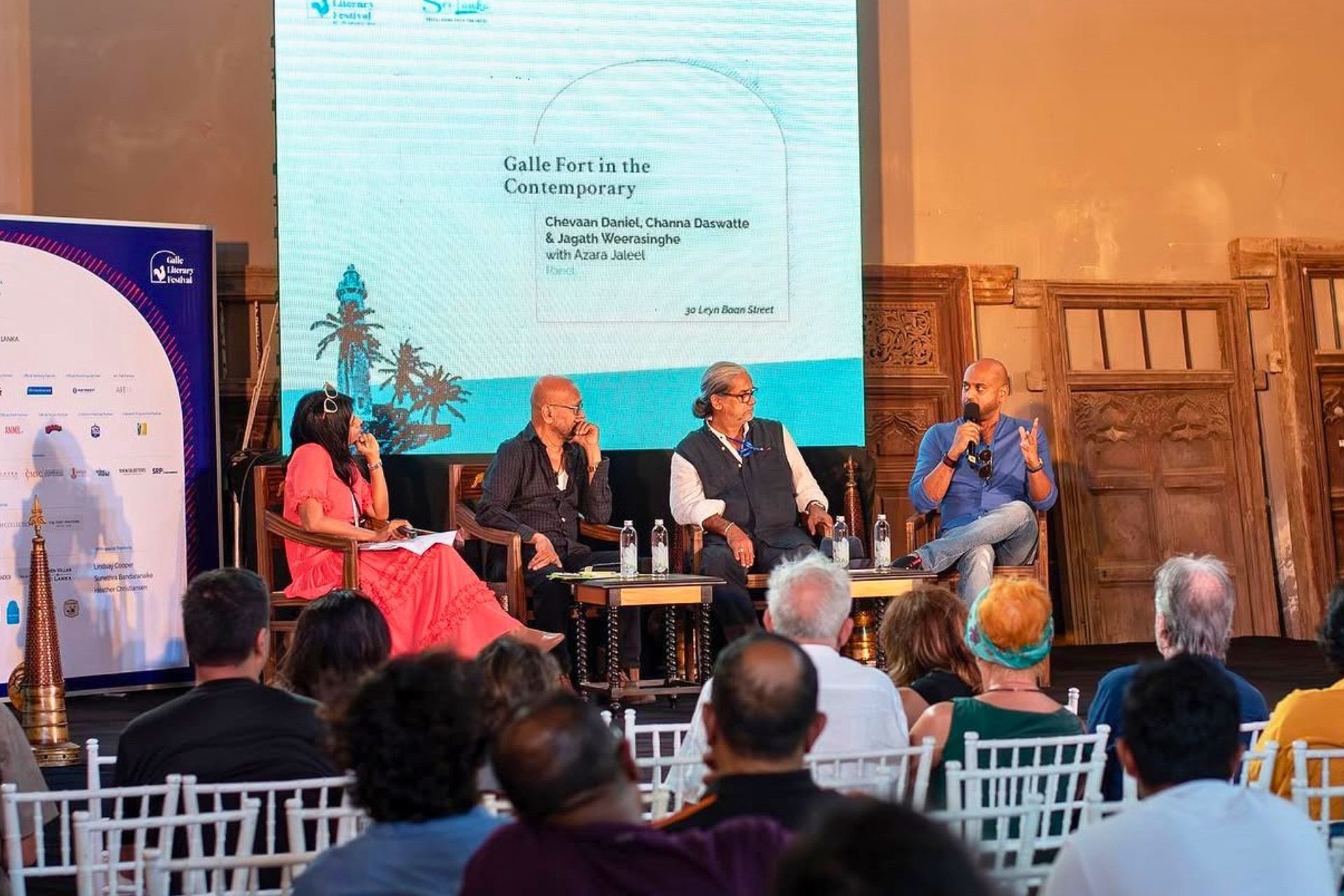
Azara talking at the Galle Literary Festival, inside the Galle Fort
Kandy
The Suriyakantha Centre
The Suriyakantha Centre is an 18th-century walawwa, an aristocratic Kandyan mansion, with a permanent archive of antique furniture, rare manuscripts and historical artefacts.
Within this setting, it brings the second generation of contemporary artists, so the house’s past and the island’s present are shown side by side. The man behind it was Jacques, a French scholar who came to lecture at the University of Peradeniya and never left.
“He fell in love with the island’s rich cultural voices of the old and new,” says Azara, who counted him a friend.
Jaffna
At Fox Jaffna, a bunker has become a gallery for contemporary artists from Jaffna. The exhibition is part of the second edition of the ARTRA Trail, and it brings art from the north into a space with a history of its own.
In Azara’s own words: “We are transforming this space of sorrow into one of scintillation.”
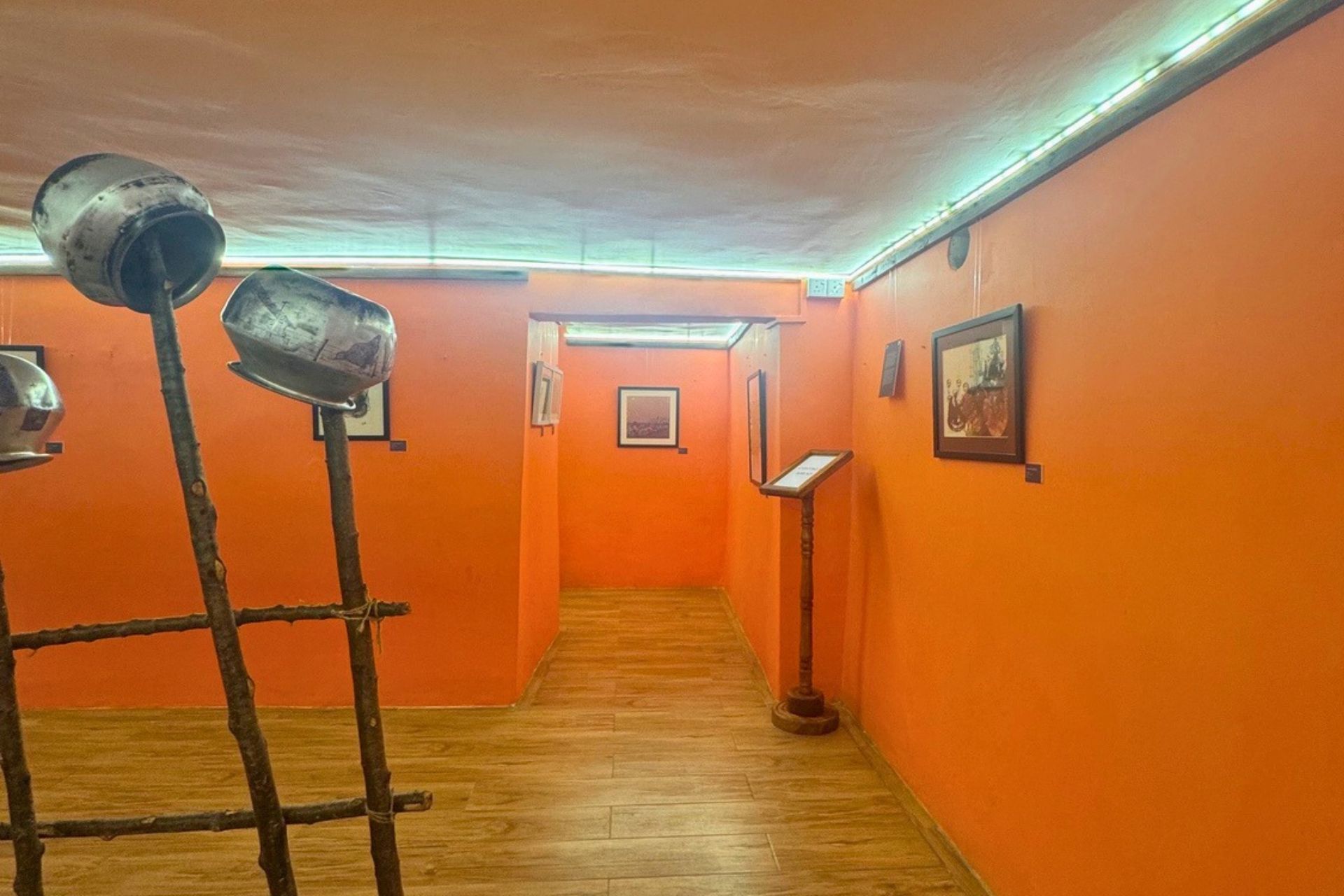
Jaffna bunker turned contemporary art gallery. Credit: ARTRA
More about ARTRA
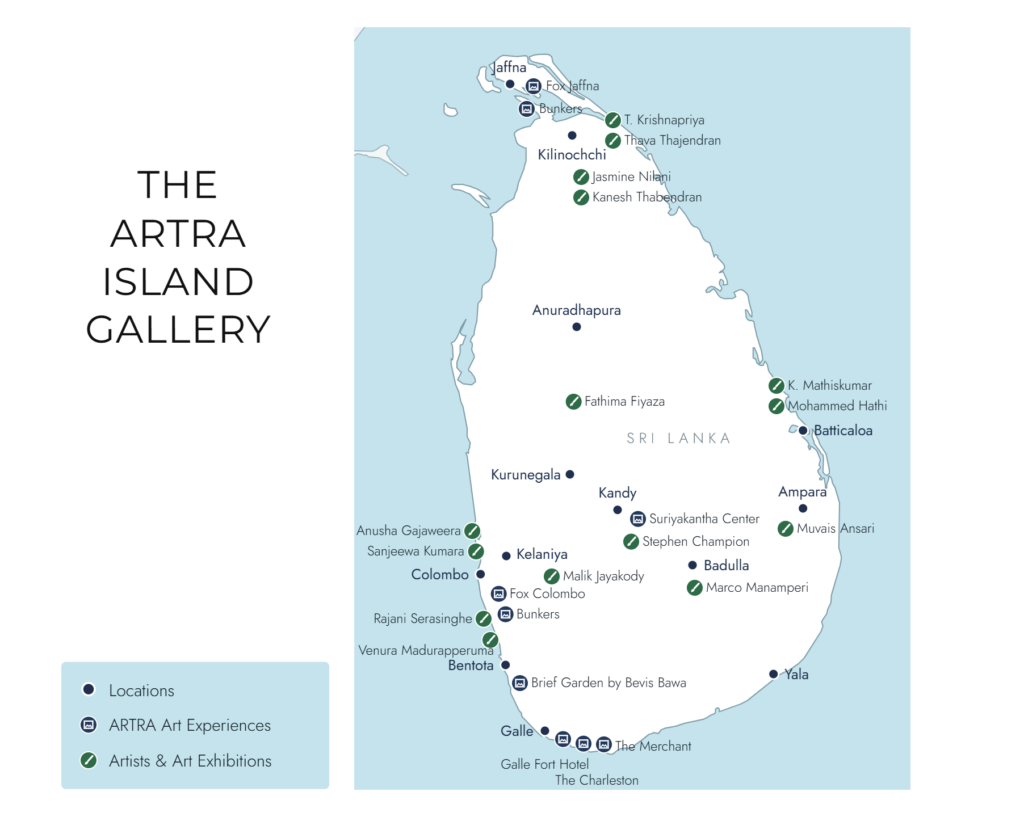
ARTRA is a Sri Lankan art magazine and platform, founded by Azara Jaleel, its editor-in-chief.
Its editions cover the island’s art from the ‘43 Group to today, and its Island Gallery (below) maps the spaces and artists it works with across the country.
Through its 1% Transformation programme, ARTRA gives graduates from Sri Lanka’s public universities a platform to show their work, so many of the artists on the map are at the start of their careers.
Explore Our Sri Lanka Holidays
They offer a view into the island; a theme, a route. There’s much to discover. Dive in.

Take the Next Step with ETG
Our knowledgeable team with deep regional insight, strong local partnerships, and first-hand experience, are expertly placed to design your holiday experience in Sri Lanka.

You may also like