Skip to content
0207 924 7133 START PLANNING
0207 924 7133

by Ranji Thangiah (Tooting Mama)

Inside Sri Lanka’s Living Food Culture

Across family kitchens, roadside griddles and coconut farms, recipes in Sri Lanka are still taught by hand. Sri Lankan food writer Ranji Thangiah, aka ‘Tooting Mama’, travelled through the island with us to meet the cooks and communities behind the cuisine. Here's her account...

Written by Ranji Thangiah, aka ‘Tooting Mama’, following her ETG foodie journey through Sri Lanka


Sri Lanka: Where Real Luxury Simmers in the Jungle

I’m a London-based food writer, photographer and podcaster living in the heart of the UK’s Sri Lankan community, Tooting, South London. When my father passed away, he took his signature recipe for black pork curry with him. When that happened, I lost more than just a dish; I lost a deeply rooted connection to my culture and heritage.

Image credit: Abhishek Gunaratnam


That loss became my mission: to document, celebrate, and preserve Sri Lankan food culture through writing, photography, podcasts, and festivals.

Sri Lanka has a rich culinary heritage due in part to its abundant and varied biodiversity of plants and animals, along with easy access to freshwater fish and marine life. As well as Singhalese and Tamil cuisines, Sri Lankan food has been influenced by the movement of people from the Indian subcontinent, trade (Arabic and Malay (via Indonesia)) and its three waves of colonisation, Portuguese, Dutch and British.  

With Experience Travel Group, I was able to dive deep into this extraordinary food culture. It was my chance to be a tourist in Sri Lanka and explore the country in a way I had never done before, while staying in locally run and owned boutique hotels, houses and retreats. It was a meaningful travel experience in so many ways. 

I discovered that Sri Lanka isn’t just a holiday destination. The country is a living, breathing blend of cultures.. Every meal tells an incredible story, whether you’re eating food cooked in a clay pot on an open wood fire or at a world-class beachside bar. 

Join me as I take you on my culinary food tour of Sri Lanka.

You also can listen to my interview with Sam Clark, the Co-Founder of ETG.

Photo credit: Ranji Thangiah Photography


The Mudhouse: Where Jungle Meets Farm-to-Table Luxury

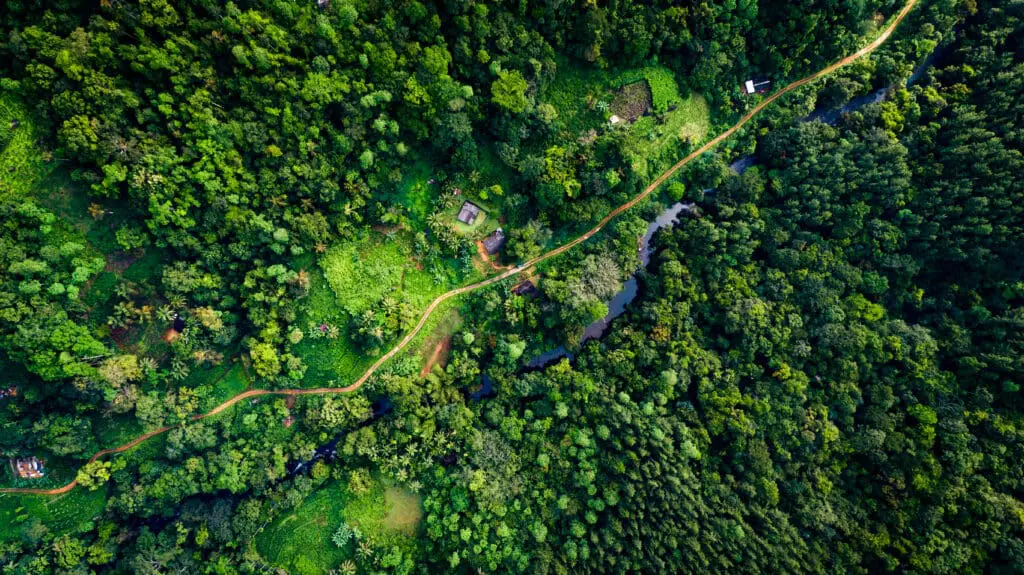
Two-and-a-half hours from Colombo, past the urban sprawl of Chillaw, a dusty red path leads to the Mudhouse, a sanctuary of lotus flower-filled lakes, coconut palms and jungle birdsong. 

Have no fear, these aren’t rustic huts; they’re luxurious mudhouses built from termite mud bricks, sealed with elephant dung, with four-poster beds and yes, solar-powered wifi is available on tap. 

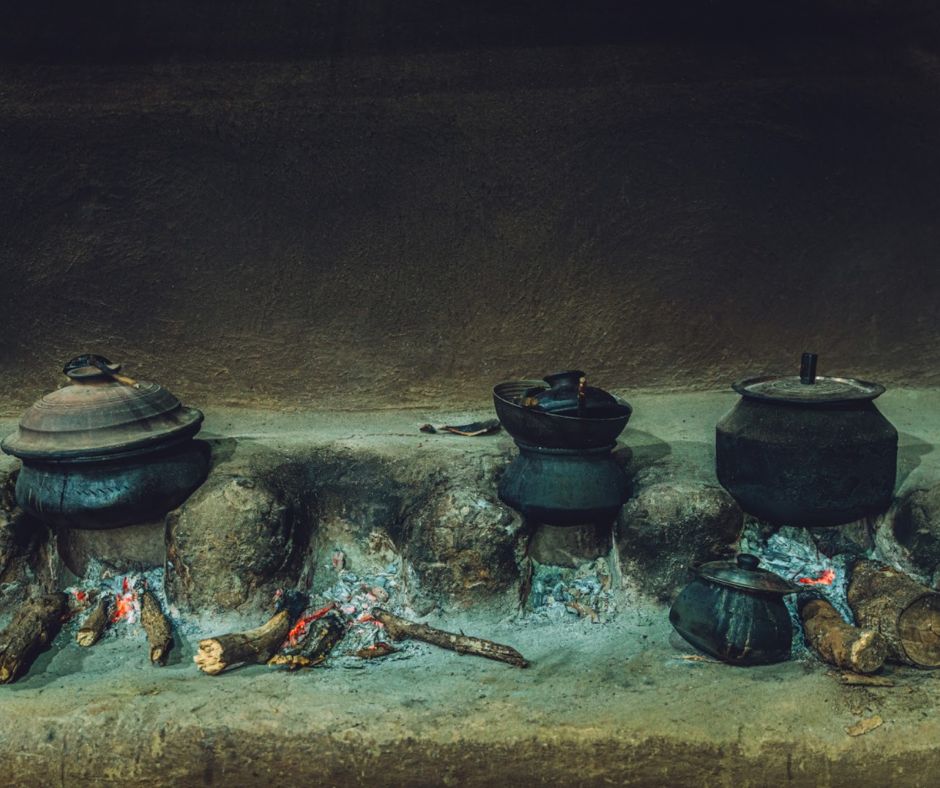
The true magic is their farm-to-table concept. Each meal is harvested that morning from the surrounding land. The kitchen is commanded by Chef and his team, who are masters of open-fire claypot cooking, a village mainstay, where curries simmer over wood fire.

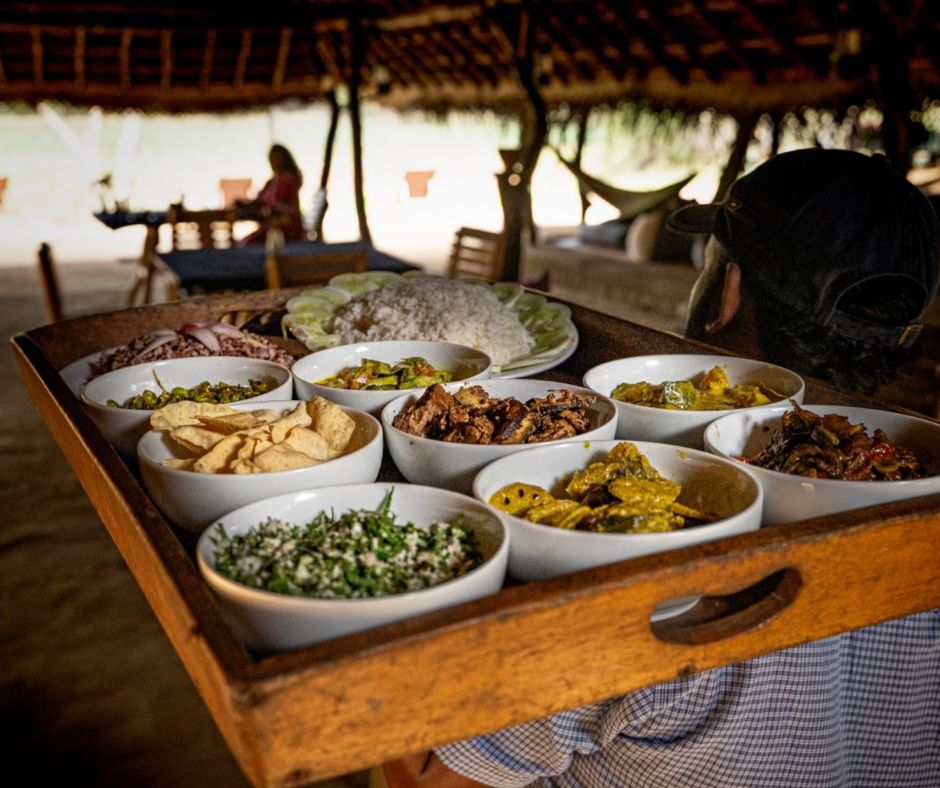
Here I tasted gotu kola kanda, a savoury green herbal porridge, and ingredients I’d never previously encountered: pea aubergines and lotus rice. The food flows with abundance from the kitchen, and believe me, you won’t be able to say no to Chef, so be ready to eat!

Don’t miss: A cooking class with Chef to master claypot techniques, and a grounds tour with Kumar Mahendra to learn the true ethos of the Mudhouse.

Image credit: Abhishek Gunaratnam


Horapothola Estate: Inside Sri Lanka’s Coconut Triangle

Sri Lanka is built on coconuts, and the coconut triangle is its beating heart. Horapothola, a 50-acre functioning coconut farm, was once a British colonial retreat and is now under the ownership of the Fernando family. 

Horapothola is a study in colonial elegance, with its dark teak furniture laced with cane, hand-embroidered linen. A 300-year-old araliya (temple tree) stands proud on the lawn, the perfect spot for a morning toddy or afternoon tea.

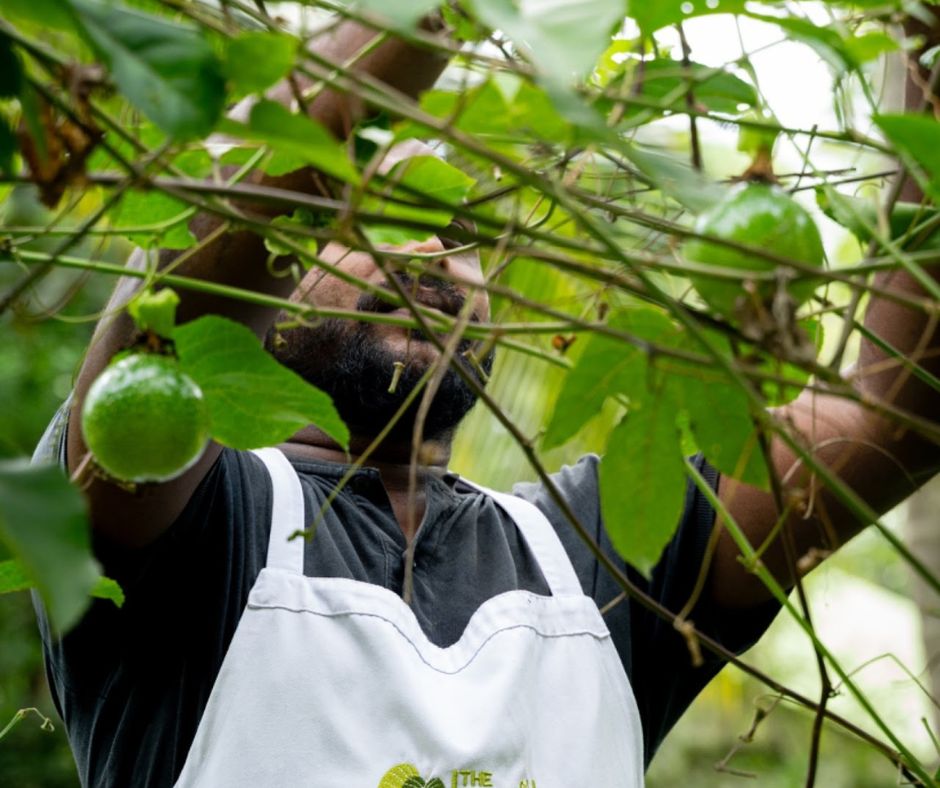
The cooking class was transformative. We harvested passion fruit leaves from the kitchen garden for mallum (traditional stir-fried greens), cooking everything on a century-old open fire. 

Village excursions revealed thriving markets and hand-shelled cashew nut factories, while a coconut factory demonstrated how every part of this vital crop is used.

Insider tip: Take the bullock cart ride around the estate’s grounds for the full experience. If you get the chance, take a trip to the village market.

Photo credit: Ranji Thangiah Photography


The Road to Nuwara Eliya: Ever-Changing Weather and Glorious Views

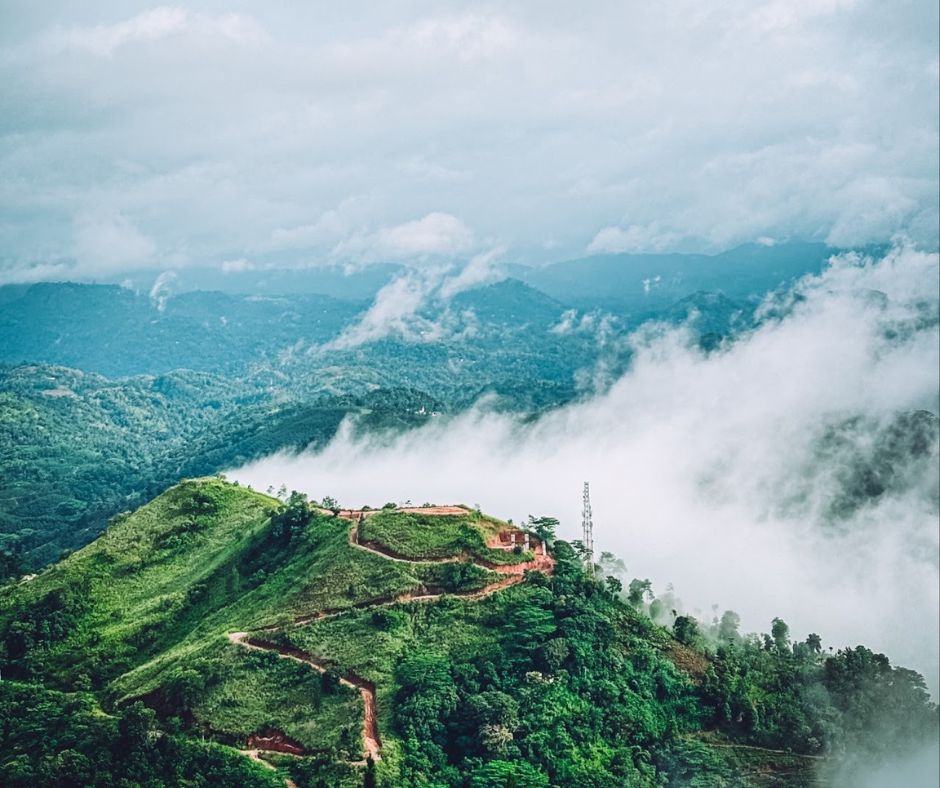
As the road winds upward, brash heat gives way to pleasant summer temperatures. It’s perfect for this Brit from London, but the locals donned jumpers and woolly hats! Fruit stalls further down the hill, which were selling pineapples and papaya, were now offering carrots and cabbages.

Stop at roadside stands for freshly-made hot off the griddle pol roti. It’s the simplest flatbread of water, flour, coconut, and salt, cooked to perfection. I promise you, it will be the best you’ll ever eat (no fancy restaurant will match this!). Try a piping hot kola kanda (green herbal porridge) served with jaggery to counter the herbs’ bitterness. It might take some getting used to. It’s Sri Lanka’s superfood, and it’s worth persisting with!

Must-see detour: Ambuluwawa Tower, a gleaming white, cloud-piercing spire that offers breathtaking panoramic views.

Photo credit: Ranji Thangiah Photography


Nuwara Eliya: Little England Nestled in the Hills

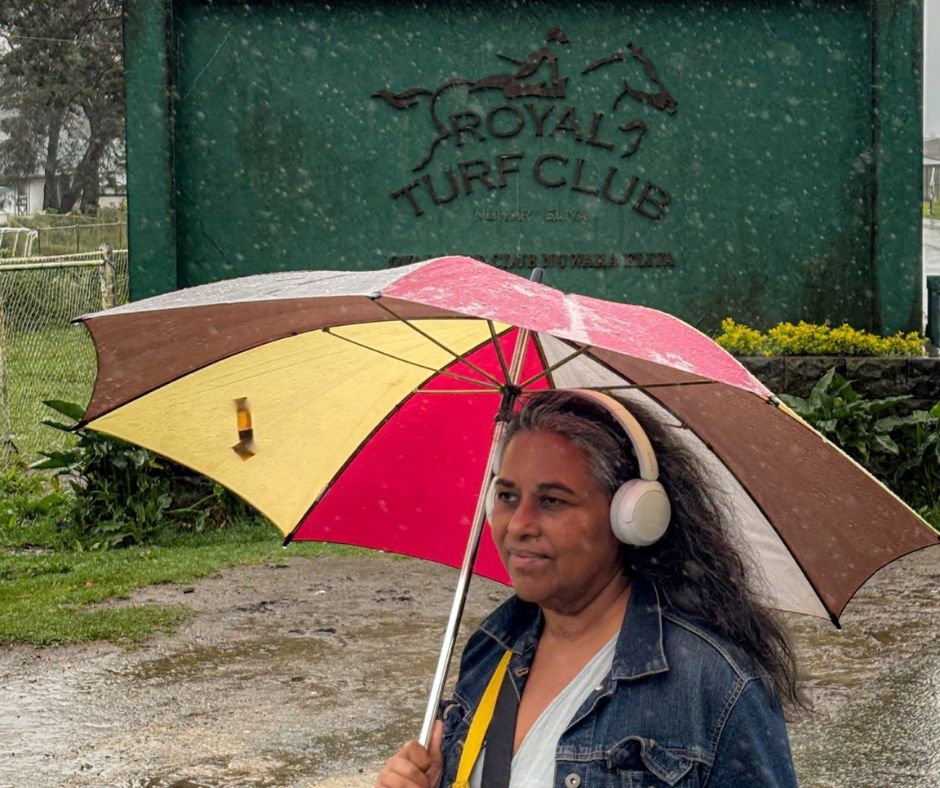
After five-and-a-half hours of driving, Nuwara Eliya welcomes you with colonial charm. Founded by British explorer Samuel Baker in 1846, “Little England” was where civil servants and planters retreated to and maintained their British pastimes: fox hunting, polo, golf, and cricket.

I stayed at Ferncliff bungalow, surrounded by manicured gardens with cosy nooks for serene moments. Our butler, Bernhard, lit a fire to fend off the September chill and served an afternoon tea; there was no need to venture out.

Insider tip: Take the walking tour, download the app onto your phone to see the very English post office, the Grand Hotel (where you can have a grand afternoon tea), and the golf and race courses. 

Image credit: Abhishek Gunaratnam


Haputale: Discovering Bohra Cuisine

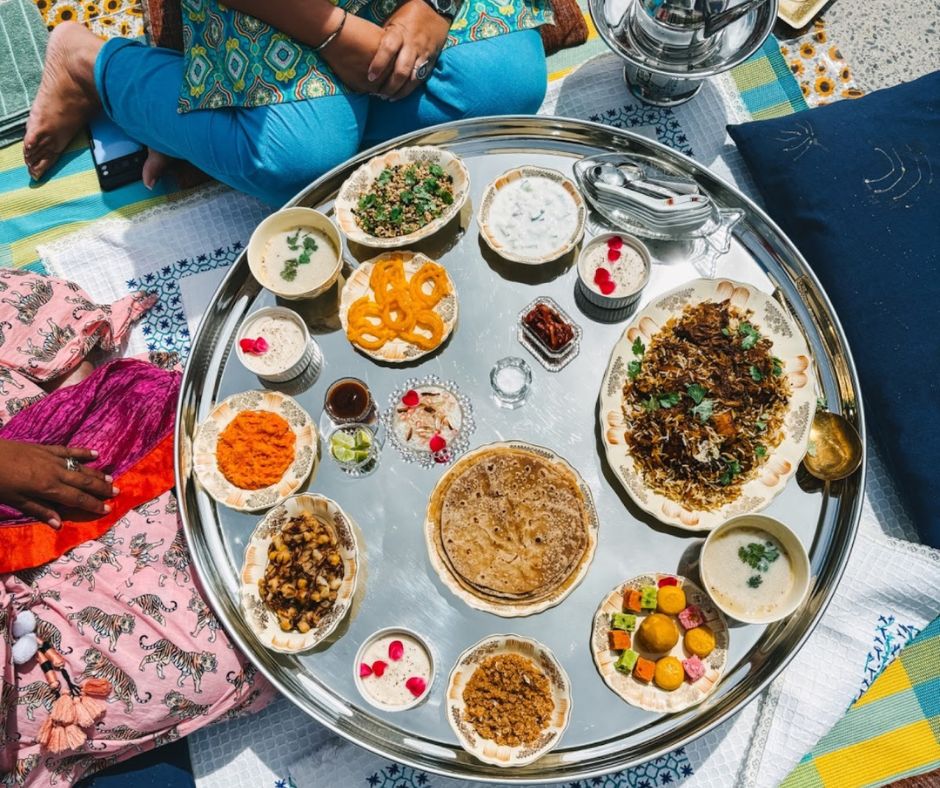
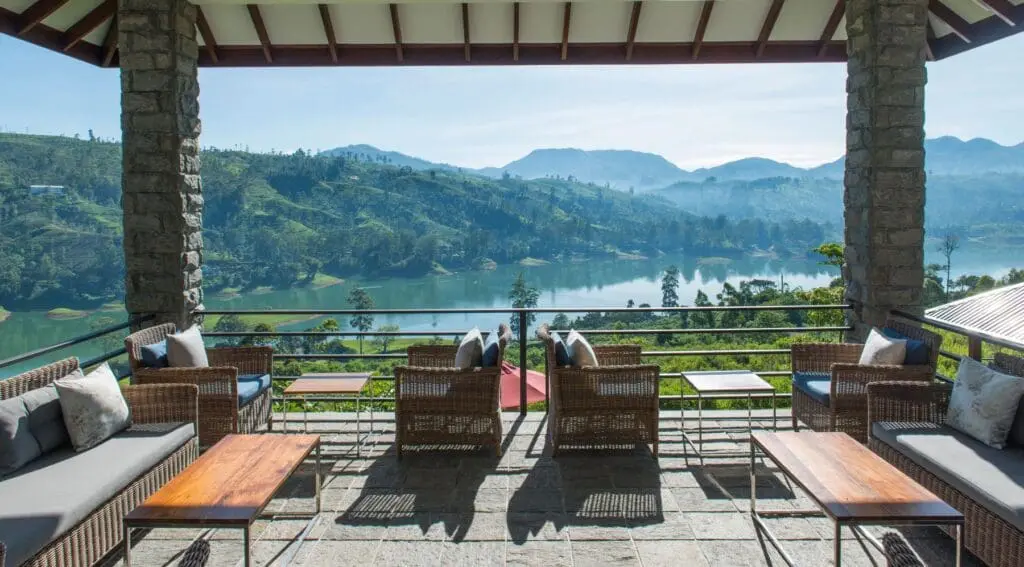
A short drive from Nuwara Eliya brings you to Haputale’s modern bungalow with stunning terrace views that stretch across hills to the sea. But the real attraction is the thaal cuisine experience. This is an intimate introduction to Bohra cuisine from Sri Lanka’s Muslim Bohri community, descendants of Yemeni traders.

My gracious host Munira guided me through the ritual: washing hands, tasting salt to cleanse the palate, then alternating between savoury and sweet dishes from the circular silver platter (thaal) symbolising community and sharing. The chickpea betata (chickpeas in spiced tamarind sauce), biryani, and mutton bone broth are now on my must-recreate recipe list.

Image credit: Abhishek Gunaratnam


Galle: Where History Meets Contemporary Cool

After years of hearing travellers gush about Galle, it actually lived up to the mythological status that had built up in my mind. 

Architecture is built in layers from pre-colonial, Portuguese, Dutch, British, and what you have is a Mediterranean vibe with whitewashed buildings, boutique hotels, and craft shops.

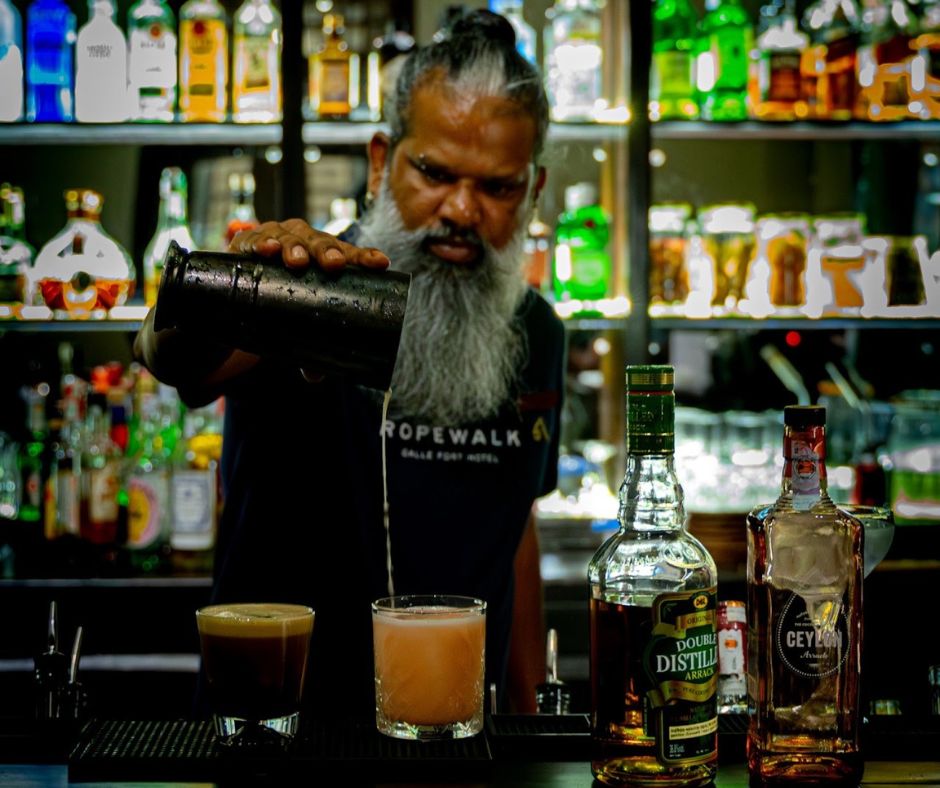
At Galle Fort Hotel’s Rope Walk, Sri Lanka’s first arrack bar, operations manager Clare Holman led me through an arrack and food pairing. I knew arrack (Sri Lanka’s 2,000-year-old indigenous spirit made from fermented coconut flower sap), but discovering that there are over 100 local varieties, each flavoured by local terroir and climate, like fine wine, was a revelation. 

Photo credit: Ranji Thangiah Photography

Galle highlights: The lighthouse, Dutch Reformed Church, National Maritime Museum, and the annual Galle Literary Festival (since 2007).


Mastering Crab Curry with a Local

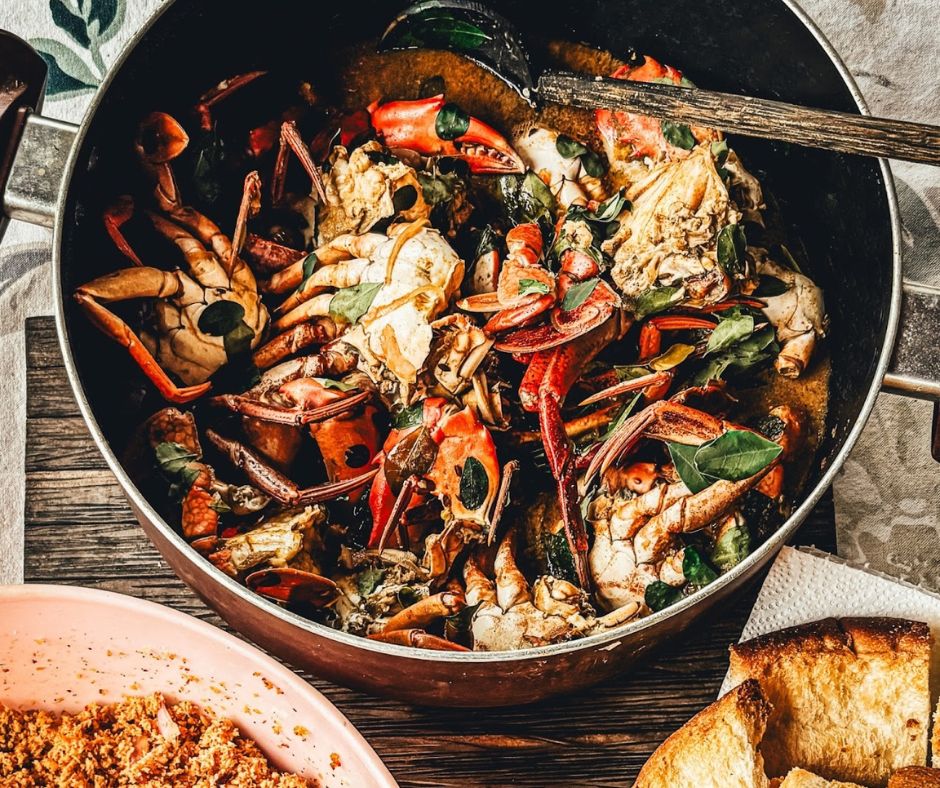
When I met Shanjei Premual (Galle Fort Walks), I was on a mission: learn to make crab curry. It’s the dish that defines Sri Lanka’s coastal cuisine. We bought live crabs directly from fishermen’s homes, joining queues of locals picking up weekend curry ingredients, selecting crabs with the juiciest claws. These were brought to Shajei’s kitchen where we made the crab curry according to his father’s secret recipe.

Then came coconut scraping for pol sambol (the accompaniment eaten at pretty much every meal). While UK shops stock pre-scraped frozen coconut, the traditional art requires skill in smoothly manoeuvring the coconut around an ultra-sharp scraper blade. A hefty portion of fresh pol sambol (scraped coconut, onion, chilli, lime, salt (occasionally Maldive fish, cured dried tuna)) accompanied our crab curry with roast paan (Sri Lankan style bread), perfect for mopping up gravy.

Photo credit: Ranji Thangiah Photography


World-Class Beach Bars: Smoke and Bitters & Raa

On Sri Lanka’s southern tip, two bars epitomise why the island ranks 7th in Condé Nast’s world best food rankings. Smoke & Bitters, founded five years ago by Don Ranasinghe and Lahiru Perera, has soared onto the Top 50 Best Bars in Asia, and tops Sri Lanka’s best bar list. Every dish uses wood fire, and every cocktail features house-made bitters from local ingredients, hence Smoke and Bitters.

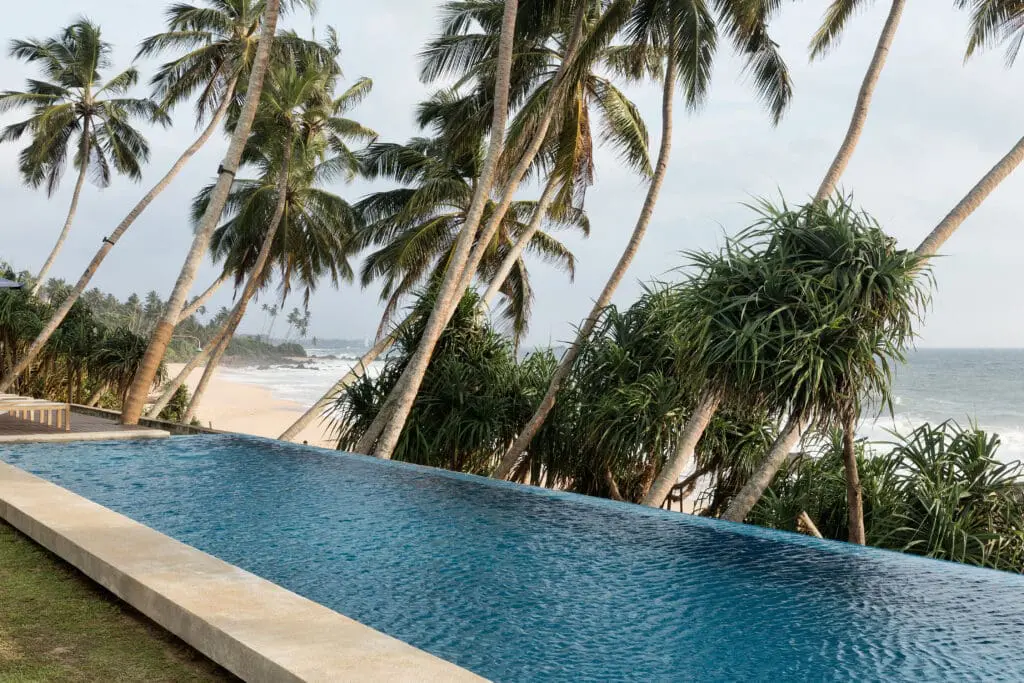
Their newer offering, Raa, sits beachside, surrounded by coconut palms. This is where I sipped pol espresso (in-house brewed coffee liqueur, king coconut coffee liqueur, coconut milk, jaggery) while watching surfers was pure magic.

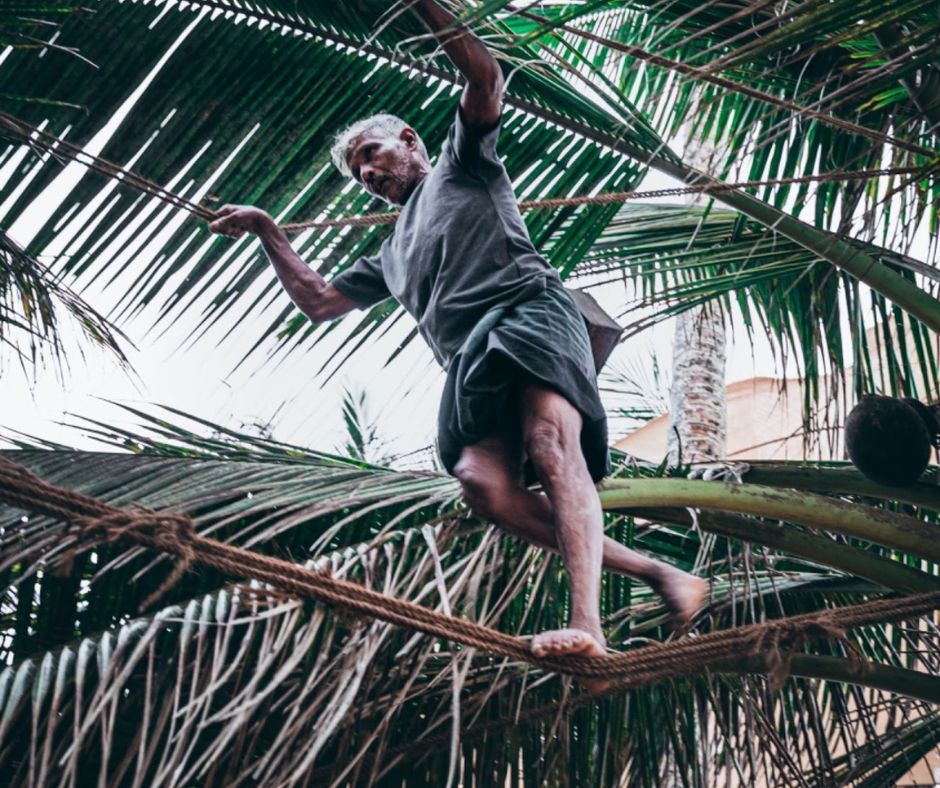
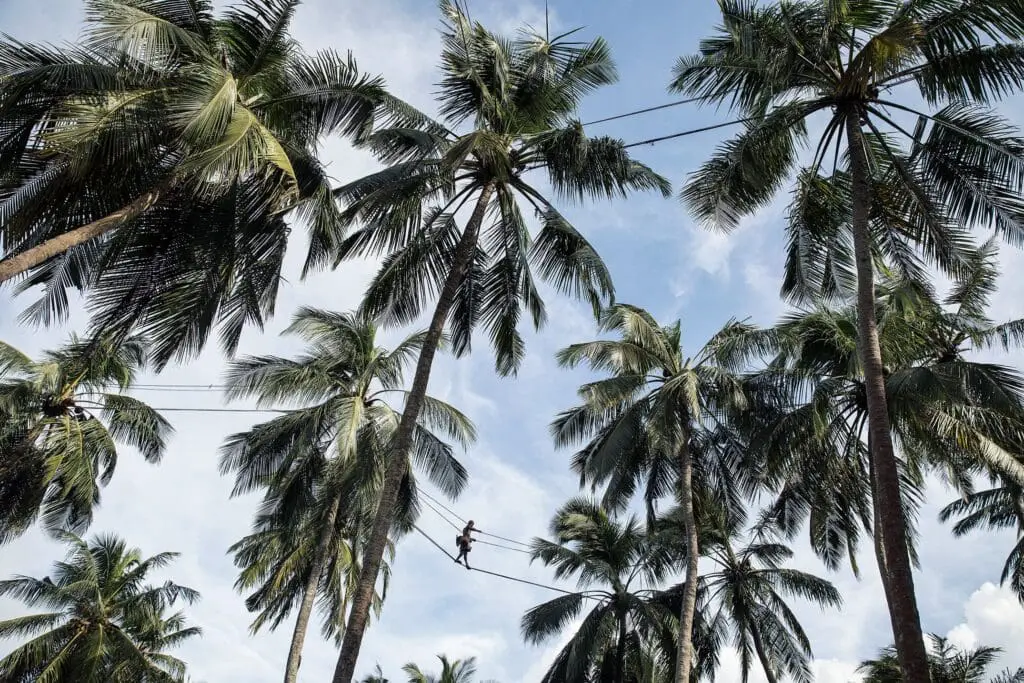
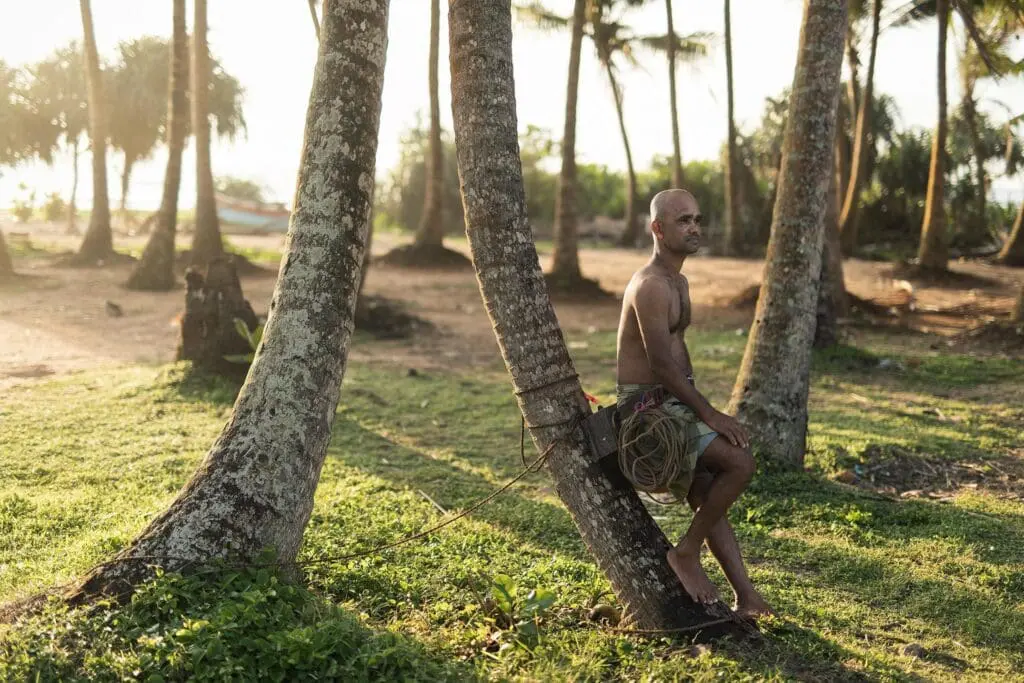
Not to be missed: Sample freshly tapped toddy. Toddy is collected from the sap of the coconut flower. It has natural sugars and yeast, allowing the sap to naturally ferment into a mildly alcoholic drink called toddy. When it’s collected fresh, the sap has a sweet, tangy taste (a bit like kombucha).

Photo credit: Ranji Thangiah Photography


Heenitagala Walauwa: The Grand Finale

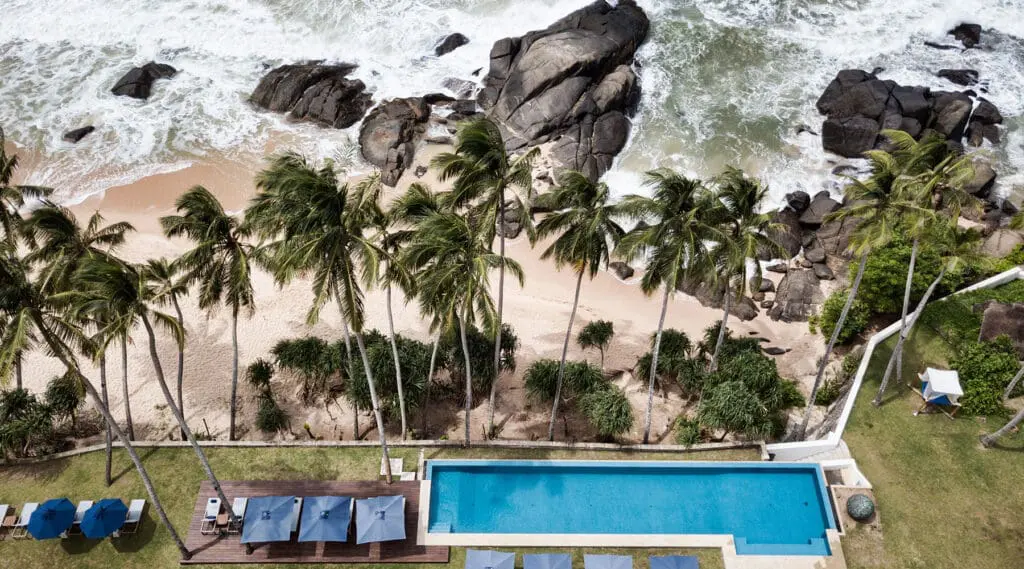
This 17th-century Dutch villa outside Galle was the perfect finale: a glossy-magazine-worthy retreat with exquisite rooms overlooking the pool.

The evening began with a cocktail session at the bar: tamarind martinis, basil-infused creations, and drinks using homemade elderflower cordial (a ten-day process in Sri Lanka). Then the chef taught me hopper-making on the veranda, where I mastered the batter-pouring and pan-swirling techniques to get the signature crisp, lacy edges. We made plain, egg, milk, and jaggery hoppers, which were eaten with our evening meal.

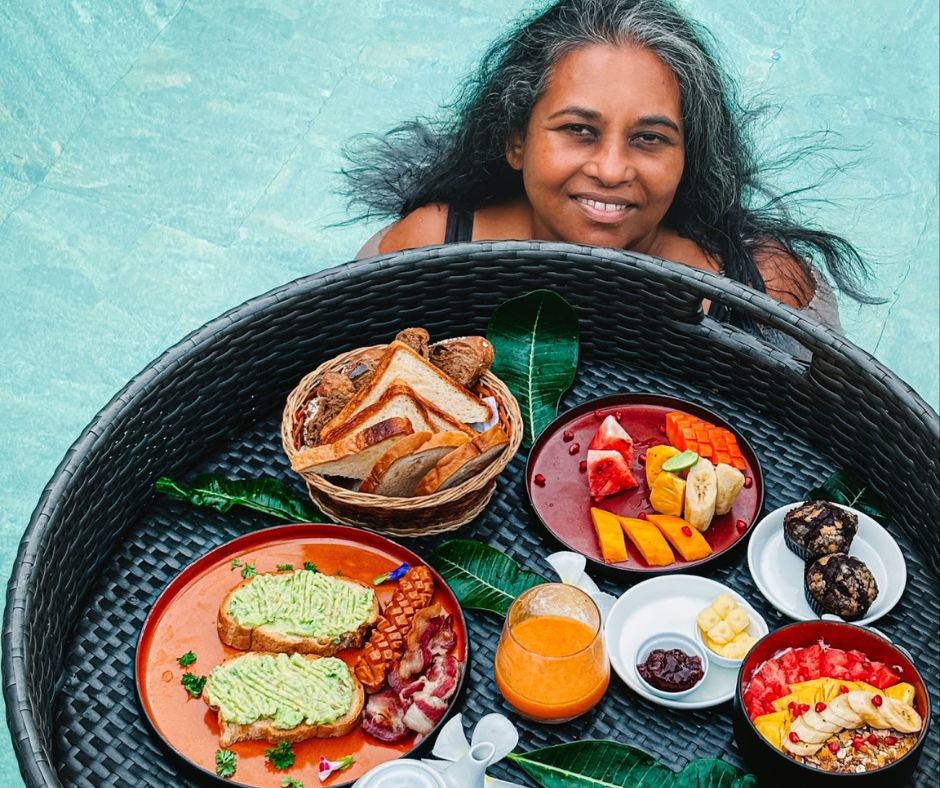
The next morning brought the trending floating breakfast. It’s somewhere between breakfast in bed and poolside lounging. As my breakfast floated across the pool, I swam out to savour freshly squeezed fruit juice, fresh pineapple, and avocado toast. 

Chef’s parting gift? Two pots of buffalo curd with thick kithul treacle. It’s another dish you cannot afford to miss when you’re in Sri Lanka.

Image credit: Abhishek Gunaratnam

Colombo’s Cafe Culture

Back in Colombo, I explored the thriving cafe scene: 

Barefoot Garden Cafe: Sip drinks in the courtyard before browsing Barefoot’s exquisite handloomed textiles: saris, sarongs, scarves and more.

Cafe Kumbuk: Head out to the garden and relax with a coconut cold brew, perfect! 

The Stache: Taste fusion magic (which Sri Lanka is getting known for) like Siam Ceylon (kiribath mound surrounded by a pool of Thai red curry sauce) and Ceylon Turkish eggs (poached eggs on labneh, surrounded by parripu (dhal), garnished with bacon, chilli oil and served on roast paan.

The Ceylon Curry Club: Housed in the Dutch Hospital and known for its signature authentic curries and baked buffalo curd with kithul treacle, legendary.

Photo credit: Ranji Thangiah Photography


Explore ETG Holidays in Sri Lanka

Sri Lanka

Classic Sri Lanka with an ETG Twist

16 Days
Sri Lanka - Tea Pluckers

Sri Lanka

The Spirit of Sri Lanka

15 Days
Summer

Sri Lanka

Family Safari, Surf and Turf

15 Days
Nature

Sri Lanka

Digital Detox in Sri Lanka

18 Days
Sri Lanka Tea Plantations
Slow Paced

Sri Lanka

Relaxed Sri Lanka Holiday

16 Days
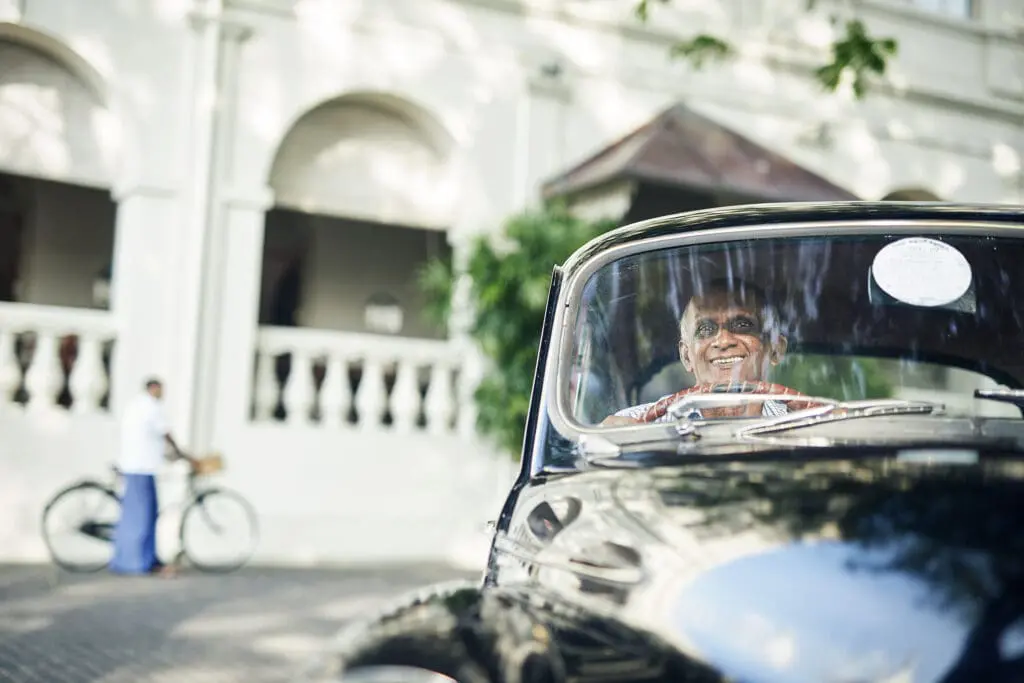
Vintage Car in Galle
Luxury

Sri Lanka

Slow Paced Luxury

15 Days
Kamal Thilakarathna X ETG

Sri Lanka

Wildlife Explorer in Sri Lanka

19 Days
birdlife of sri lanka
Wildlife

Sri Lanka

The Birdlife of Sri Lanka

16 Days
Villas

Sri Lanka

Sri Lanka for Families & Friends

17 Days
Luxury

Sri Lanka

Slow Travel, Tea & Trains with Teardrop Hotels

16 Days
Sri Lanka Pool
Compact

Sri Lanka

South Coast Discovery

From £4,550 pp
14 Days
srilanka-beach
Luxury

Sri Lanka

Luxury with a Touch of Adventure

15 Days

FEELING INSPIRED TO GO?

Please get in touch on 0207 924 7133.

Alternatively, fill out an online enquiry form to start your journey.


About Ranji Thangiah, Tooting Mama

Ranji Thangiah is a London-based food writer, photographer and podcaster living in the heart of the UK’s Sri Lankan community, Tooting, South London. 

She is the host of the popular Sri Lankan food podcast, Tea with Tooting Mama, and runs the popular Sri Lankan food and culture substack, Tooting Mama

She has been featured in the London Metro, BBC Travel, Time and Leisure Magazine. Ranji has demonstrated Sri Lankan cooking on stage at the Great British Food Festival and has appeared on BBC London Live. She is also one of the co-founders of the Sri Lankan Culture Collective which celebrates creativity among the Sri Lankan diaspora.