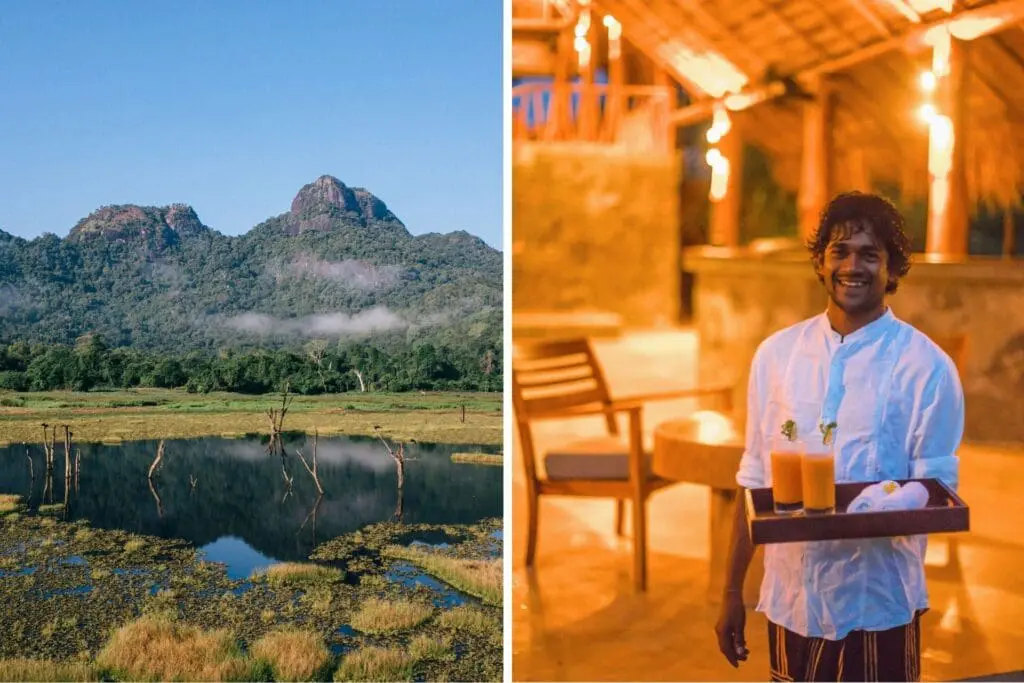
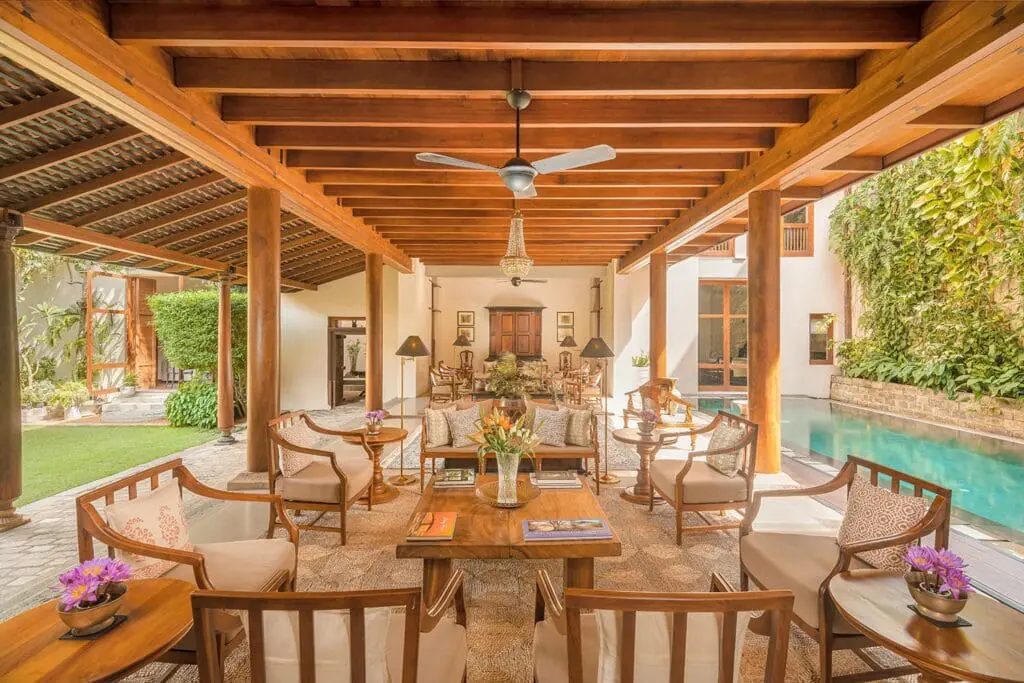
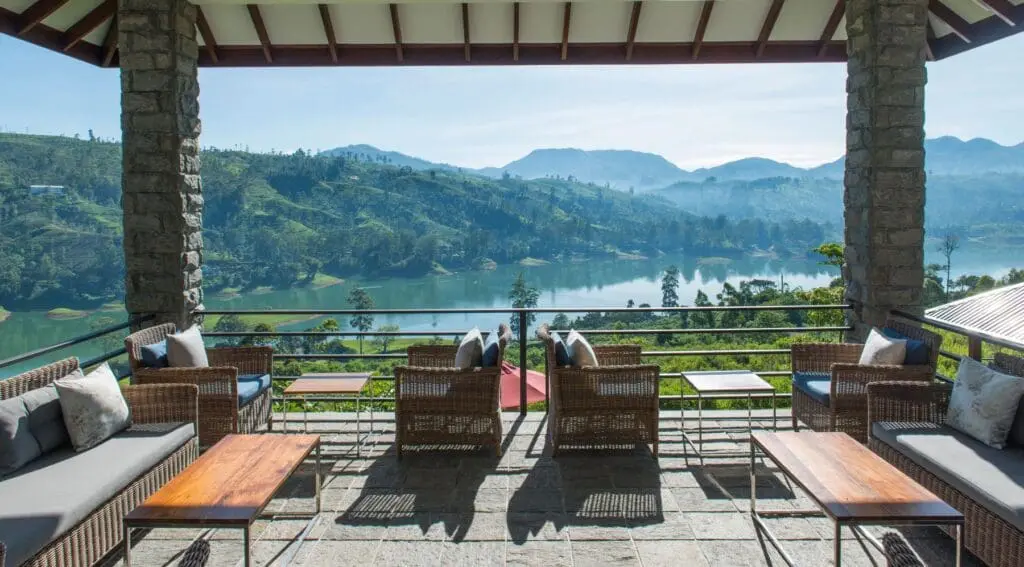
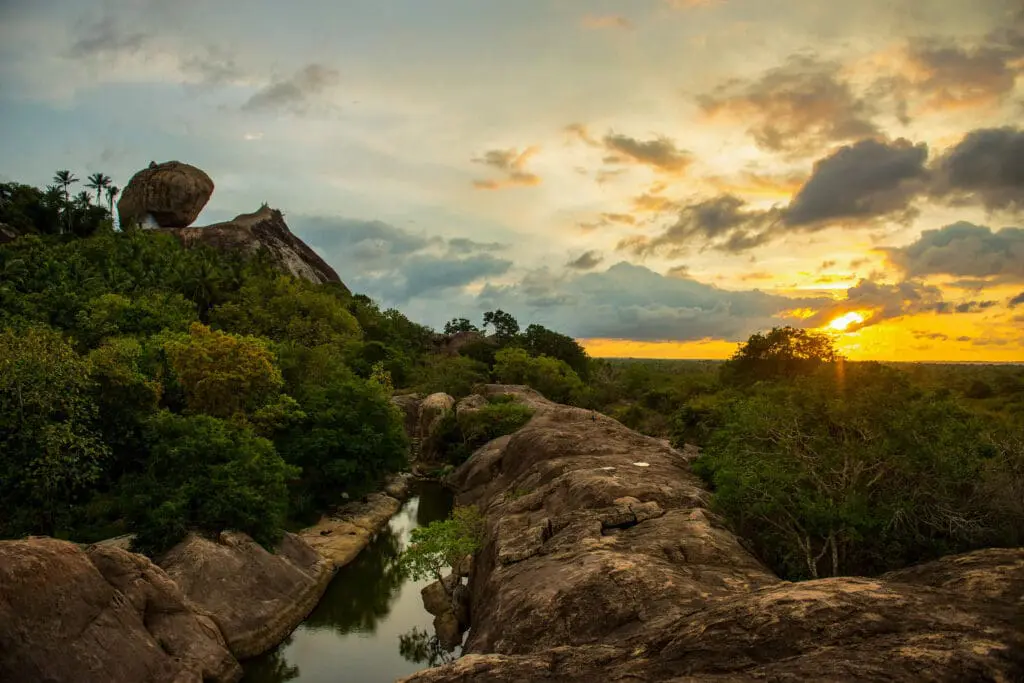
We shower and wash the road dirt from our backs and swim in the lodge pool overlooked by a towering edifice called Monkey Rock.
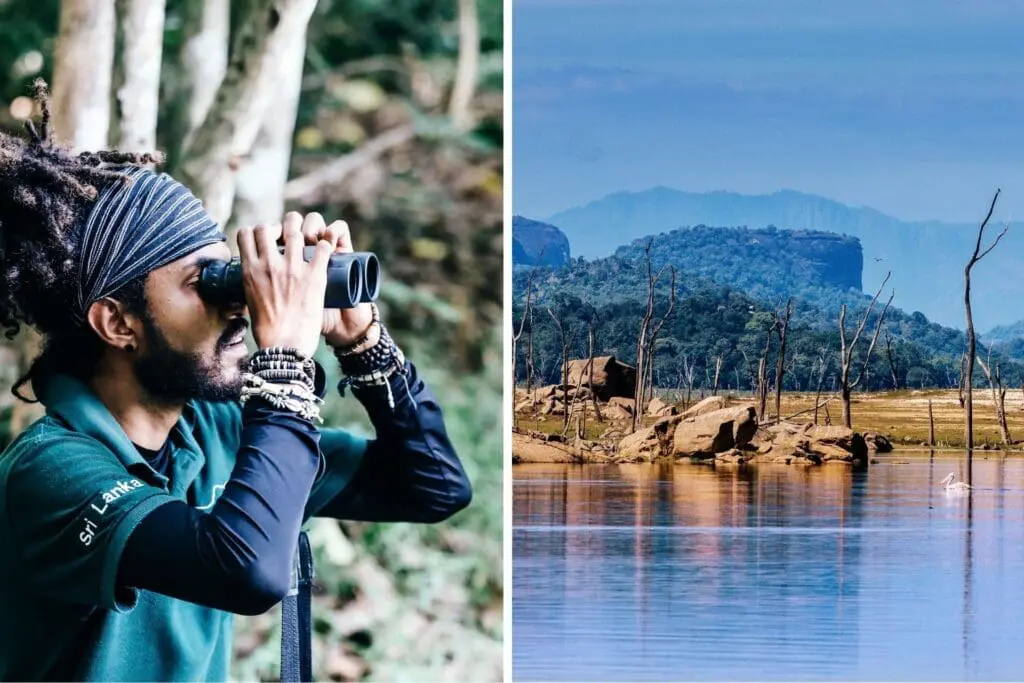
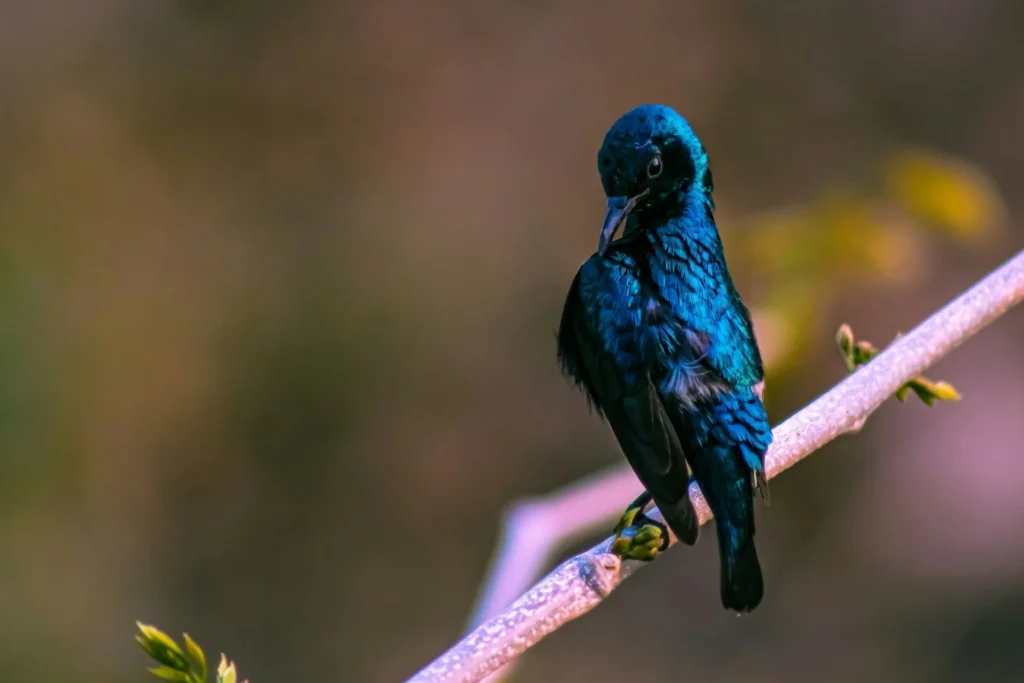
“I wonder if we can climb that?” asks Johnny, who is visibly twitching as brilliantly coloured birds dance through the reeds surrounding the pool. “Sunbirds,” he says, with reference to the hotel bird book and offers me his binoculars. I take them and train my eyes to see. The birds are undeniably beautiful and iridescent in the Sri Lankan sun.

An iridescent sunbird
As the temperature cools, we meet with Anuradha and set off for an afternoon walk past well-tended homes guarded by dogs. Our guide shows us a pepper vine and a green leaf which, when rubbed in our palms, produces the oily scent of teak.
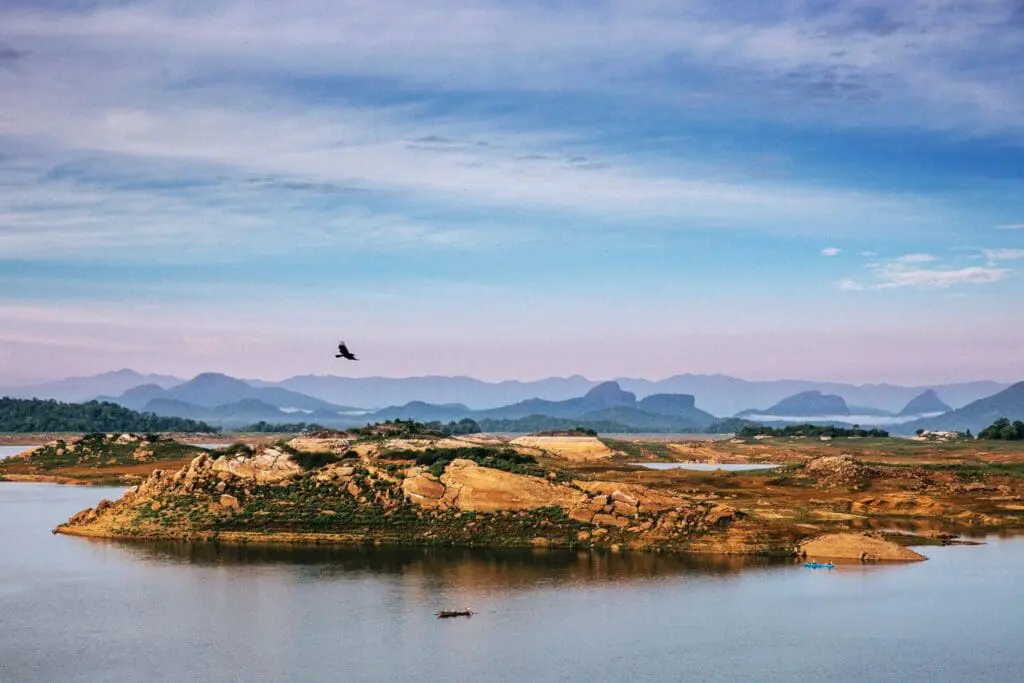
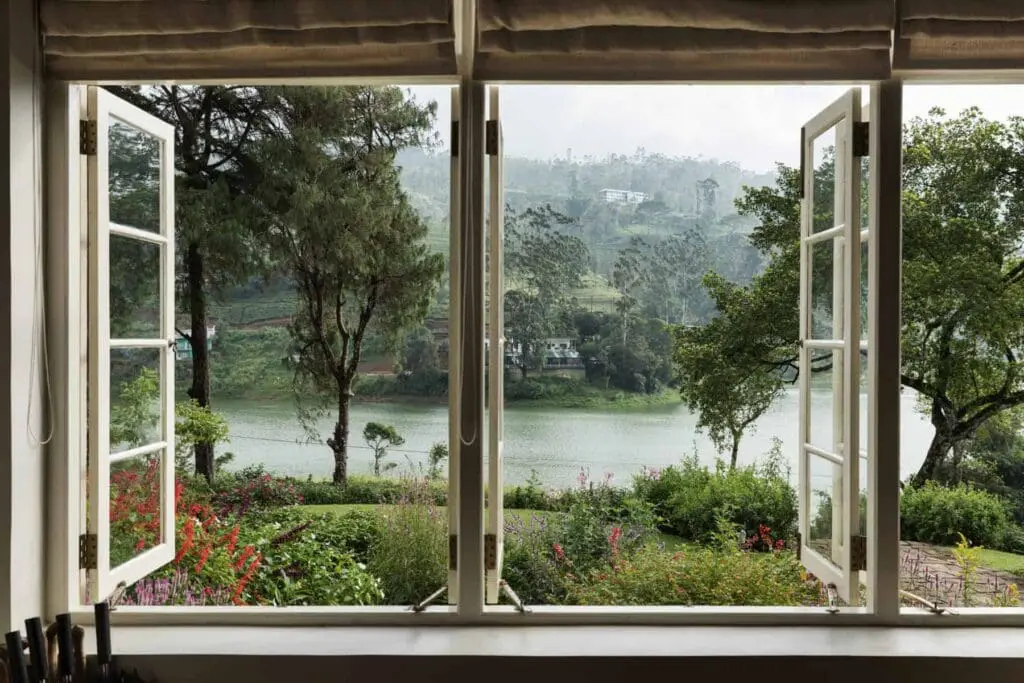
The path leads to a lake surrounded by an amphitheatre of mountains crowned with granite domes.
In full twitching mode, Johnny is rapt as Anuradha points to birds he’s not seen before—lifers as twitchers call them—many of them endemic to Sri Lanka.
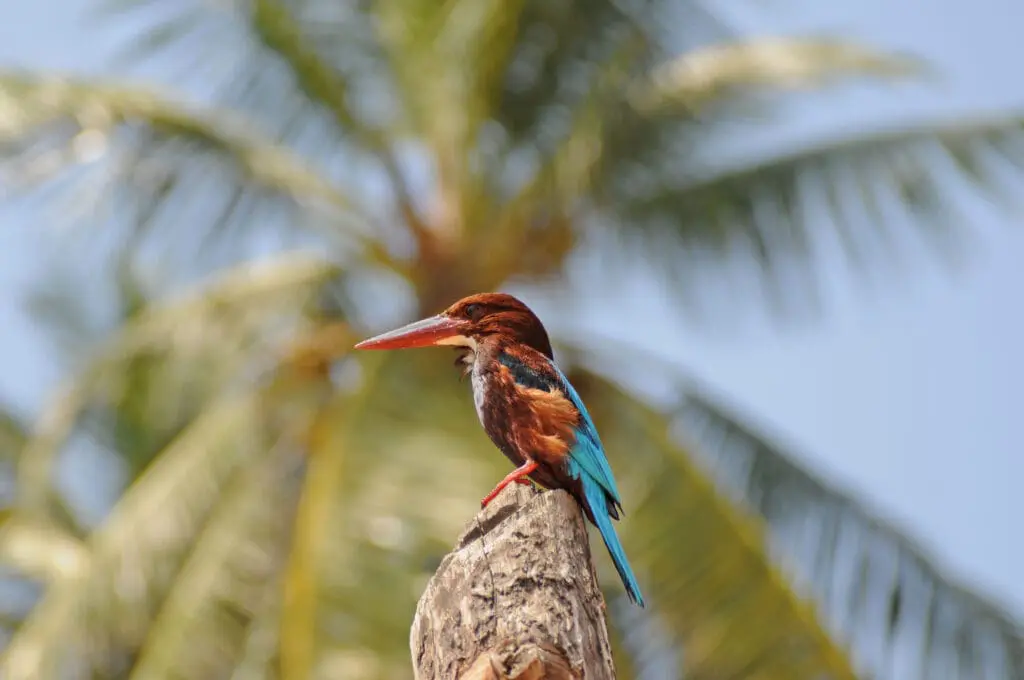
I am starting to feel like a third wheel on a tandem bike until Anuradha graciously lends me his binoculars, and with his help, I train them on a Grey Hornbill, Bee Eaters surveying the scene like opportunist bandits, and a cobalt-coloured kingfisher flashing in the sun.
What’s happening to me? These birds are completely wonderful. Why has it taken me so long to fix my binos on these birds? Why am I starting to talk like this?
A cobalt-coloured kingfisher
The following morning, we rise early for a boat safari in the national park. The outboard purrs as we part the still waters of the lake reflecting uncontaminated skies and the scale and majesty of the scenery, which is awesome. Aside from a few fishermen, we see no one. This is indeed the quietest National Park in Sri Lanka.
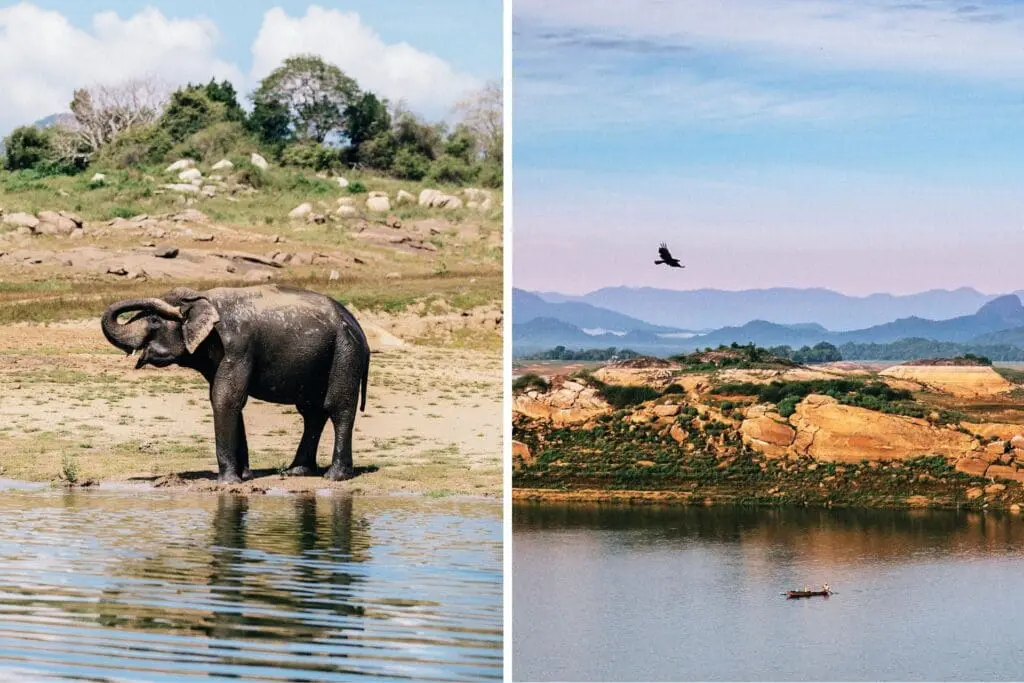
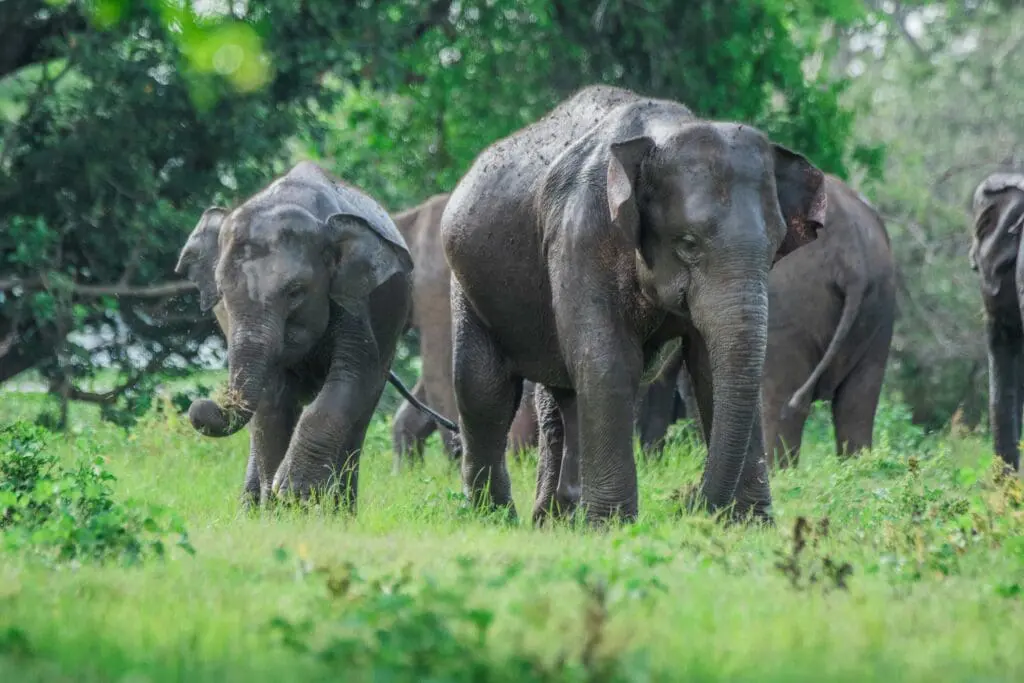
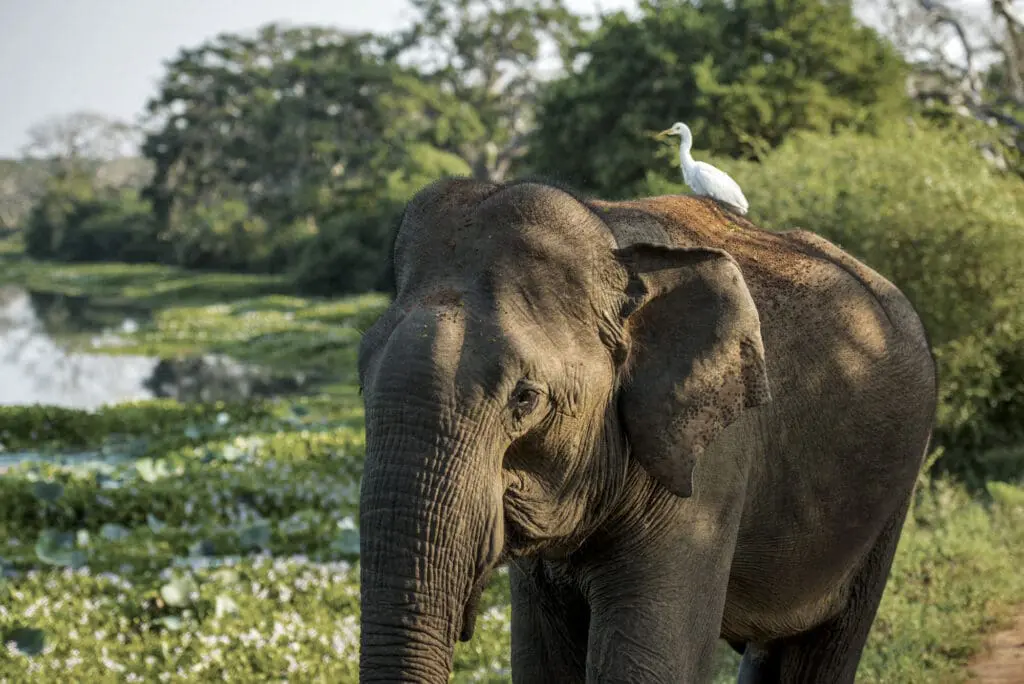
Anuradha spots a lone male elephant, and we move in for a closer look at his creased skin, marbled ears, and soulful brown eyes. We see eagles, bitterns, storks, and a rat snake curled around the branch of a submerged tree. Cormorants pant in the sun, egrets preen their breeding plumage, and herons hunch like executioners at the water’s edge.
An elephant and a cormorant soaring along
“I’ve never seen so many different species of birds in one place,” marvels Johnny. “Not even in Africa?” I ask. We picnic on the granite boulders of a small island where the only sounds are bird calls and the mellifluous tones of our guides.
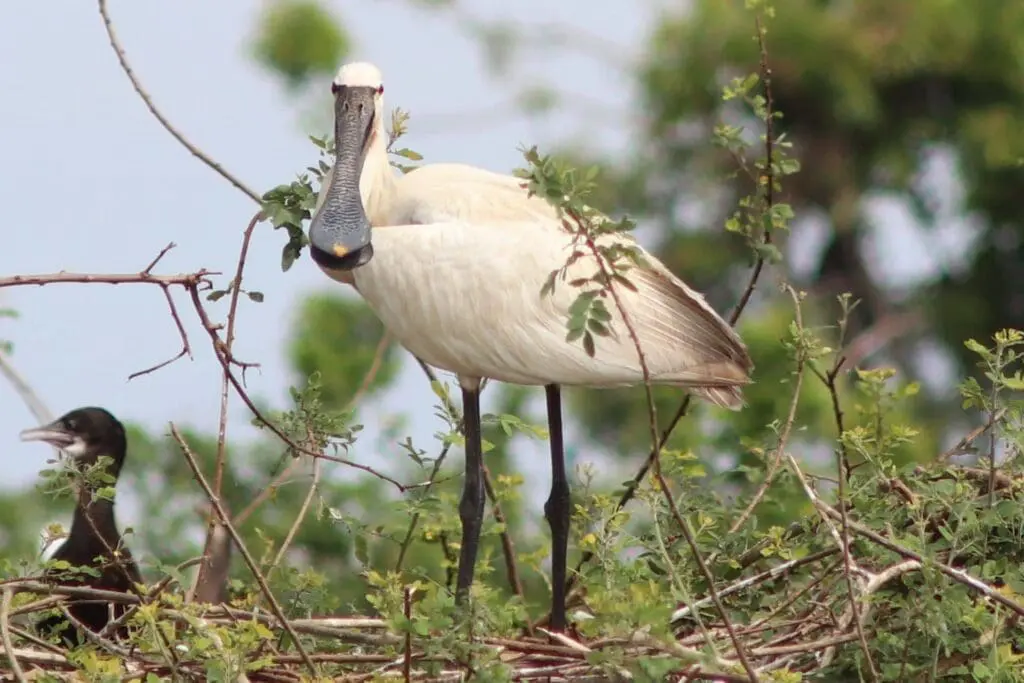
On the return journey, we see a pair of nesting spoonbills fixing us with a wise and disapproving look. We decide that if the Dowager Countess from Downton Abbey was a bird, she would be a spoonbill.
The Dowager Countess of the bird world!
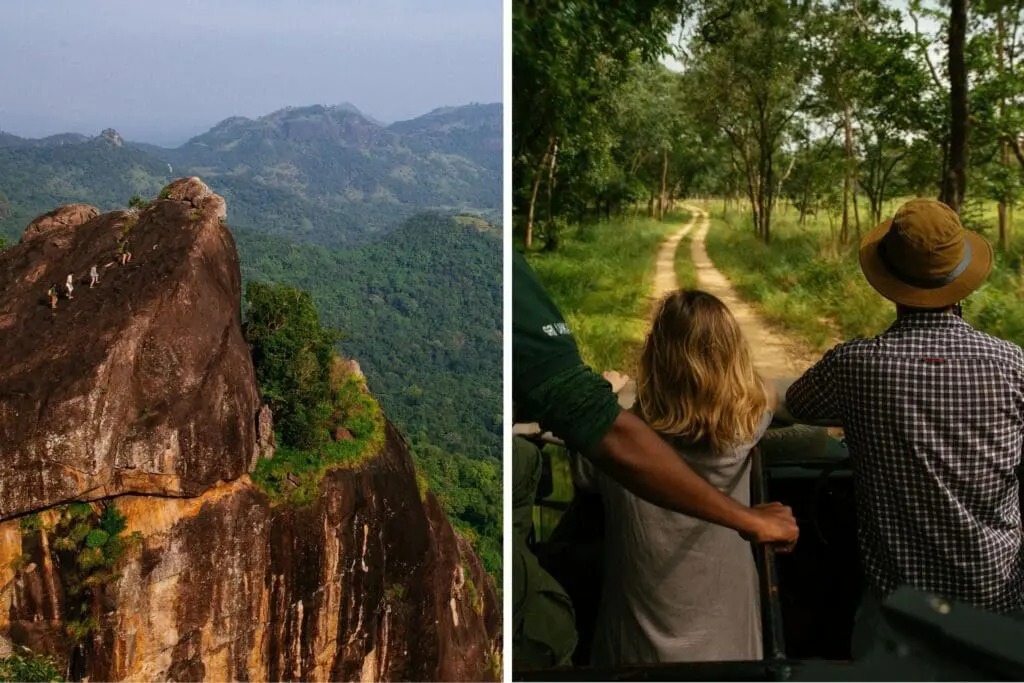
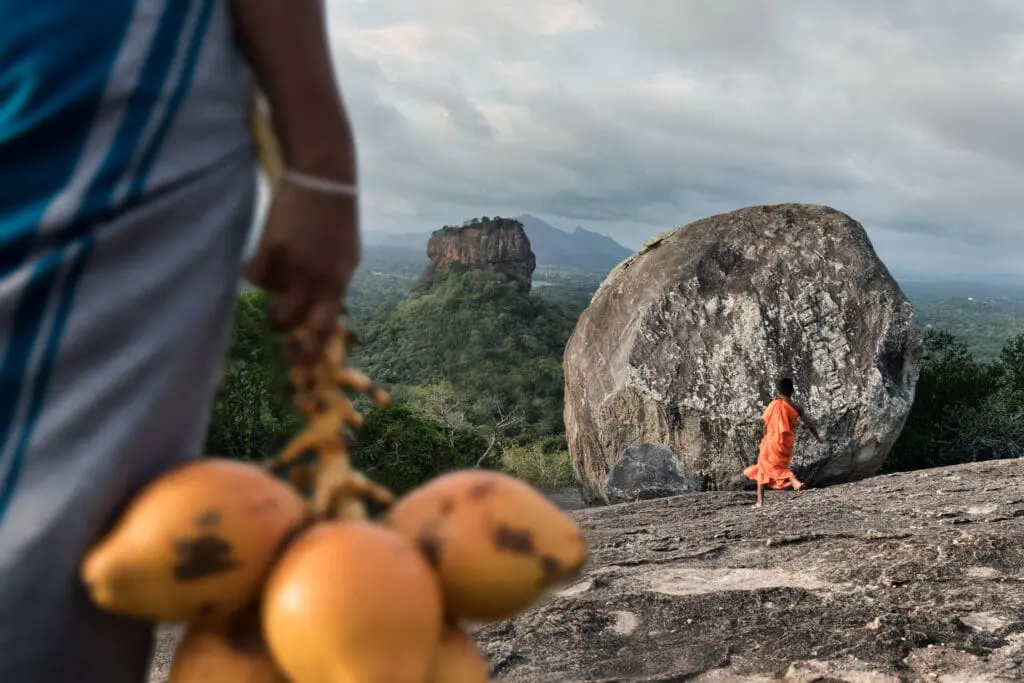
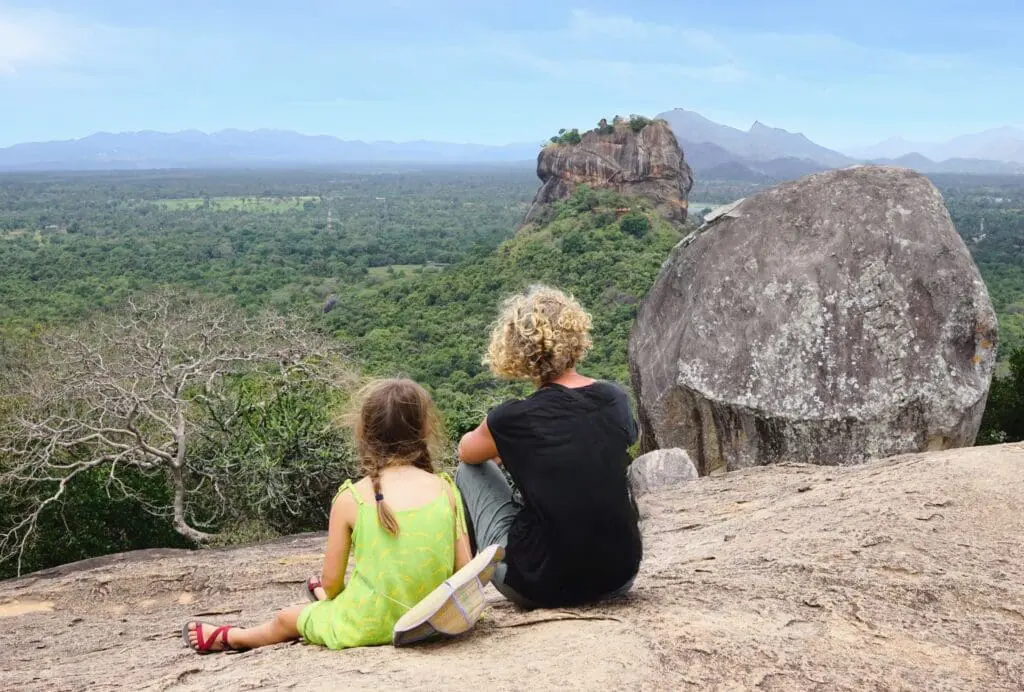
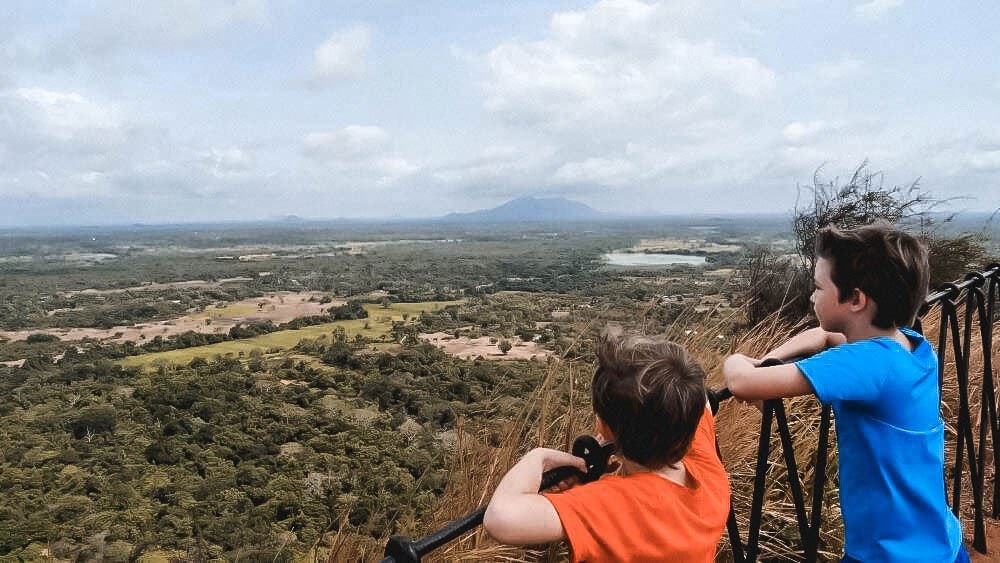
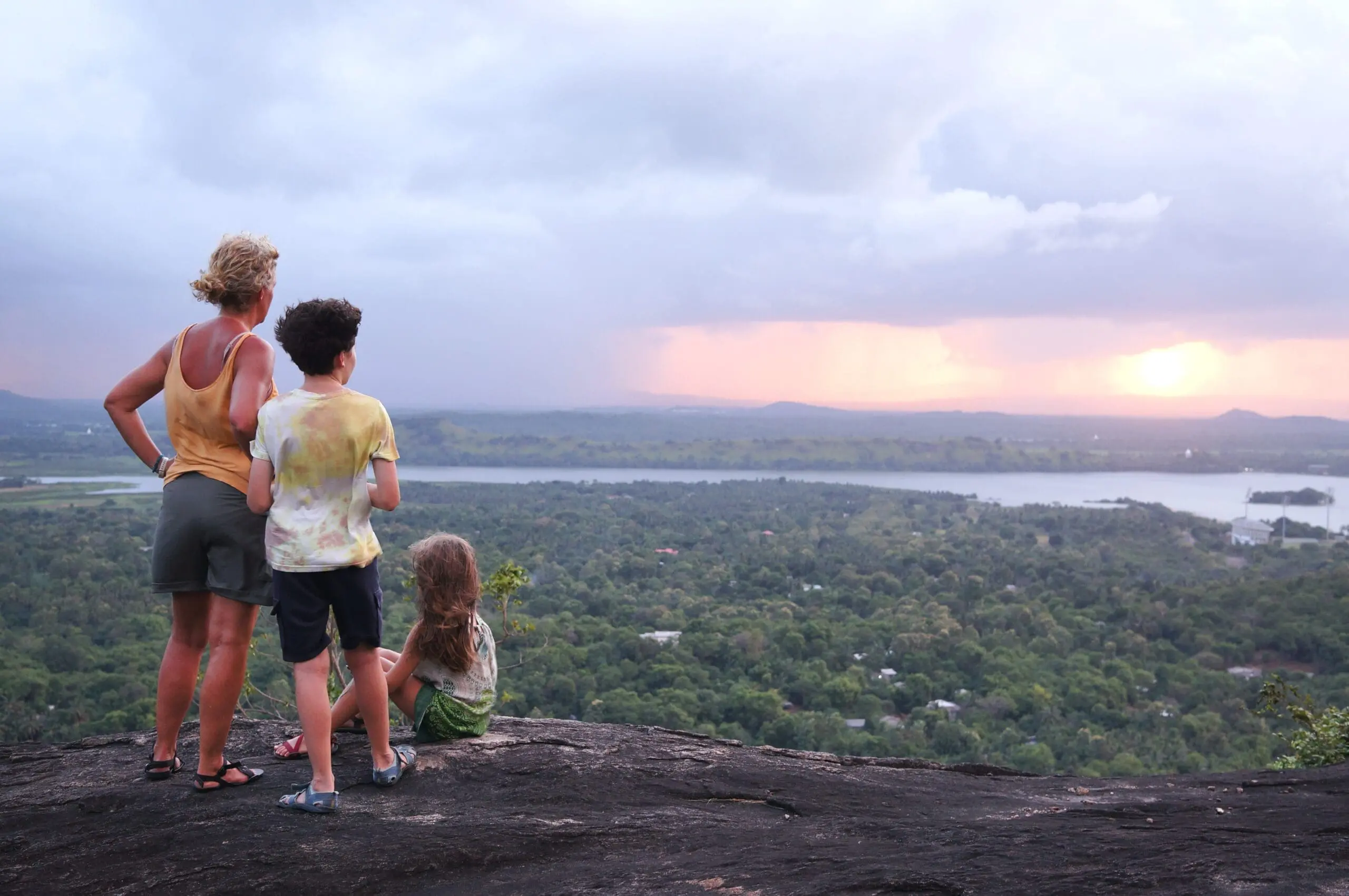
We rise early again the following morning to climb Monkey Rock. It’s an arduous ascent through a humid forest, and I must watch my step. But I hear the birds all around me, and the views from the top make it all worthwhile. “This is how our next chapter shall be,” I tell Johnny, “although possibly with a slightly gentler climb.”
At the heart of Gal Oya Lodge is the Jim Edwards Wildlife Research Centre, and later, we learn from the resident wildlife expert Andrew Kittle just how important sanctuaries such as Gal Oya are to the survival of Sri Lanka’s wildlife.
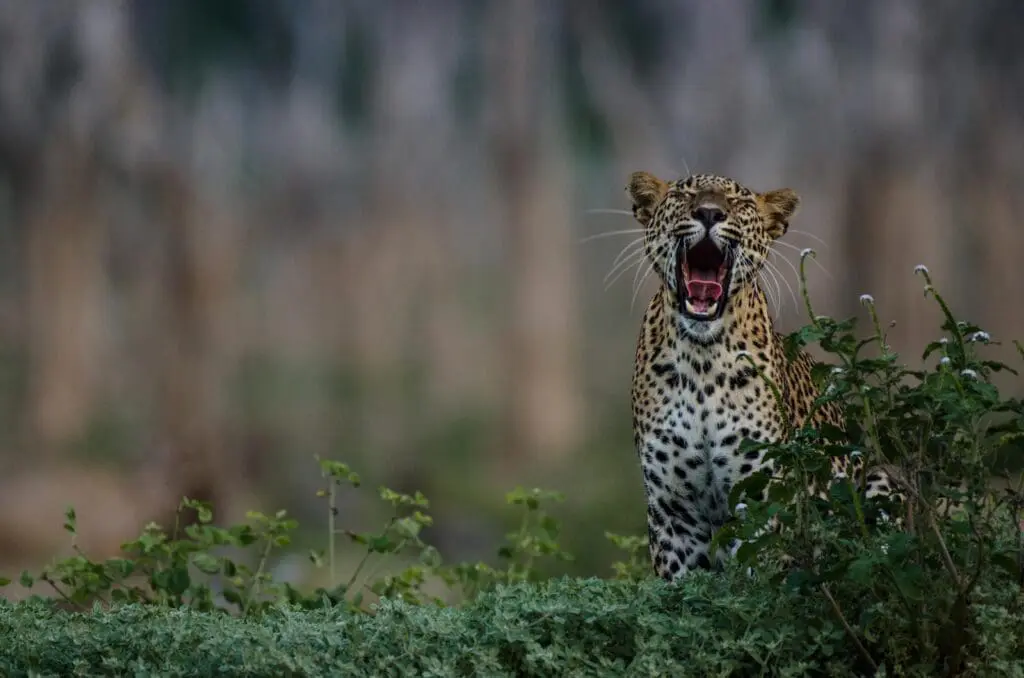
The lodge’s camera traps have recorded images of porcupine, mongoose, mouse deer, wild boar, jackal, civet, leopard, and pangolin; the latter is considered the world’s most trafficked animal, and the species is critically endangered.
Children staying at the lodge can participate in the research centre’s activities, and because there is no Wi-Fi here, Gal Oya Lodge is a place to engage with the people around you and with nature.
Climbing Monkey Rock and kids exploring the wilderness
Far too soon, it is time to leave this extraordinary place. We say our goodbyes to Heshan, our wonderful host. Johnny suggests to Anuradha that he come to watch some cricket at Lord’s. He smiles that smile, and I wonder why he would ever want to leave this place, but hope one day he will.
Our vehicle pulls out of the reserve to join the tar road, and I feel a real sense of sadness—unlike anywhere else I have left. Looking at my finger for possibly the 50th time, I smile at my ring, twin stones as a memory of my new twin loves, my husband-to-be, and my new love for birding.
Phoebe in action birdwatching. Credit: @coburncomms
Tempted to follow in Phoebe’s footsteps? Get in touch today
Take flight with these brilliant birding adventures:
(And a heads-up: with ETG, your trip is never one-dimensional or surface-level. Beyond birdwatching, you’ll delve into local culture, taste culinary creations, marvel at extraordinary monuments and much more besides. Travelling with us is a truly enriching experience: distinctive and deeply memorable).